

Key Takeaways
Start here
Why the First Year Sets the Foundation
Next
The First Vet Visit: What to Expect
Then
Core Preventive Care in Year One
Watch for
Symptoms That Warrant a Call to the Vet
Looking ahead
Building a Long-Term Health Habit
Why the First Year Sets the Foundation
Bringing a new pet home is exciting and — if you're honest — a little overwhelming. Beyond the daily feeding schedule and settling-in period, year one involves a specific set of veterinary milestones that shape your animal's long-term health trajectory. Missing or delaying them can have real consequences.
Whether you've adopted a puppy, kitten, adult rescue dog, or adult cat, the first twelve months represent the window when your vet establishes a baseline: weight, parasite status, vaccine history, dental development, and temperament. That baseline becomes the reference point for everything that follows. For new owners who want a fuller picture of what pet ownership involves from day one, our grounded introduction to the journey ahead is a helpful starting point.
Core vaccines
Vaccinations recommended for all pets of a given species regardless of lifestyle, because the diseases they prevent are severe, widespread, or transmissible to humans. Examples include rabies and distemper.
Non-core vaccines
Optional vaccinations recommended based on a pet's specific risk factors — such as geographic location, contact with other animals, or time spent outdoors — rather than universally.
Wellness exam
A routine veterinary checkup performed on a healthy animal to assess overall condition, catch early signs of illness, and update preventive care. It is not the same as a sick visit.
Heartworm
A parasitic worm transmitted through mosquito bites that can cause serious heart and lung damage in dogs and, less commonly, cats. Prevention is far simpler and less costly than treatment.
Baseline health record
The initial documented measurements and health findings from your pet's first vet visit, used as a reference point for detecting changes in future appointments.
Spay / Neuter
Surgical procedures that remove reproductive organs from female (spay) and male (neuter) animals. Beyond preventing reproduction, they carry specific health implications that vary by species and breed.
The First Vet Visit: What to Expect
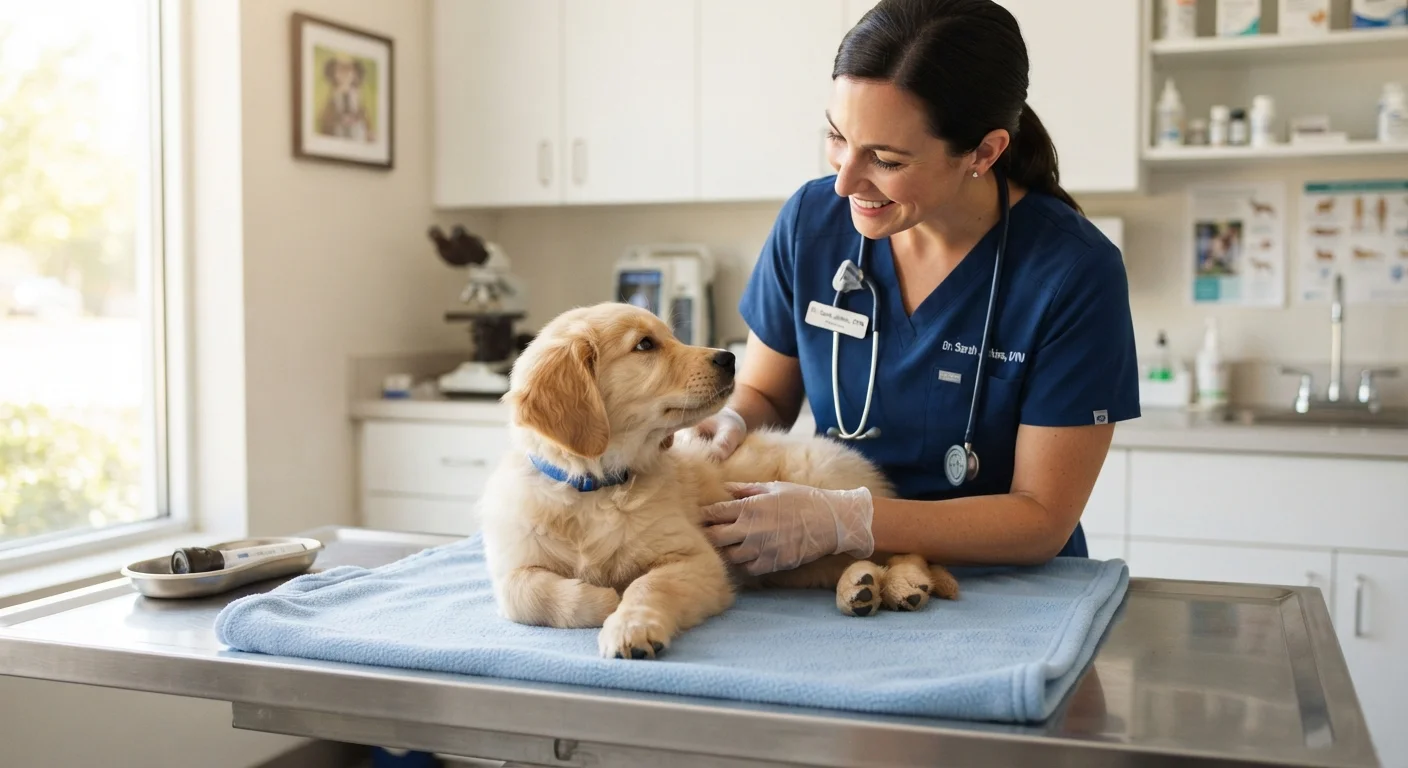
Your pet's first appointment is a comprehensive wellness exam, not just a shot visit. The vet will typically weigh your animal, examine eyes, ears, teeth, coat, skin, and lymph nodes, listen to the heart and lungs, and check for external parasites. They'll also ask about diet, behavior, living environment, and any prior veterinary records.
Bring any documentation you received from a shelter, rescue, or breeder — vaccination records, deworming history, and microchip numbers are all useful. If your pet has no prior records, the vet will work from scratch. For a detailed walkthrough of what happens during a wellness exam, see our overview of routine vet wellness exams.
Bring a Written List of Questions
First-time owners often leave the exam room realizing they forgot to ask something important. Jot down your questions beforehand — about diet, behavior, parasite prevention, or anything unusual you've noticed. Vets genuinely appreciate prepared owners, and the conversation will be more productive for both of you.
To reduce stress on both you and your pet, preparing your pet before the appointment — including carrier training and limiting food if advised — can make a noticeable difference in how the visit goes.
Core Preventive Care in Year One
Preventive care is the backbone of first-year veterinary medicine. It broadly covers three areas:
- Vaccinations: Puppies and kittens need a series of core vaccines starting around six to eight weeks of age, with boosters every three to four weeks until around sixteen weeks. Rabies vaccination is legally required in most US states. Adult animals with unknown vaccine histories often receive a catch-up series.
- Parasite prevention: Fleas, ticks, intestinal worms, and heartworm are real risks across much of the US. Your vet will recommend a prevention approach based on your location, your pet's lifestyle, and species-specific needs. Our detailed guide on parasite prevention in pets covers transmission and general prevention approaches. Heartworm prevention in dogs is particularly important — the disease is transmitted by mosquitoes and is present in all 50 states.
- Spay or neuter: Beyond population control, there are meaningful health considerations attached to this decision. Timing varies by species, breed, and body size, and recommendations have evolved. Our article on the medical case for spaying and neutering explains the current veterinary thinking.
The complete picture of pet preventive care offers a broader look at how vaccines, dental care, and routine exams work together across your pet's life.
Don't Skip Boosters — Timing Matters
Puppy and kitten vaccine series are timed specifically to work with the animal's developing immune system. Skipping or significantly delaying a booster can leave a gap in protection. If you miss a scheduled appointment, contact your vet as soon as possible rather than waiting until the next scheduled visit.
Symptoms That Warrant a Call to the Vet
New owners often struggle to distinguish normal adjustment behavior from signs of illness. Some variation in appetite and energy in the first few days home is expected. The following symptoms, however, generally warrant contacting your veterinarian rather than waiting:
- Repeated vomiting or diarrhea lasting more than 24 hours — or containing blood at any point
- Significant lethargy that doesn't improve after a day of settling in
- Loss of appetite beyond 48 hours
- Difficulty breathing, persistent coughing, or nasal discharge
- Straining to urinate or defecate
- Limping, swelling, or visible wounds
- Suspected ingestion of a toxic substance
For guidance on one of the most common concerns, our article on digestive upsets in pets explains the range of causes and when urgent care is appropriate. When in doubt, a phone call to your vet — or an emergency clinic after hours — is always the right instinct.
This article is for informational purposes only and is not a substitute for professional veterinary advice. Always consult a licensed veterinarian for guidance specific to your pet's health.
Building a Long-Term Health Habit
The goal of year one isn't just to check boxes — it's to establish habits and relationships that will serve your pet for life. That means finding a veterinarian you trust, keeping organized records, and learning to notice when something seems off before it becomes serious.
Keeping vaccination and health records organized is a practical step that pays dividends later — especially if you move, switch vets, or need boarding. After year one, most healthy adult pets need at least one annual wellness exam; your vet will tell you if your animal's needs are different. Our guide on what happens at your pet's annual wellness exam explains exactly what to expect going forward.
Understanding why owners delay vet visits can also help you recognize — and sidestep — the rationalizations that lead to treatable conditions becoming serious ones. Building a consistent preventive care routine now is one of the most effective things you can do for your pet's long-term wellbeing.