

Key Takeaways
Why Organized Pet Health Records Matter
Most pet owners know they should keep their pet's vet paperwork, yet those documents often end up scattered across email inboxes, junk drawers, and phone camera rolls. When an emergency happens — or even a routine boarding check-in — scrambling to reconstruct your pet's vaccination history is stressful and potentially risky.
A complete health record gives any veterinarian immediate insight into your pet's medical background: prior illnesses, surgical history, current medications, vaccine dates, and any known sensitivities. This context shapes treatment decisions in ways that matter. An organized record is also essential for interstate travel, grooming appointments, and daycare facilities that require proof of vaccination.
Think of it the same way you'd approach a vehicle service history. Just as tracking maintenance protects a car investment — as outlined in our vehicle maintenance log guide — tracking your pet's health history protects something far more valuable. Our Pet Care Basics hub covers the full scope of daily and preventive care that generates these records in the first place.
Records Are Especially Important in Emergencies
Emergency veterinary clinics often see patients with no prior history on file. Having a summary document — even a simple photo of your regular vet's visit notes — can meaningfully speed up triage. Consider keeping a one-page pet health summary in your wallet or saved on your phone's photo roll for exactly these situations.
What to Include in Your Pet's Health File
A useful pet health file goes beyond vaccination certificates. Below is a practical list of what to collect and maintain:
- Vaccination records: Date administered, vaccine type, lot number, and next due date.
- Parasite prevention log: Brand-agnostic — note the type of product (oral, topical, collar), date given, and dosing interval. Our guide to parasite prevention in pets explains what to track and why timing matters.
- Vet visit summaries: Diagnosis notes, lab results, and any follow-up instructions from each appointment.
- Medication history: Name of medication, prescribed dose and duration, and the condition it treated.
- Surgical and dental records: Procedure performed, anesthesia used, and recovery notes.
- Microchip number and registration details.
- Weight and growth chart: Especially useful for puppies, kittens, and senior pets whose weight is closely monitored.
If you have a new pet, our first-year vet care roadmap outlines exactly which records and screenings to expect during those critical early months.
Best Practices for Keeping Records Accessible and Current
Create a single dedicated location for all pet health documents immediately after each vet visit.
Consolidating records in one place — whether a physical binder or a digital folder — eliminates the time lost searching across multiple sources during urgent situations. It also ensures nothing is accidentally discarded.
Record the due date for every vaccination and preventive treatment, not just the date it was given.
Knowing when the next dose is due is more actionable than knowing only when the last one was given. Missed preventive care — especially for heartworm prevention — can have serious health consequences.
Share record access with everyone in your household who might take the pet to the vet.
If only one person knows where the records are, a family emergency or schedule conflict can leave a caregiver without critical information. Shared digital folders solve this instantly.
Request written summaries from your veterinarian after every visit, not just vaccination certificates.
Visit notes capture diagnoses, observations, and instructions that are easy to forget. They also provide continuity if you switch veterinary practices or travel.
Keep a brief medication log separate from vet summaries for fast reference.
A dedicated medication list — including what was prescribed, for what condition, and the outcome — helps any new vet quickly understand your pet's treatment history without reading through every visit note.
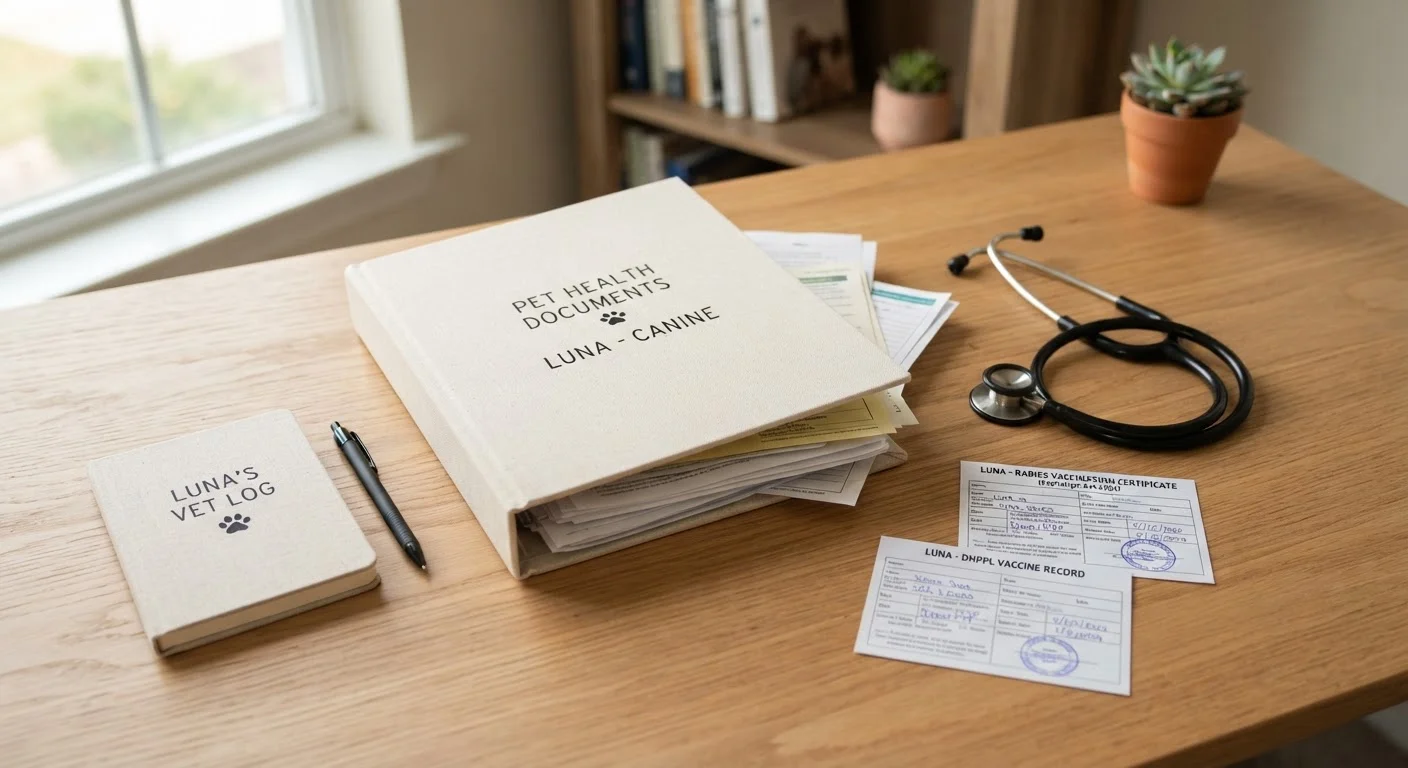
Choosing the right system comes down to what you'll actually maintain. Some families prefer a labeled physical binder kept with pet supplies; others favor a dedicated folder in cloud storage or a pet health app. Either approach works as long as updates happen promptly after every vet visit.
Before your next appointment, review what you already have and identify gaps. Our article on preparing your pet for a vet appointment walks through what to bring along — and having your records in order is one of the most useful things you can do in advance.
Quick Steps You Can Take Today
Even spending 15 minutes gathering scattered documents into one place is meaningful progress. Understanding the complete picture of pet preventive care can help you identify which records are most critical to track. Once your system is set up, maintenance becomes a habit rather than a project.
This article is for general informational purposes only and is not a substitute for professional veterinary advice. Always consult a licensed veterinarian for guidance specific to your pet's health needs.