

Key Takeaways
Summary
22 items · 30–60 minutes
Why This Checklist Exists
The Grand Canyon is one of those places that genuinely deserves its reputation — but it humbles families who show up unprepared. The combination of extreme elevation, unpredictable desert heat, sheer unguarded drop-offs, and limited cell service creates real stakes that a theme park or beach vacation simply doesn't. This checklist is designed to help you walk in confident, not anxious.
Whether you're doing a weekend dash from Las Vegas or folding the canyon into a longer Southwest loop — see our guide on planning a multi-generational Southwest road trip — getting the prep right makes the difference between a trip your kids talk about forever and one you spend recovering from.
Before you even load the car, check your vehicle is road-ready. Our family road trip vehicle safety checklist covers tires, fluids, and emergency gear so you can focus on the canyon once you arrive.
Logistics & Reservations
Vehicle & Drive Preparation
Health, Altitude & Hydration
Trail & Activity Planning
Essential Packing Items
What to Pack — and What to Leave Behind
Packing for the Grand Canyon is its own skill. The canyon microclimate shifts dramatically between the rim and the inner gorge, and between morning and afternoon. Layers are non-negotiable. Kids need sun protection from the moment they step out of the car — the high-altitude sun at 7,000 feet is more intense than most families expect.
Desert Sun at Altitude Hits Harder Than You Expect
At 7,000 feet, UV exposure is significantly more intense than at sea level, and the dry air means sweat evaporates so quickly that kids often don't realize how much they're losing. Reapply sunscreen every two hours, enforce hat use, and offer water on a schedule rather than waiting for thirst — children frequently underreport thirst until dehydration is already a problem.
For a full packing framework, our guide to packing for a family trip without overpacking will help you make smart decisions about what actually earns its place in the bag. If you want a room-by-room departure checklist, the road trip packing checklist for families is a reliable companion.
NPS Grand Canyon App
Provides offline maps, shuttle schedules, trail information, and ranger program details without requiring cell signal.
Reusable insulated water bottles
Keeps water cool in desert heat and reduces single-use plastic waste; refill stations are available throughout the South Rim.
Portable battery pack
Charges phones and devices when no outlets are available at overlooks, trailheads, or during long driving stretches.
Binoculars
Enhances wildlife spotting — especially California condors — from rim viewpoints and keeps kids engaged.
Physical road atlas or downloaded offline maps
Serves as a GPS backup on desert highways and park roads where cell service drops out.
On the Rim: Staying Safe With Kids
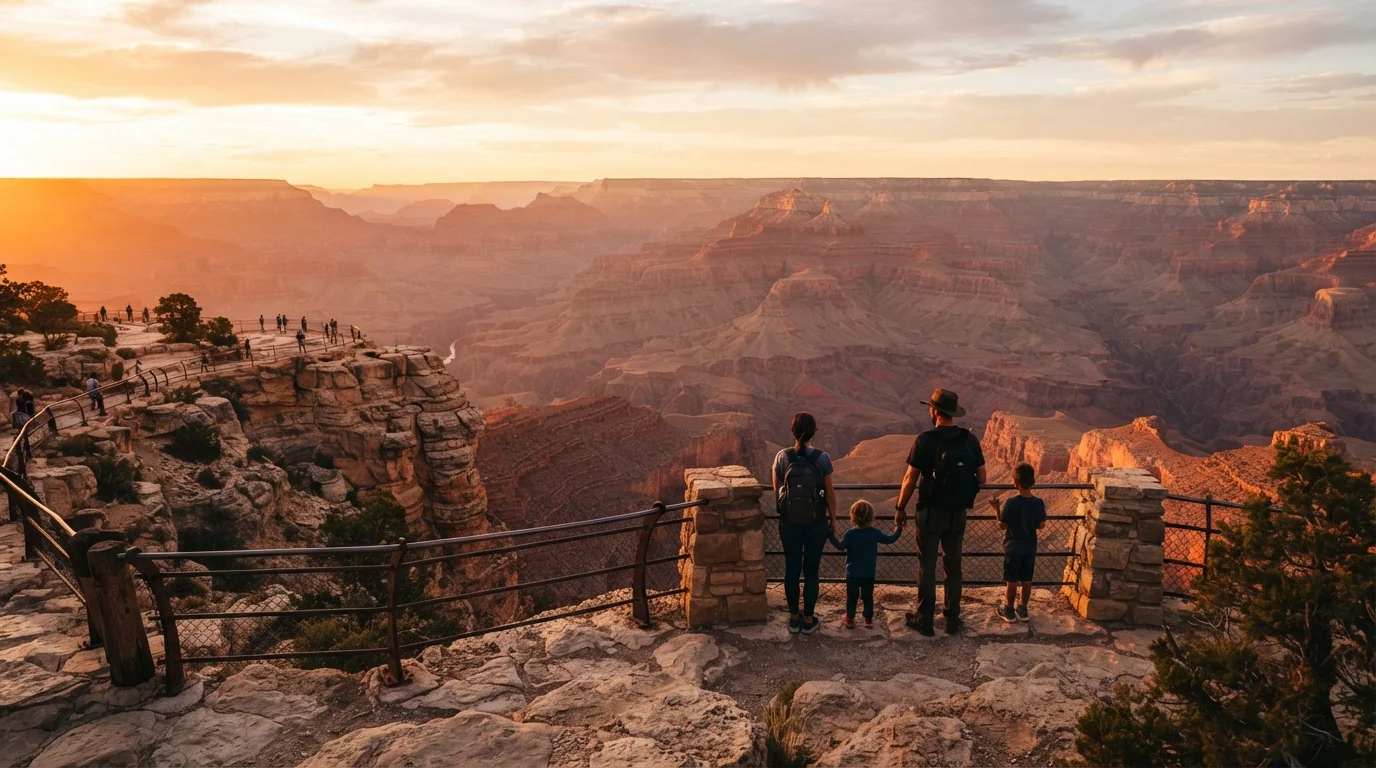
The South Rim has no continuous guardrail system. Some of the most dramatic viewpoints — the ones in every photograph — have low or no barriers between your child and a vertical drop of over a mile. This isn't a reason to skip the canyon; it's a reason to talk with your kids before you arrive about staying behind rocks, walls, and designated markers.
The Canyon Has Real, Unguarded Drop-Offs
The South Rim does not have continuous protective barriers. Many of the most iconic viewpoints involve standing near the edge of sheer vertical cliffs dropping thousands of feet. Establish clear physical boundaries with your children before you exit the vehicle, and actively supervise — not just monitor — every child at every overlook. Tragically, serious falls do occur. This risk is manageable with attentive parenting and advance communication.
The good news: rim-level experiences are genuinely spectacular. The Rim Trail stretches roughly 13 miles and is mostly paved or compacted gravel, making it accessible for strollers and younger children at an easy pace. Mather Point, Yavapai Point, and Desert View are all fantastic stops that don't require descending into the canyon at all.
For families who want to compare the Grand Canyon experience with another iconic national park, our look at Yellowstone with children offers a useful contrast — different hazards, different age sweet spots, same need for advance planning.
More tips for traveling with kids — including how to handle long driving days — are available in our dedicated hub. And for the big-picture planning decisions, our travel planning tips hub covers everything from itinerary structure to managing expectations when kids are in the mix.