

Key Takeaways
Summary
22 items · 30-60 minutes
Why a Pre-Trip Vehicle Check Is Non-Negotiable
Most roadside breakdowns aren't random misfortune - they're the predictable result of skipped maintenance. Tires lose pressure gradually, coolant levels drop, and wiper blades crack without anyone noticing until the moment they're needed most. When your vehicle is loaded with kids, luggage, and snacks for a 400-mile drive, a preventable failure becomes a serious safety event.
This checklist is designed to be completed one to two days before departure, giving you time to address anything that turns up. It pairs well with your full family departure checklist, which covers documents, health prep, and kid essentials alongside these vehicle-specific items.
Run through these checks methodically - ideally in daylight on a level surface - and you'll significantly reduce the chance of your trip being derailed before it begins.
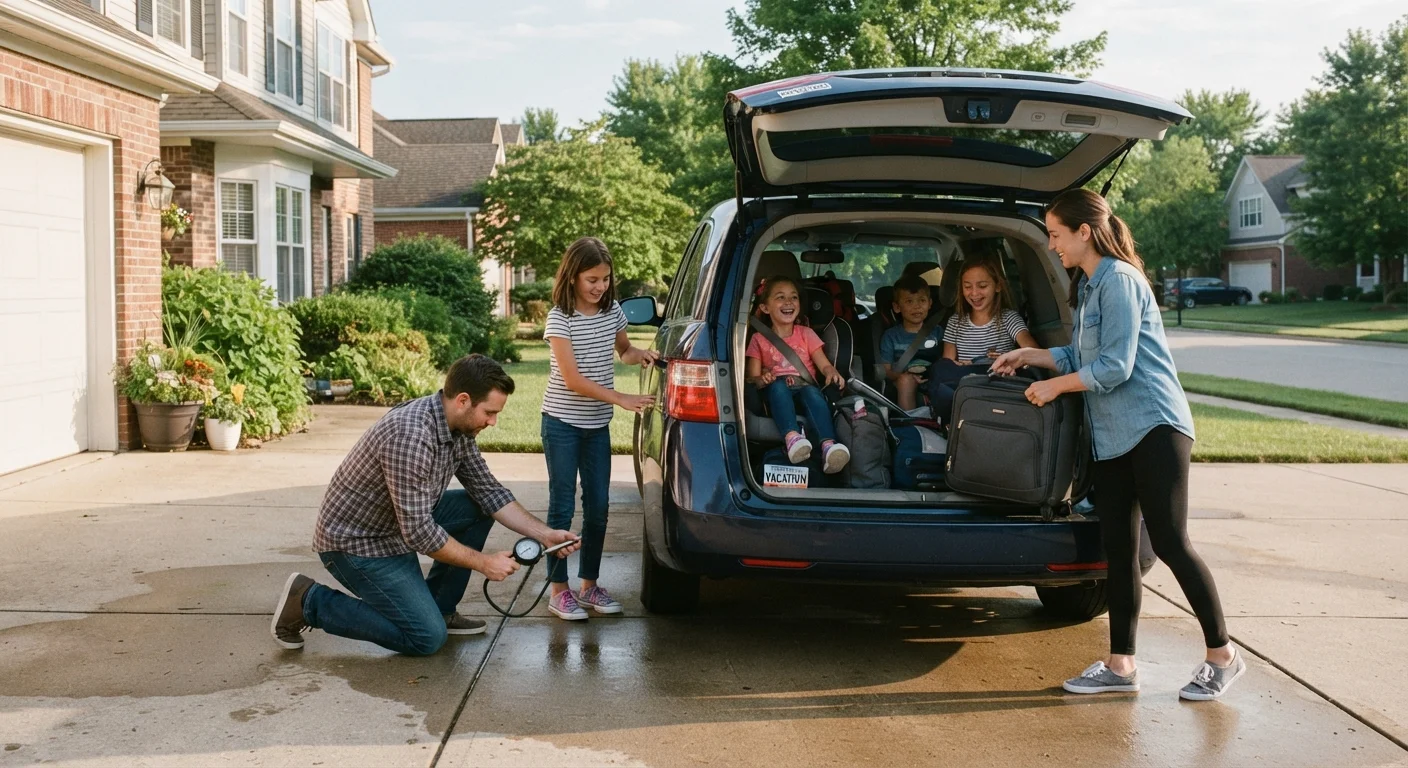
Tire pressure gauge
Measures current tire PSI accurately so you can inflate to the manufacturer's specification.
Penny or tread-depth gauge
Allows a quick visual or measured assessment of remaining tire tread depth.
Flashlight or work light
Illuminates engine bay, tire sidewalls, and underneath the vehicle during inspection.
Battery terminal brush
Removes corrosion from battery terminals to ensure reliable electrical connection.
Jumper cables or jump-start pack
Provides a backup power source if the battery fails to start the vehicle during the trip.
Basic first-aid kit
Addresses minor injuries during the trip until professional care is accessible.
How to Use This Checklist
Work through each group in order. Items marked must are non-negotiable safety checks - do not skip them. Items marked should are strongly recommended for any trip over 100 miles. Items marked nice to have add comfort or redundancy for longer journeys.
If you find a problem during any must item, resolve it before driving. For anything involving brakes, steering, or suspension, have a qualified mechanic inspect the vehicle - these are not DIY items for most drivers. For tire-specific detail, our tire pressure and tread depth checklist goes deeper on monitoring wear and rotation schedules.
Tires
Fluids
Lights and Visibility
Battery and Belts
Brakes and Steering
Emergency Kit
Never Ignore Brake or Steering Symptoms
If your vehicle pulls, shudders, or makes noise when braking during your pre-trip test drive, do not proceed with the journey until a qualified mechanic has inspected the system. Brake and steering failures at highway speed are among the most dangerous mechanical events a driver can face. These are not issues to monitor and hope for the best.
Overloading Affects Tire Pressure and Handling
A fully packed family vehicle - luggage, car seats, passengers - can significantly increase the load on your tires. Check your vehicle's door jamb sticker for the maximum load rating and, where provided, the recommended tire pressure for a loaded vehicle. Overloaded tires run hotter and are more susceptible to blowouts on long highway stretches.
Don't Forget Your Emergency Kit
A vehicle check protects against known risks, but every long drive carries unknowns. A properly stocked emergency kit means you're not stranded helplessly if something does go wrong. Keep it in an accessible spot in the cargo area - not buried under luggage - so any adult in the vehicle can reach it quickly.
Keep Emergency Kit Accessible, Not Buried
An emergency kit under three suitcases and a stroller is nearly useless in a roadside situation. Store it in an accessible location - a dedicated bag near the cargo opening or under a seat - that any adult can reach within seconds. Review the contents before every major trip to replace used or expired items, particularly in first-aid supplies and battery-powered devices.
For families heading to more remote destinations, these preparations matter even more. Our guide on driving to the Grand Canyon with kids illustrates how terrain and distance can amplify the consequences of an unprepared vehicle.
Once you've confirmed the car is ready, shift your attention to the seasonal context of your trip. Seasonal vehicle care covers how summer heat, winter cold, and fall wet roads each create distinct demands on tires, fluids, and batteries - details that can refine which items on this checklist deserve extra attention at different times of year.