

Key Takeaways
Why Indoor Environment Design Matters
Cats are natural hunters, climbers, and explorers. When they live exclusively indoors, the richness of that environment directly shapes their physical health and emotional well-being. A sparse room with only a food bowl and a litter box leaves a cat understimulated — and understimulated cats often develop stress-related behaviors such as over-grooming, aggression, or destructive scratching.
Thoughtful environmental design isn't about buying every product on the shelf. It's about understanding what cats actually need: opportunities to climb, observe, hide, hunt, and scratch. If you're still in the process of deciding whether a cat fits your household, the factors that make a home truly pet-friendly go well beyond space and allergies.
Indoor vs. Outdoor: A Note on Risk
Keeping cats indoors is widely supported by veterinary and animal welfare organizations as a way to reduce risks from traffic, predators, disease, and injury. However, indoor-only life requires owners to compensate for the stimulation cats would otherwise get outside. This article focuses on how to provide that compensation effectively. Individual circumstances — such as a securely fenced yard or a supervised outdoor enclosure — vary, so discuss what's right for your cat with your veterinarian.
Safety First: Removing Hidden Hazards
Before enrichment comes safety. Many common household items are genuinely dangerous to cats and should be addressed proactively.
- Toxic plants: Lilies, pothos, and sago palm are among many plants toxic to cats. Check any greenery against a reliable veterinary plant-toxicity list before placing it in shared spaces.
- Loose cords and strings: Dangling electrical cords and window-blind cords are both chewing and strangulation hazards. Secure or conceal them.
- Small ingestible items: Rubber bands, hair ties, twist ties, and small children's toys can cause intestinal blockages if swallowed.
- Unsecured cabinets: Cleaning products and medications should be behind latched doors; cats are surprisingly capable of nudging open standard cabinet doors.
Doing a thorough room-by-room sweep before your cat settles in prevents emergencies. If you're introducing a cat to a home that already has children, the planning steps for a safe introduction cover additional overlap between child safety and pet safety.
Core Enrichment Practices for Indoor Cats
Once the space is safe, focus on filling it with meaningful opportunities for natural behavior.
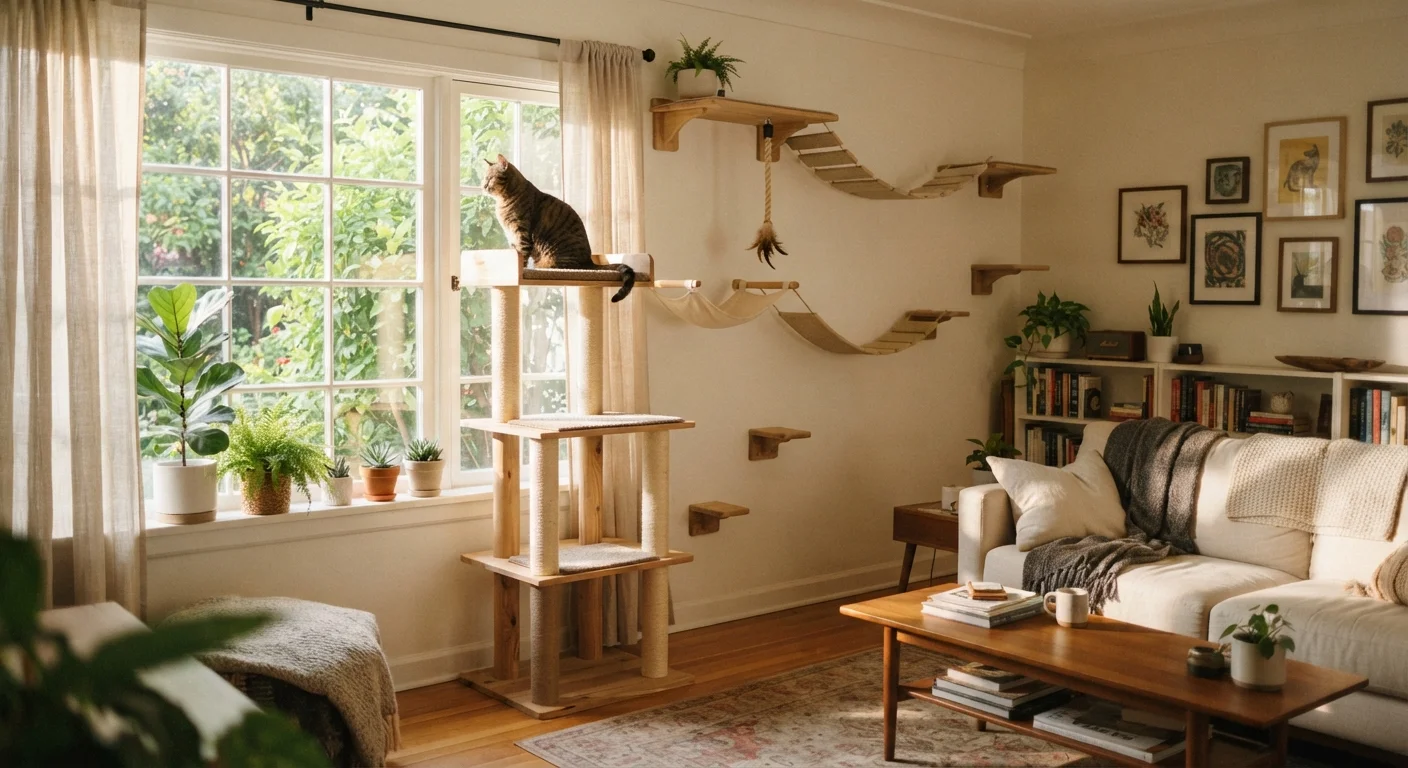
Provide multiple vertical climbing options at different heights
Cats instinctively seek elevated vantage points for security and observation. Vertical space also allows multiple cats — or a cat and other pets — to coexist without constant territorial conflict. Without it, cats may resort to climbing furniture inappropriately.
Install at least one dedicated window perch with an outdoor view
Visual stimulation from watching birds, squirrels, and passing activity engages a cat's predatory instincts without requiring outdoor access. This simple addition meaningfully reduces boredom during hours when owners are away.
Place scratching surfaces in multiple locations — both vertical and horizontal
Scratching is a physical and communicative need, not a behavioral problem. Cats scratch to shed claw sheaths, stretch muscles, and mark territory. Providing appropriate surfaces redirects this behavior away from furniture.
Create at least one enclosed hiding or resting retreat
Cats need spaces where they can withdraw, feel hidden, and decompress — especially in busy households. The ability to hide voluntarily is a strong indicator of a cat's sense of security in its environment.
Rotate toys regularly to maintain novelty and interest
Cats habituate quickly to familiar objects. Rotating a selection of toys in and out of use every few days preserves the novelty effect that drives engagement. This practice costs nothing beyond organization.
Enrichment doesn't require a large home. Vertical space — cat trees, wall-mounted shelves, or cleared bookcase tiers — adds square footage in height rather than footprint. Even apartment dwellers can create a layered, interesting environment.
Building a Daily Routine That Supports Well-Being
Environment isn't only about physical objects — it's also about predictable routines. Cats are creatures of habit, and a consistent daily schedule for feeding, play, and grooming reduces anxiety and reinforces the bond between cat and owner.
Interactive play sessions of 10–15 minutes, ideally twice daily, are especially valuable. Wand toys that mimic prey movement allow cats to complete a natural hunt-catch-kill sequence, which is mentally satisfying. End sessions with a small food reward or meal to mirror the hunt-then-eat rhythm cats are wired for.
For the grooming side of routine care, see our practical guide to at-home cat grooming, which covers brushing, nail trimming, and ear cleaning in straightforward steps.
~90%
of US pet cats kept primarily indoors
Survey data from the American Pet Products Association has consistently found that the large majority of owned cats in the US live primarily or exclusively indoors.
2–3x
longer average lifespan for indoor cats vs. outdoor
Veterinary and shelter medicine literature generally estimates indoor cats live significantly longer on average than cats with outdoor access, largely due to reduced exposure to injury and infectious disease.
This article provides general pet care information for educational purposes and is not a substitute for personalized advice from a licensed veterinarian.