

Key Takeaways
Why At-Home Grooming Matters
Cats are fastidious self-groomers, but they still benefit from regular human assistance. Routine brushing reduces hairballs, prevents painful matting, and gives you an opportunity to notice skin changes, lumps, or parasites early. Nail trimming protects your furniture and prevents nails from curling into the paw pads — a painful condition more common in older or less active cats. Ear checks catch wax buildup or early signs of infection before they escalate.
If you're new to living with cats, the first-time pet owner's guide offers broader context on building routines that support your cat's overall wellbeing. Starting grooming habits early — ideally while your cat is still a kitten — makes the process far smoother for both of you.
What you will need
What You'll Need
Having the right tools ready before you begin prevents interruptions that can unsettle a cat mid-session. Here's what to gather:
Slicker brush or fine-toothed comb
Removes loose fur, tangles, and debris from the coat during brushing.
Pet nail clippers
Designed to cleanly trim cat nails without crushing or splintering.
Styptic powder
Stops minor bleeding quickly if the nail quick is accidentally nicked.
Veterinarian-approved ear-cleaning solution
Loosens wax and debris safely inside the ear canal without irritating tissue.
Cotton balls
Used to gently wipe the outer ear after applying cleaning solution.
Treats
Positive reinforcement to help your cat associate grooming with a pleasant experience.
Always use tools designed specifically for cats. Human nail scissors can crush rather than cut cleanly, and cotton swabs should never be inserted into a cat's ear canal, as they risk pushing debris deeper and damaging delicate tissue.
Step-by-Step Grooming Instructions
Work through each task in a single calm session or spread them across different days — whatever your cat tolerates best. Keep early sessions short (five to ten minutes) and reward cooperation generously.
Brush the Coat
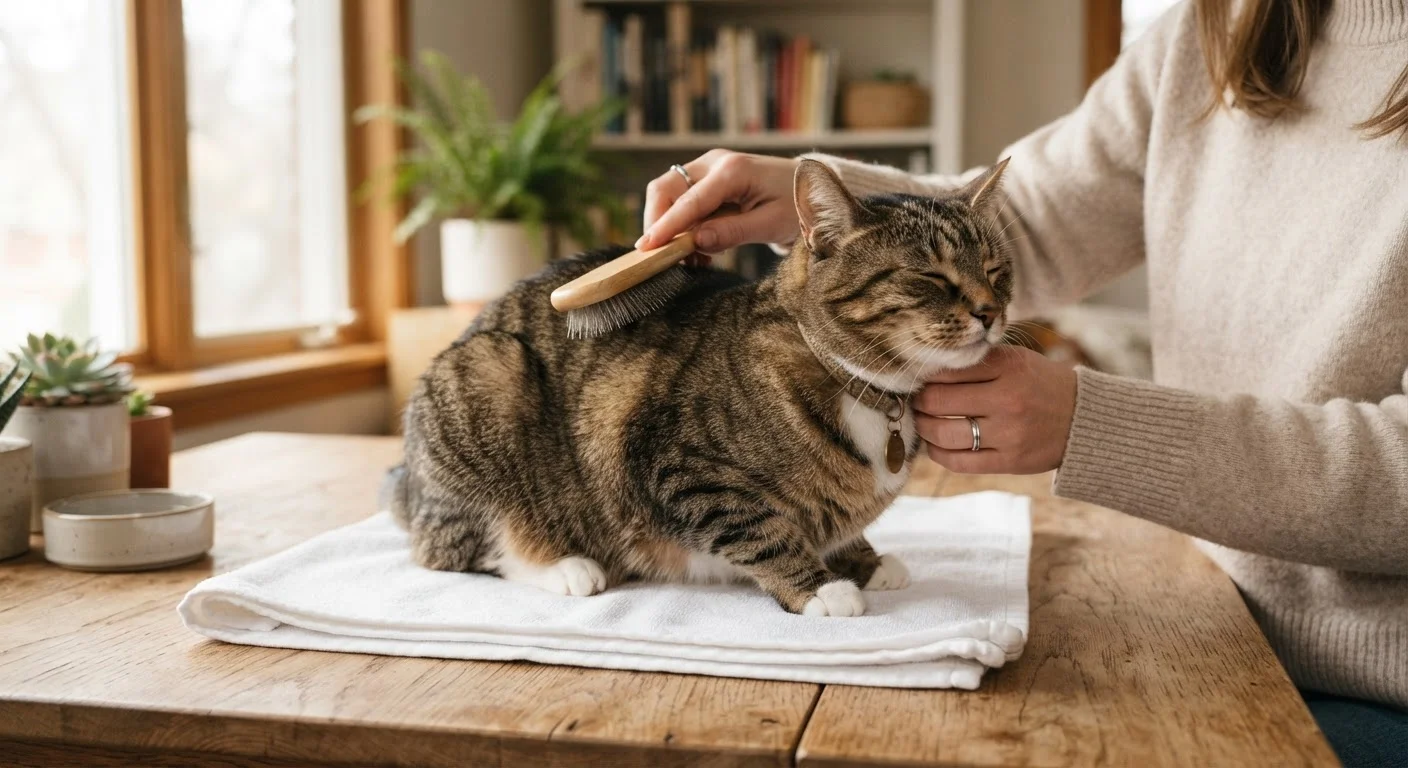
Settle your cat in your lap or on a stable, non-slip surface. Begin brushing in the direction of fur growth using a slicker brush or comb. Work from neck to tail, then gently along the sides and belly if your cat permits. For short-haired cats, once or twice weekly is generally sufficient. Long-haired breeds (such as Maine Coons or Persians) typically need daily brushing to prevent matting.
If you encounter a small tangle, hold the fur at the base close to the skin and work through it with the comb in short strokes — never pull from the tip. Stop if your cat shows signs of stress (twitching tail, flattened ears, vocalizing) and resume after a break.
Trim the Nails
Gently hold one paw and press the toe pad lightly to extend the nail. You will see two distinct zones: a clear or whitish curved tip and a pink section closer to the paw called the quick, which contains blood vessels and nerves. Clip only the clear tip — cutting into the quick causes pain and bleeding.
Trim one or two nails per session if your cat is reluctant, working up to all nails over multiple short sessions. Aim to trim every two to three weeks for most indoor cats.
Clean the Ears
Fold the ear flap back gently to see the outer ear canal. A healthy ear appears pale pink, has minimal wax, and has no odor. If it looks clean, no cleaning is needed — over-cleaning can irritate healthy ears.
When light wax buildup is visible, apply a small amount of veterinarian-recommended ear-cleaning solution to a cotton ball and gently wipe the outer folds and visible surfaces only. Never insert anything into the ear canal. Check ears approximately once a month unless your vet advises otherwise.
Make Grooming a Positive Routine
Pairing each grooming session with a small treat and calm praise helps your cat build a positive association over time. Consistency matters more than duration — short, frequent, pleasant sessions are more effective than infrequent struggles. An enriched home environment also contributes to a calmer cat overall; see our guide on creating a stimulating indoor environment for ideas.
Recognizing When to See a Professional
At-home grooming covers routine maintenance, but several situations call for a veterinarian or professional groomer. Seek professional help if you notice:
- Matted fur that cannot be gently worked free with a comb — mats pulled or cut carelessly can injure skin.
- Nails that have curved into or near the paw pad — these require careful veterinary removal.
- Ear discharge, strong odor, redness, or your cat pawing at their ear — these are signs of infection or ear mites, not a grooming issue.
- Skin lesions, bald patches, or unusual lumps discovered during brushing.
For guidance on coordinating these concerns with routine vet visits, see the first-year vet care roadmap. Older cats may need more frequent grooming checks as mobility decreases — senior pet care considerations covers what to watch for as your cat ages.
Don't Skip the Vet for Health Concerns
At-home grooming is maintenance, not medical care. If you discover anything unusual during a grooming session — persistent scratching, odor, skin changes, or behavioral shifts — consult your veterinarian rather than treating it at home. Early professional assessment leads to better outcomes. You can also review how to prepare your cat for a vet visit so the appointment goes smoothly.