

Key Takeaways
Why the Introduction Phase Matters
The first days a new pet spends in your home shape how it understands its environment and the people in it. For children, early interactions establish habits — good or careless — that tend to stick. Getting this phase right isn't about following a rigid script; it's about managing two sets of needs simultaneously: a child's natural excitement and an animal's need for gradual, low-pressure exposure.
Animals arriving in a new home are already processing a significant amount of sensory and social change. Adding unpredictable, high-energy child behavior on top of that can tip a nervous animal into defensive or fearful responses. That's not the foundation you want. If you're still in the process of selecting the right animal for your household, the Choosing a Pet hub covers what factors families should weigh before bringing an animal home.
What you will need
For families navigating this for the first time, this grounded introduction to first-time pet ownership is worth reading alongside this guide.
Step-by-Step: Making the Introduction Go Smoothly
Prepare your home before the pet arrives
Set up a dedicated space — a crate, pen, or quiet room — where the pet can decompress without child access. Stock it with bedding, water, and any comfort items. Walk children through the house rules: no chasing, no grabbing, no approaching the pet's space without permission. Frame this as a way to help the animal feel safe, not as a punishment for the kids.
Introduce scent before face-to-face contact
Before the first in-person meeting, let the pet explore a piece of clothing worn by each child — and vice versa. Familiar scent reduces novelty stress for the animal. For dogs, this step also helps prevent an overly excited initial greeting that could frighten a young child.
Conduct the first meeting in a calm, controlled setting
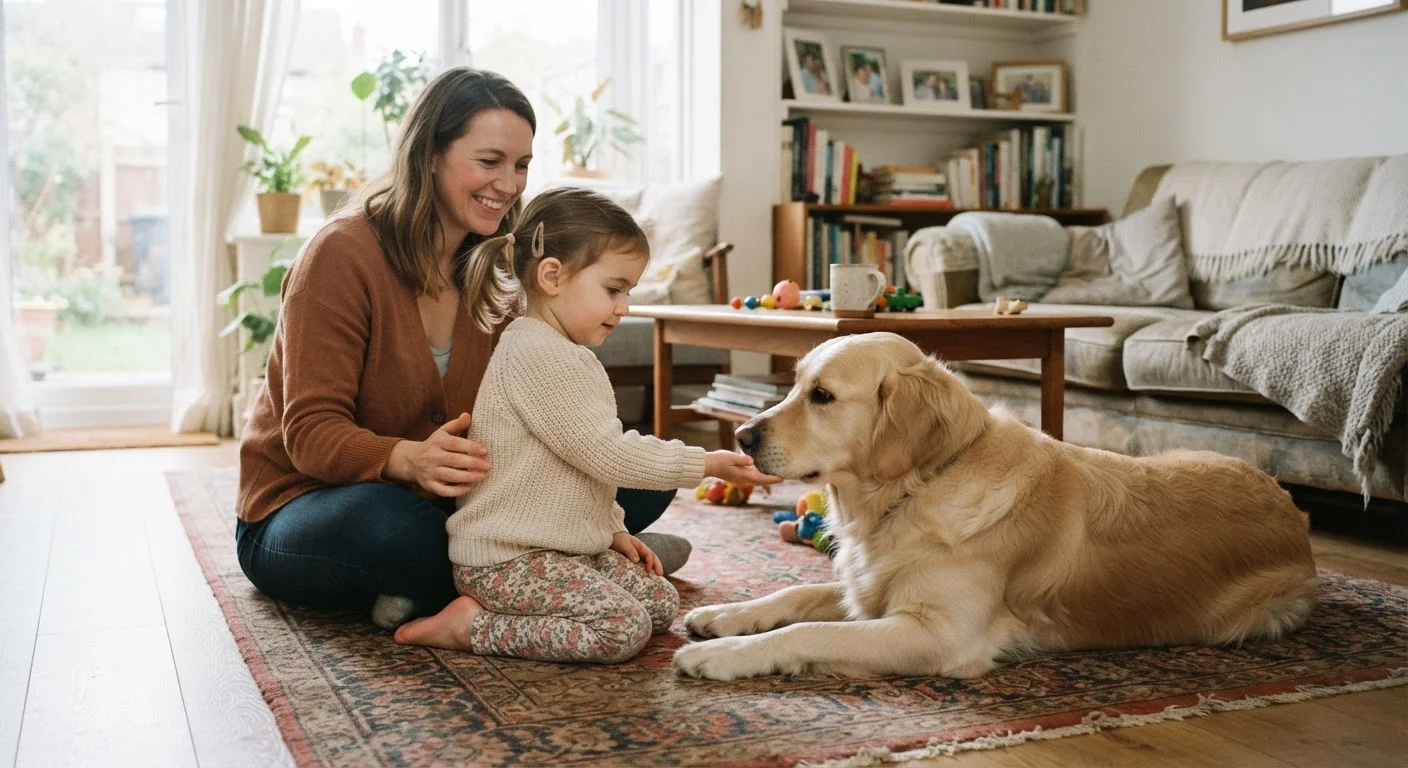
Keep the first session short — five to ten minutes is enough. For dogs, choose a neutral space like the backyard rather than inside the home. Have children sit or crouch rather than stand over the animal. Allow the pet to approach on its own terms; do not push children toward the animal. For cats or small animals, let the pet explore freely while children observe quietly from a short distance.
Teach children to read animal body language
Explain what stress looks like in simple terms: a dog that turns away, lowers its head, or tucks its tail is uncomfortable. A cat that flattens its ears or lashes its tail wants space. Teach children that these signals mean 'stop and give room.' Empowering kids to recognize these cues makes them safer around all animals, not just your own pet.
Build supervised interaction gradually over days and weeks
Increase interaction time incrementally as both the pet and children become more comfortable. Continue supervising all contact until you are confident in how both parties behave. Establish a consistent daily routine for feeding and play — predictability reduces anxiety in most animals. For deeper guidance on managing the full first week, see what to expect in your first week with a new pet.
Consistency Helps Both Sides Adjust
Predictable schedules for feeding, play, and quiet time reduce stress for the animal and help children know what to expect too. Try to involve kids in the routine in small, supervised ways from the start. Over time, this builds trust on both sides of the relationship.
Watch for Signs the Pet Is Overwhelmed
Hiding, refusing food, excessive panting, or attempts to escape contact are signals that the introduction pace may need to slow down. If concerning behaviors persist beyond a few days, consult your veterinarian or a certified animal behaviorist. Never punish an animal for showing stress — doing so can escalate the risk of defensive behavior.
Once the initial introductions are behind you, your focus shifts to building consistent routines. Regular vet visits are part of that foundation — especially in the first year. The first-year vet care roadmap for new pets outlines what appointments and preventive steps to expect. You can also explore the broader Pet Health & Vet hub for guidance on ongoing wellness.
This article provides general educational information about pet introductions. It is not a substitute for guidance from a qualified veterinarian or certified animal behaviorist, particularly if your pet shows signs of fear, aggression, or significant distress.