

Key Takeaways
Summary
18 items · 20-40 minutes
Why Tire Maintenance Is Non-Negotiable for Family Drivers
Tires are the only part of your vehicle that actually touch the road. Every braking decision, every curve taken in rain, every highway mile depends on four contact patches roughly the size of your palm. Neglecting tire pressure, tread depth, or rotation patterns doesn't just shorten tire life - it directly compromises how your vehicle handles in an emergency.
The good news: a disciplined routine costs almost nothing and takes less time than a coffee stop. This checklist is designed to walk you through the three pillars of tire maintenance - pressure, tread, and rotation - so you can catch problems early, wear tires evenly, and avoid the far higher cost of premature replacement or a roadside blowout.
For broader vehicle readiness, see the Complete Family Car Maintenance Playbook, which places tire care in context with every other aspect of keeping your vehicle safe and cost-efficient.
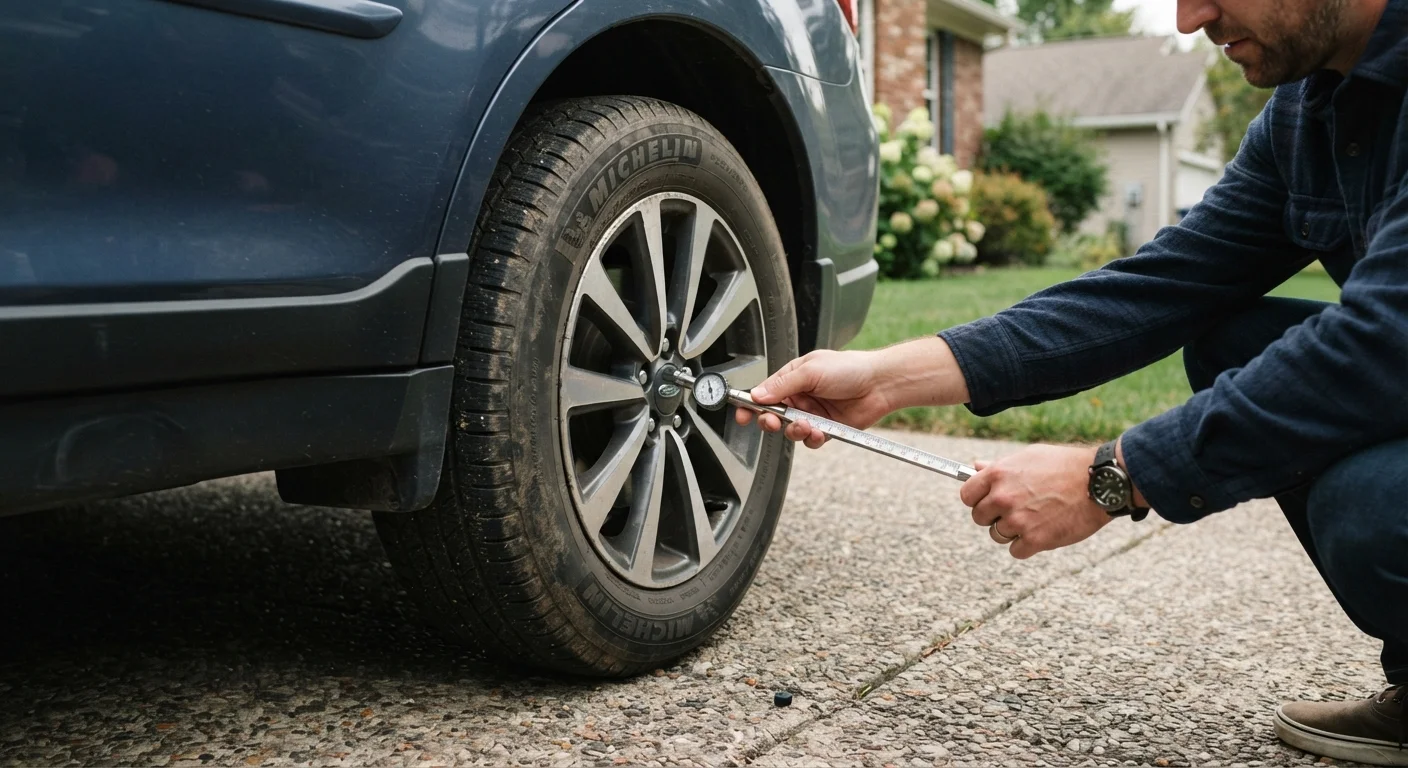
Digital or Dial Tire Pressure Gauge
Measures actual tire pressure accurately; more reliable than the gauges built into gas station air hoses.
Penny and Quarter (coins)
Used for the standard tread depth test - a quick, no-cost way to assess whether tires are approaching replacement threshold.
Tread Depth Gauge
Provides a precise numeric reading of tread depth in 32nds of an inch, more accurate than the coin method for ongoing tracking.
Vehicle Owner's Manual
Contains manufacturer-specified tire pressure, rotation interval, and rotation pattern recommendations specific to your vehicle.
Portable Tire Inflator
Allows you to top up pressure at home without driving to a gas station, making monthly checks faster and more consistent.
How to Use This Checklist
Work through each group in order. The Monthly Checks group should become a standing habit - link it to a recurring calendar reminder or tie it to your monthly fuel fill-up. The Tread Inspection items can run alongside pressure checks. The Rotation and Service group applies at every oil change interval or roughly every 5,000-7,500 miles, depending on your driving pattern and manufacturer guidance.
If your vehicle displays a TPMS (Tire Pressure Monitoring System) light, address it promptly - but understand that TPMS only activates after a significant pressure drop. Manual monthly checks catch gradual losses before the system alerts you. For a full explanation of what dashboard warning lights mean and which require urgent attention, see our guide on reading dashboard warning lights.
Don't Rely Solely on Your TPMS Light
Most TPMS systems only trigger an alert when a tire is 25% below the recommended pressure - by that point, handling and fuel economy are already affected. Manual monthly checks with a gauge catch gradual pressure loss long before the warning light activates. Think of TPMS as a safety backstop, not a substitute for regular inspection.
Monthly Pressure Checks
Tread Depth Inspection
Visual and Physical Inspection
Rotation and Service Intervals
Putting It All Together
Consistent tire maintenance pays off in three concrete ways: safer handling (especially in wet or wintry conditions), better fuel economy from properly inflated tires, and a longer service life that delays the significant expense of a full set of replacements. Tires that are rotated regularly and kept at correct pressure can last thousands of miles longer than neglected ones.
Pair this checklist with your seasonal car care routine - tire needs shift with temperature, since cold air causes pressure to drop roughly 1 PSI for every 10°F decrease. Before any long family trip, run through the pressure and tread items here alongside the full pre-road-trip safety check. And if you're a newer driver still building confidence in vehicle upkeep, the car maintenance guide for new owners is a strong companion resource.
Bald or Damaged Tires Are a Safety Emergency
A tire at or below 2/32-inch tread depth has severely reduced wet-road traction and is considered legally unsafe in most US states. Sidewall bulges and internal damage cannot be repaired - driving on a structurally compromised tire risks a sudden blowout at speed. If you identify either condition, have the vehicle inspected by a qualified tire technician before driving it further on public roads.