

| Warning light tiers | Red (urgent), Amber (service soon), Green/Blue (informational) |
| OBD-II standard applies to | All US vehicles manufactured after 1996 (US EPA requirement) |
| TPMS required since | 2008 (all new US passenger vehicles) (NHTSA TPMS rule) |
| Flashing check-engine light | Indicates active misfire - stop driving promptly |
| Free OBD-II scans | Available at many auto parts retailers at no charge |
Why Warning Lights Deserve Immediate Attention
Modern vehicles monitor dozens of systems simultaneously, and dashboard warning lights are the primary way your car communicates problems. Ignoring them is one of the most common - and expensive - mistakes drivers make. A light that seems minor today can signal cascading damage if left unaddressed.
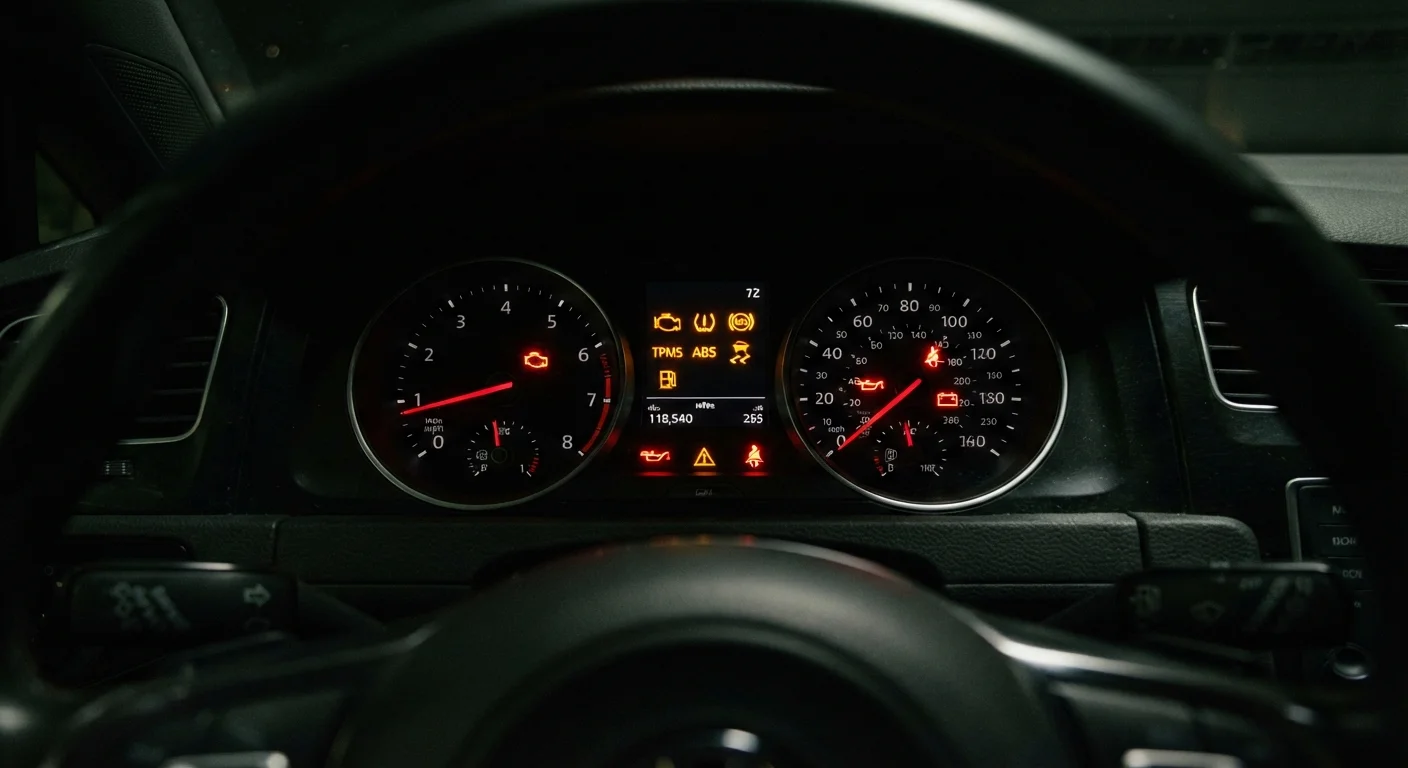
Warning lights generally fall into three urgency tiers: red (stop driving as soon as safely possible), amber/yellow (service needed soon), and green or blue (informational, systems active). Understanding this color logic alone helps you prioritize correctly.
For first-time owners especially, knowing these basics is foundational. Our car maintenance guide for new owners covers the broader context of keeping your vehicle healthy from day one.
| Warning light tiers | Red (urgent), Amber (service soon), Green/Blue (informational) |
| OBD-II standard applies to | All US vehicles manufactured after 1996 (US EPA requirement) |
| TPMS required since | 2008 (all new US passenger vehicles) (NHTSA TPMS rule) |
| Flashing check-engine light | Indicates active misfire - stop driving promptly |
| Free OBD-II scans | Available at many auto parts retailers at no charge |
The Most Common Warning Lights Decoded
Here is a plain-language breakdown of the lights most drivers encounter:
- Check Engine (MIL): The most misunderstood light on any dashboard. A steady amber light can mean anything from a loose gas cap to a failing oxygen sensor. A flashing check-engine light, however, signals active misfires that can damage your catalytic converter - pull over and get it diagnosed promptly.
- Oil Pressure: A red oil can symbol means dangerously low oil pressure. Do not continue driving. Engine components can seize within minutes without adequate lubrication. Check your oil level immediately and seek professional service.
- Battery / Charging System: This amber or red battery icon means the charging system isn't maintaining voltage - often a failing alternator or a battery nearing the end of its life. You may have limited driving time before the car shuts down. See signs your battery is failing to understand the early indicators.
- Temperature Warning: A red thermometer means your engine is overheating. Pull over immediately. Continuing to drive risks warping the cylinder head - a repair that can cost thousands of dollars.
- TPMS (Tire Pressure Monitoring System): An amber horseshoe with an exclamation mark means one or more tires is significantly under-inflated. Underinflated tires reduce fuel economy, handling, and tire lifespan. See our tire pressure and tread depth checklist for a complete monitoring routine.
- Brake System Warning: If this red light appears with the parking brake released, have your brake fluid level and brake system inspected immediately. Braking performance may be compromised. Learn how your braking system works to understand the stakes.
- ABS Warning: Your standard brakes still function, but the anti-lock braking system is offline. In emergency stops, wheels may lock. Schedule service promptly.
- Traction Control / Stability Control: A flashing icon during slippery conditions is normal - the system is working. A steady light means the system is disabled, reducing your car's ability to manage skids.
Warning Lights on a Used Car Purchase
If a warning light is illuminated on a vehicle you're considering buying, treat it as a red flag requiring explanation before purchase. A seller clearing codes just before a test drive is a known practice. Pairing a pre-purchase inspection with a vehicle history report review gives you a much clearer picture of the car's true condition.
Before a long drive, a quick dashboard scan takes seconds. Our pre-road-trip safety checklist makes this habit straightforward for the whole family.
What to Do When a Light Comes On
The appropriate response depends on the light's color and behavior:
- Red lights: Treat as urgent. Pull over safely when you see a red oil or temperature warning. Do not dismiss red lights hoping they'll resolve themselves.
- Amber lights: Don't ignore, but you typically have time to schedule a service appointment within a few days. Document when the light appeared and any symptoms (sounds, smells, handling changes).
- Get it scanned: Most auto parts retailers offer free OBD-II diagnostic scans that read the fault codes behind a check-engine light. This tells you the system that triggered the alert, though a mechanic should interpret whether it requires immediate repair.
- Don't reset without repairing: Clearing a fault code without fixing the underlying cause only delays the diagnosis - the light will return, often with additional damage.
OBD-II
On-Board Diagnostics II - a standardized system in all US vehicles built after 1996 that monitors engine and emissions performance and stores diagnostic fault codes readable by a scanner.
MIL (Malfunction Indicator Lamp)
The official name for the check-engine light. It illuminates when the vehicle's engine control module detects a fault that affects emissions or engine performance.
TPMS
Tire Pressure Monitoring System - a sensor-based system that alerts the driver when tire pressure drops significantly below the recommended level, required on all US vehicles since 2008.
Fault Code (DTC)
A Diagnostic Trouble Code stored by the vehicle's computer when a sensor reading falls outside acceptable parameters. Codes help mechanics identify which system is malfunctioning.
ABS
Anti-lock Braking System - a safety feature that prevents wheels from locking during hard braking, helping the driver maintain steering control in emergency stops.
Catalytic Converter
An emissions control device in the exhaust system that converts harmful combustion byproducts into less harmful gases. Engine misfires can overheat and permanently damage it.
Keeping a record of warning lights - including when they appeared and any accompanying symptoms - helps your mechanic diagnose faster and more accurately, potentially reducing labor costs.