

Key Takeaways
Hydraulic Disc Brake System
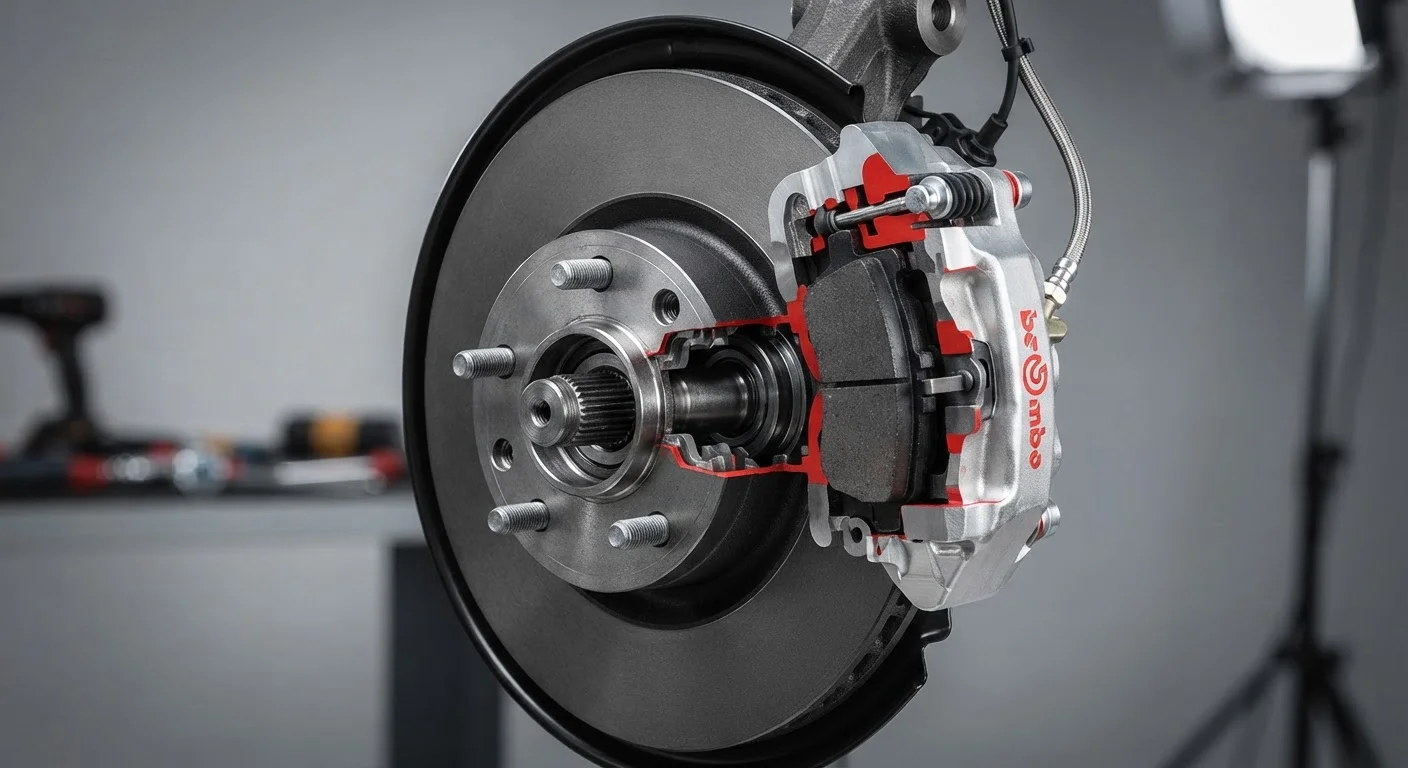
Your car's braking system converts the force of your foot pressing the pedal into friction that slows the wheels. It does this using pressurized fluid, mechanical clamps called calipers, and replaceable friction pads that press against metal discs (rotors) attached to each wheel. Most modern passenger vehicles use disc brakes on all four wheels.
Brake fluid is a glycol-ether compound that transfers hydraulic pressure through the brake lines; its hygroscopic nature - meaning it absorbs moisture from the air over time - is why periodic replacement matters even if you haven't driven many miles.
The Three Components Working Together
Every time you press the brake pedal, three separate components act in concert to bring your vehicle to a stop. Understanding what each one does makes it far easier to recognize when something is wrong.
Brake pads are friction material bonded to a metal backing plate. When you press the pedal, the caliper - a hydraulically actuated clamp - squeezes the pads against either side of the spinning rotor. That friction converts kinetic energy into heat, slowing the wheel.
Rotors (also called brake discs) are the large metal discs you can often see through the wheel spokes. They spin with the wheel and provide the surface the pads grip. Rotors are engineered to dissipate heat quickly; vented rotors have internal channels that draw heat away from the braking surface.
Brake fluid is the hydraulic medium that connects your foot to the calipers. When you press the pedal, the master cylinder pressurizes fluid through the brake lines to each wheel, pushing the caliper pistons outward and engaging the pads. Without clean, uncontaminated fluid at the correct pressure, the entire system loses effectiveness.
For a broader look at how this fits into your vehicle's overall fluid maintenance, see our guide to essential car fluids.
30K-70K
Typical brake pad lifespan in miles
Actual wear varies significantly by driving style, vehicle weight, pad compound, and whether driving is primarily urban or highway.
2-3 years
Recommended brake fluid replacement interval
Many manufacturers specify time-based fluid replacement regardless of mileage due to moisture absorption that degrades fluid performance.
~3×
Cost multiplier when rotors are damaged by worn pads
Industry repair data consistently shows that pad-plus-rotor replacements cost substantially more than pad-only service performed at the right interval.
Warning Signs You Shouldn't Ignore
Your braking system gives you clear signals before it fails - the problem is that many drivers don't know what to listen or feel for.
- Squealing or squeaking: Most brake pads include a small metal wear indicator that contacts the rotor when the pad is nearly worn out. That high-pitched squeal is intentional - it's your warning to schedule service.
- Grinding noise: A grinding or metal-on-metal sound typically means the pad material is gone and the backing plate is contacting the rotor. At this stage, the rotor is likely being damaged with every stop.
- Vibration or pulsing through the pedal: This usually indicates warped rotors. The uneven surface causes the caliper to pulse in and out as the rotor spins, which you feel as a rhythmic shudder when braking.
- Pulling to one side: If the vehicle drifts left or right under braking, one caliper may be sticking, or pad wear may be uneven across the axle.
- Soft or spongy pedal: A pedal that sinks further than normal, or feels mushy, often signals air or moisture in the brake lines - or a leak in the system.
Any of these symptoms warrants a prompt inspection by a qualified mechanic. Brakes are not a maintenance item to monitor from the sidelines. Understanding how stopping distances change when braking performance degrades is covered in detail in the science behind stopping distances.
Schedule Brake Inspections Proactively
You don't need to wait for a warning sign to have your brakes checked. Ask your mechanic to inspect pad thickness and rotor condition at every oil change or tire rotation. This takes only a few minutes and lets you plan for service before it becomes urgent - and before noise or damage develops.
Service Intervals and What to Expect
There are no universal mileage figures that apply to every vehicle, but general ranges give you a useful starting framework.
Brake pads typically last 30,000 to 70,000 miles. Aggressive drivers, those who tow, and city commuters will see the lower end of that range. Highway drivers and those who practice smooth, gradual braking tend to get more life from their pads.
Rotors often outlast a set or two of pads, but they should be measured at each pad replacement. A rotor worn below its minimum thickness specification must be replaced - not resurfaced. Many mechanics recommend replacing pads and rotors together to ensure even contact and predictable performance.
Brake fluid is frequently overlooked. Most manufacturers recommend a change every two to three years, not solely based on mileage. Because the fluid is hygroscopic - meaning it absorbs moisture from the air - older fluid has a lower boiling point and can cause pedal fade during hard or prolonged braking. Your owner's manual will list the recommended interval and fluid specification.
To put brake service in context with your full maintenance schedule, see your car's maintenance schedule explained. First-time owners will also find the overview at car maintenance for new drivers a helpful companion read.
Why Deferred Brake Maintenance Costs More
Brake service has a compounding cost structure: catching wear early is almost always cheaper than waiting. A worn pad replaced at the right time is a straightforward job. A worn pad left in place damages the rotor, turning a pad-only replacement into a pad-and-rotor job - often two to three times the cost.
Beyond repair bills, deteriorated braking performance has real safety consequences. A system operating at reduced efficiency increases stopping distances - a particularly serious concern in emergency situations or adverse weather. The relationship between vehicle condition and stopping distance is something every driver benefits from understanding.
Brake work generally requires a qualified mechanic with the right tools and familiarity with your vehicle's system. Some maintenance tasks are suitable for confident DIYers, but brake repairs involve safety-critical hydraulic systems, torque specifications, and bedding-in procedures that leave little room for error. Have the system inspected by a professional if you have any doubt about its current condition.
Brake Work Is Safety-Critical
Unlike some maintenance tasks that a confident owner can handle at home, brake system work involves hydraulic components, precise torque requirements, and a required break-in procedure for new pads and rotors. Mistakes can compromise stopping ability. Have brake repairs performed by a qualified mechanic, and verify the work includes a test drive before returning the vehicle to regular use.