

Key Takeaways
Why Battery Warnings Deserve Attention
A dead battery is among the most common reasons drivers call for roadside assistance - and in most cases, the battery gave fair warning before it quit entirely. The challenge is knowing which symptoms to take seriously and which are normal vehicle behavior.
Car batteries don't operate in isolation. They power your starter motor, feed the electrical system when the engine is off, and stabilize voltage across the whole vehicle. When a battery starts to weaken, the effects ripple through multiple systems at once - making the warning signs easy to misread or dismiss as unrelated issues.
Understanding what a failing battery actually looks and sounds like is practical, money-saving knowledge for any driver. It fits squarely into the kind of routine awareness covered in our car maintenance schedule guide. Below are the most telling signs that your battery may be on its way out.
Slow or labored engine cranking
When you turn the key or press the start button, the starter motor draws a large burst of current from the battery. If that current delivery is sluggish, you'll hear the engine turn over more slowly than usual - a low, grinding or drawn-out sound before the engine catches. This is often the first and most reliable sign that battery capacity is declining. Don't confuse it with a cold-weather startup, which can also produce slower cranking, but should still resolve quickly on a healthy battery.
A slow, labored crank is often the first reliable signal of a battery losing capacity.
Dim or flickering headlights
Your headlights run directly off the electrical system. When the battery can't maintain stable voltage - particularly at idle, when the alternator's contribution is lowest - lights may appear noticeably dimmer than usual or flicker when other electrical loads (like the blower motor or rear defroster) are active. If your lights seem brighter when you rev the engine, that's a strong indicator the battery isn't holding its charge adequately between charging cycles.
Headlights that brighten when you rev the engine point to a battery struggling to hold charge.
Needing jump-starts more than once
A single jump-start after accidentally leaving lights on overnight is not unusual. But if you've needed more than one jump-start within a few weeks - without an obvious explanation like a door left ajar - the battery is likely no longer holding a sufficient charge. Repeated jump-starting is also hard on the battery itself, accelerating its deterioration and potentially affecting the alternator over time.
Repeated jump-starts with no obvious cause are a clear signal the battery has lost reliable capacity.
Electrical gremlins and erratic behavior
Modern vehicles are loaded with electronics, and all of them depend on stable voltage from the battery. A weakening battery can cause seemingly unrelated glitches: power windows moving sluggishly, the radio resetting, seat memory settings clearing, or interior lights dimming when you engage large electrical loads. These symptoms are easy to dismiss as software bugs, but if they appear together or alongside other battery warning signs, the battery is a logical first thing to investigate.
Unexplained electrical glitches across multiple systems often trace back to an unstable battery.
Visible corrosion or a bloated case
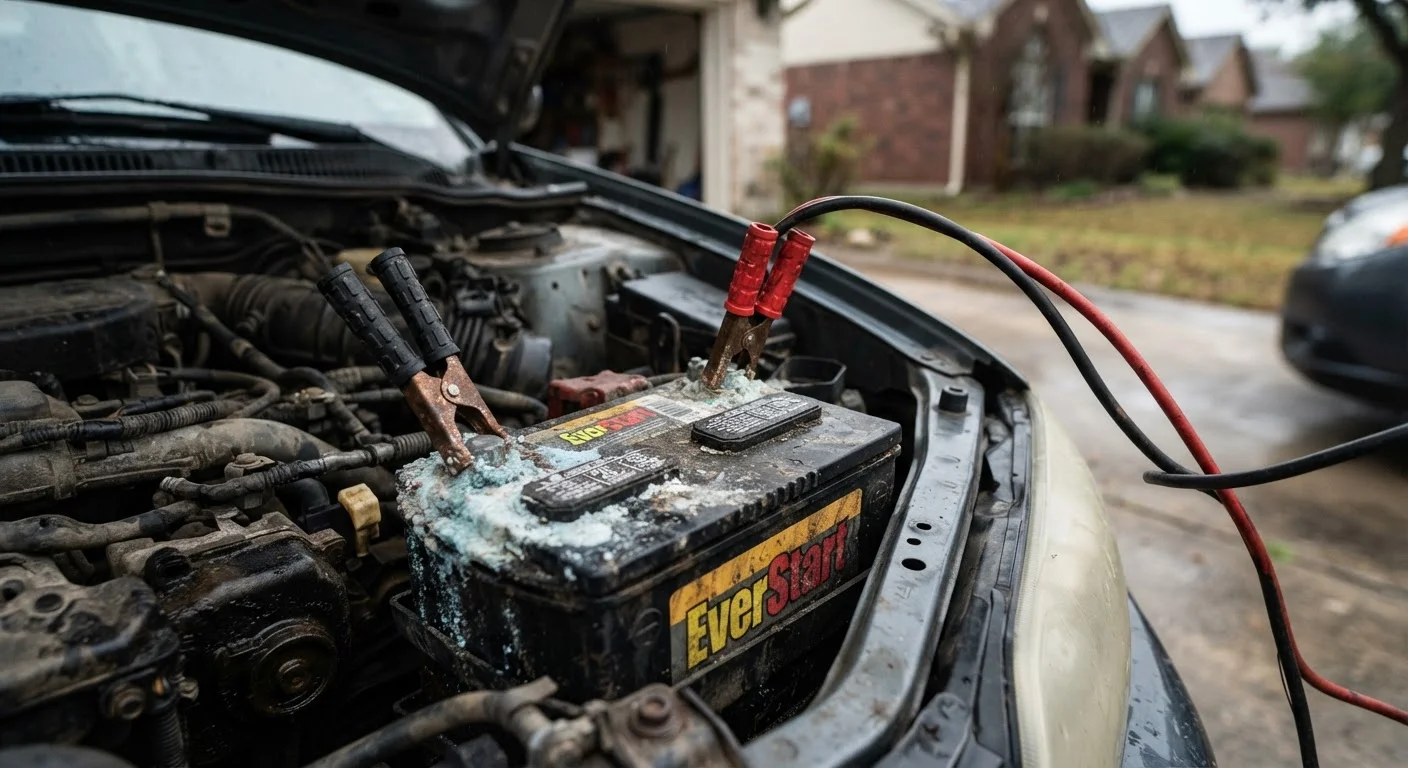
A visual inspection of the battery can reveal important clues. White or blue-green powdery buildup around the terminals indicates corrosion, which increases electrical resistance and reduces the battery's ability to deliver current efficiently. A bloated or swollen battery case - caused by excessive heat exposure - signals that the battery's internal chemistry has been compromised and the battery should be replaced promptly. Always have a qualified mechanic handle battery removal and replacement, as batteries contain sulfuric acid and produce hydrogen gas.
Swollen battery cases and heavy terminal corrosion are physical signs replacement is overdue.
The battery is more than three to five years old
Age is one of the most dependable predictors of battery failure. Most automotive batteries have a practical service life of three to five years, depending on climate, driving habits, and how often the vehicle is used. Hot climates are especially hard on batteries, accelerating the chemical degradation inside the cells. If your battery is approaching or beyond this window, testing it annually - regardless of symptoms - is a sensible part of routine maintenance.
A battery over four years old deserves annual testing, even if no obvious symptoms have appeared yet.
What to Do When You Spot the Signs
If two or more of the warning signs above apply to your vehicle - especially if the battery is three or more years old - have it load-tested by a qualified mechanic or at a reputable auto repair shop. A load test measures how well the battery holds voltage under real-world demand, which is far more informative than a simple voltage reading with the engine off.
Get a Load Test, Not Just a Voltage Check
A basic voltmeter reading with the engine off only tells you the battery has surface charge - it won't reveal how the battery performs under the demands of starting and driving. Ask for a load test or conductance test instead. Many repair shops offer this test at low or no cost, and the results are far more actionable for deciding whether replacement is warranted.
Battery issues can sometimes overlap with alternator problems, so a thorough electrical system check is worthwhile if your symptoms have been persistent. For first-time owners who aren't sure what to look for, our guide for new drivers walks through the basics of keeping your vehicle reliable. And before any long trip, make battery condition part of your pre-departure routine - something our road trip safety checklist covers in full.
Replacing a battery proactively - before it strands you - is almost always less disruptive and less expensive than an emergency situation. If you're unsure whether warning lights on your dash are related, understanding those warning signals is a useful next step.