

Key Takeaways
Why the Southwest Works Exceptionally Well for Multigenerational Travel
Few regions in the United States pack as much visual drama into such a manageable geographic footprint as the American Southwest. The combination of iconic national parks, accessible paved viewpoints, varied terrain, and year-round (if seasonal) accessibility makes it genuinely suitable for groups that span 60-plus years in age range.
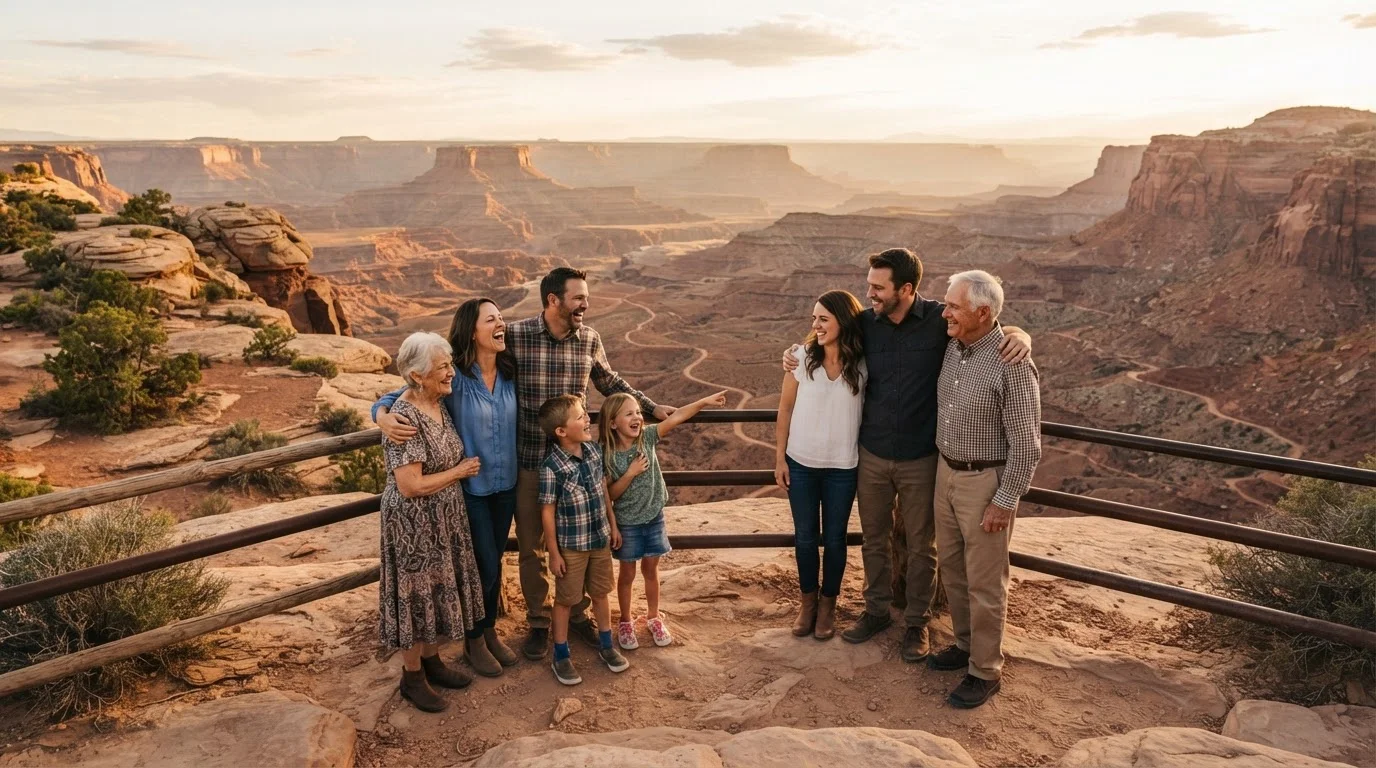
Grandparents can watch the Colorado River carve the canyon from a paved rim overlook while teenagers scramble down the first stretch of a rim trail and toddlers collect pinecones. That parallel-play quality — everyone engaged, nobody bored, nobody excluded — is rare and worth planning around. See our traveling with kids hub for broader strategies on keeping mixed-age groups happy on the road.
The Southwest also rewards slow travel. Driving between Sedona and the Grand Canyon or between Zion and Bryce Canyon is itself part of the experience. That built-in pace naturally limits the daily mileage pressure that makes road trips grueling, and it gives everyone in the vehicle time to talk, nap, and decompress between big stops.
Let Every Generation Lead One Activity
Assign each generation — grandparents, parents, kids — one half-day activity they get to choose and lead for the group. This simple structure creates ownership, reduces complaints, and often produces the trip's most memorable moments. Even a five-year-old leading a rock-collecting walk becomes a family story.
What You'll Need Before You Hit the Road
Preparation is the single biggest differentiator between a multigenerational trip that becomes a cherished tradition and one that everyone agrees never to repeat. The good news: most of the logistical work happens before you leave, which means the trip itself can actually feel relaxed.
What you will need
Beyond the basics, take time to research each destination's accessibility features and current conditions through official sources. Park websites, the National Park Service app, and state tourism offices publish current information on trail closures, permit requirements, and seasonal advisories.
America the Beautiful Annual Pass
Covers entrance fees at national parks and federal recreation lands — a strong value for groups making multiple stops.
Paper or digital road atlas
Provides reliable navigation in remote Southwest corridors where cell service is limited or absent.
Portable cooler
Keeps medications, snacks, and drinks accessible without requiring frequent restaurant stops.
Foldable camp chairs or lightweight beach chairs
Gives grandparents and tired toddlers a comfortable resting spot at overlooks and picnic areas.
First-aid kit with prescription medication list
Ensures you can address minor injuries and document medications for every traveler in the group.
Satellite communicator or personal locator beacon
Provides emergency contact capability in remote desert areas where cell coverage is unavailable.
For the broader question of whether a road trip is even the right format for your family's specific mix of ages and needs, road trip vs. flying with kids lays out the honest trade-offs worth considering before you commit.
Verify Entry Permits and Reservations Early
Several Southwest parks and sites — including Zion's shuttle system, Arches National Park, and popular Grand Canyon rim areas — require timed-entry permits or advance reservations that sell out weeks or months ahead. Check the official National Park Service website for each destination's current entry requirements before finalizing your dates. Showing up without a required permit can mean turning away after a long drive.
Step-by-Step: Planning Your Multigenerational Southwest Road Trip
Follow these steps in order. Each builds on the last, and skipping ahead — particularly booking lodging before you've agreed on a daily driving limit — is the most common planning mistake multigenerational groups make.
Hold a multigenerational planning meeting
Before booking a single room, gather everyone — grandparents, parents, and older kids — for a conversation about expectations. Ask each person to name one destination they genuinely want to visit and one activity they want to avoid. This surfaces deal-breakers early and ensures the trip doesn't feel like one generation's agenda imposed on everyone else.
Discuss daily driving limits honestly. Many older adults and young children do best with no more than 3–4 hours of driving per day. Lock in that parameter before you build the route. For a fuller framework on age-appropriate pacing, see building a family itinerary that survives contact with kids.
Choose destinations with universal access in mind
The Southwest's greatest hits — Grand Canyon South Rim, Sedona, Zion National Park, Monument Valley, and Santa Fe — all offer paved viewpoints, shuttle systems, and ranger-led programs that work across mobility levels. Prioritize stops where grandparents can enjoy the scenery without strenuous hiking, while kids have room to explore safely.
Check the National Park Service accessibility page for each destination before you finalize the itinerary. Many parks offer accessibility guides listing paved trails, accessible restrooms, and shuttle stops. Before heading to the canyon, read this pre-trip checklist for the Grand Canyon with kids — altitude and rim safety deserve advance preparation.
Design a route with realistic daily segments
Map your route in segments of 150–250 miles per day maximum, and place meaningful stops — not just gas stations — every 90 minutes. In the Southwest, this is easy: the scenery between destinations is often as compelling as the destinations themselves. Plan at least two full rest days within a 10-day trip where no significant driving happens.
Factor in elevation changes. Routes through northern Arizona and southern Utah regularly climb above 7,000 feet, which can cause fatigue or altitude sickness, particularly in young children and older adults. Descend gradually when possible and watch for symptoms like headaches or unusual tiredness.
Coordinate medical and mobility logistics before departure
Ask each traveler — particularly grandparents — to bring a written list of current medications, known allergies, and their primary care provider's contact information. Identify the nearest urgent care clinic or hospital at each overnight stop along your route so you're not searching in a stressful moment.
If any grandparent uses a cane, walker, or wheelchair, call ahead to confirm room accessibility at each accommodation. Confirm that vehicle seating provides easy entry and exit. If traveling with infants or toddlers, verify that car seats are correctly installed before the trip — not on departure morning. For a comprehensive packing approach that accounts for varied needs, packing for a family trip without overpacking is worth a read.
Build in daily structure with built-in flexibility
A loose daily rhythm — early start, midday rest during peak heat, late afternoon activity, early dinner — suits both young children and older adults surprisingly well. Anchor each day to one main experience rather than a packed schedule of attractions.
Reserve time each evening for a low-key family debrief: what was the highlight, what was hard, what does tomorrow look like? This keeps communication open and lets you adjust plans without conflict. Destinations, pacing, and activities that work for mixed-age families offers additional strategies when your group spans a wide age range.
Once your route is set and logistics are confirmed, visit our travel planning tips hub for additional guidance on budgeting, packing, and managing travel day logistics as a large family group.
Cell Service Gaps Are Real in the Southwest
Vast stretches of Arizona, Utah, and New Mexico have limited or no cell service. Download offline maps before you leave each town, share your daily itinerary with someone not on the trip, and consider a satellite communicator if your route includes remote corridors. Do not rely solely on a smartphone for navigation or emergency contact in rural desert areas.