

Key Takeaways
Our Verdict
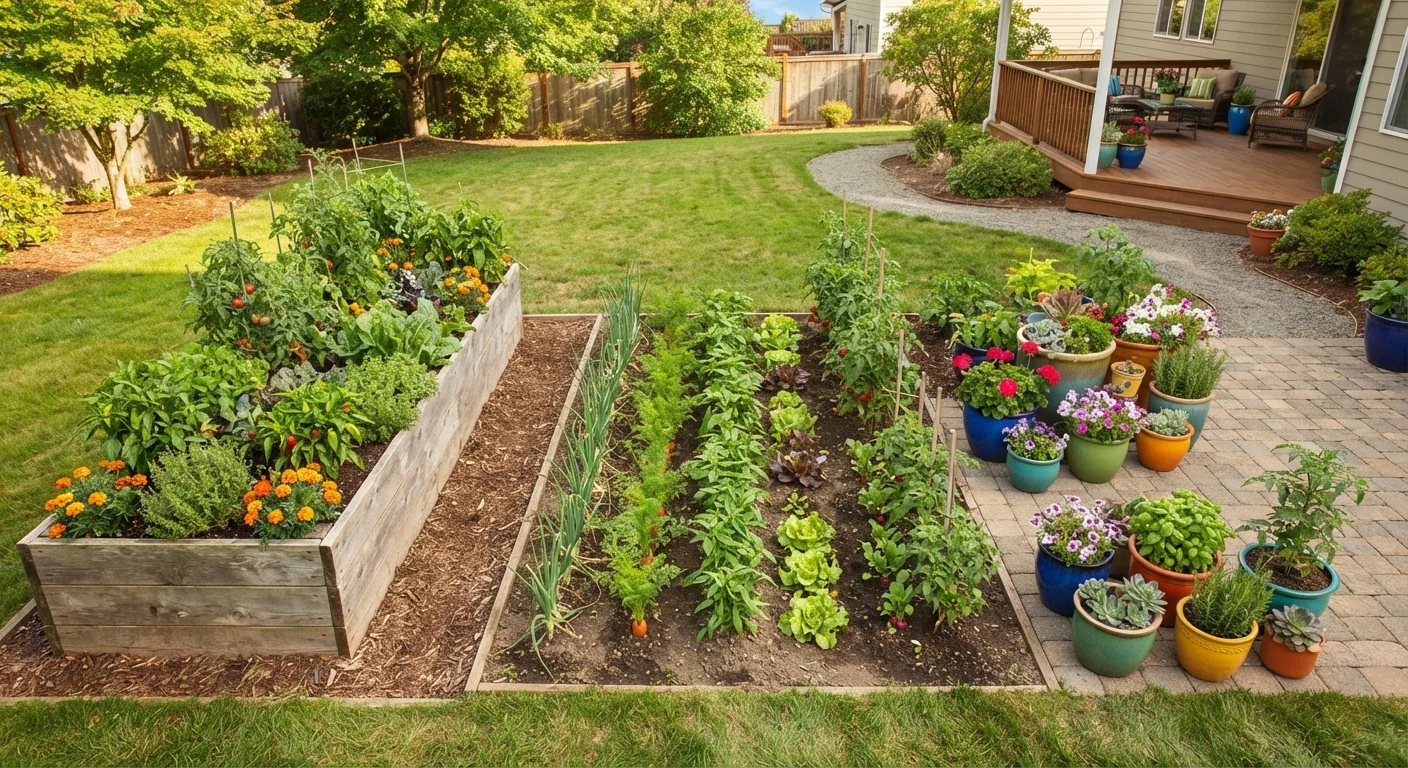
No single garden type wins for every household. Raised beds suit families willing to invest upfront for long-term ease; in-ground plots reward those with good native soil and room to expand; containers are ideal for limited-space or low-commitment gardeners. Many families mix all three as their confidence and space allow.
| Best for | Recommended |
|---|---|
| Families with poor native soil or drainage issues | Raised Beds |
| Homeowners with ample yard space and a tight starting budget | In-Ground Plots |
| Renters, apartment dwellers, or first-time gardeners | Container Gardens |
| Those who want maximum flexibility and the ability to scale gradually | Container Gardens |
How Each Growing Method Works
Understanding the basics of each approach makes it easier to match a method to your yard, lifestyle, and goals. If you're just getting started, our beginner's guide to vegetable gardening covers site selection and planting fundamentals that apply to all three setups.
Raised Beds
Raised beds are framed growing areas — typically built from wood, galvanized metal, or composite materials — filled with a custom soil mix and elevated above the surrounding ground. They can be placed on lawn, gravel, or hardscape. Depths commonly range from 6 to 12 inches, with deeper beds needed for root vegetables.
In-Ground Plots
In-ground gardening uses the existing native soil in your yard, amended as needed with compost or other organic material. Rows or blocks are laid out directly in the earth. This is the most traditional approach and requires no framing materials.
Container Gardens
Container gardening uses pots, planters, fabric grow bags, or any suitable vessel filled with potting mix. Containers can sit on patios, decks, balconies, or driveways and can be repositioned as needed.
Comparing Cost, Soil, and Maintenance
The table below lays out the key trade-offs across the three methods. Costs shown reflect general ranges and will vary by region, materials chosen, and garden size.
| Raised Beds | In-Ground Plots | Container Gardens | |
|---|---|---|---|
| Startup Cost | Moderate to high (materials + fill) | Low (soil amendment only) | Low to moderate (pots + potting mix) |
| Soil Control | Excellent — custom mix from the start | Depends on native soil quality | Full control with purchased mix |
| Drainage | Very good — drains freely | Variable — depends on soil type | Can dry out quickly; drainage holes essential |
| Weed Pressure | Low — defined edges limit encroachment | High — open to surrounding weeds | Very low — contained growing medium |
| Mobility / Flexibility | Fixed once built | Fixed in place | High — can be moved or rearranged |
| Best Suited For | Families with poor soil or drainage issues | Large harvests on a limited budget | Small spaces, renters, beginners |
| Ongoing Maintenance | Low to moderate after setup | Moderate to high (weeding, tilling) | Moderate (frequent watering needed) |
One factor not captured in the table is soil quality over time. Raised beds allow you to start with an optimized mix, but that mix will settle and need annual topping up. In-ground plots depend heavily on what you're working with — heavy clay or nutrient-poor soil will require significant amendment before planting. See our guide to home composting for a cost-effective way to build soil health in any garden type.
Mix Methods as Your Garden Grows
There's no rule that says you must pick just one approach. Many experienced home gardeners use raised beds for vegetables that need good drainage, in-ground space for sprawling crops like squash or corn, and containers for herbs on a kitchen patio. Starting with containers or one raised bed limits your initial investment while you learn what grows well in your specific conditions.
Watering, Drainage, and Irrigation Fit
Each garden type interacts with water differently. Raised beds drain freely — a real advantage in regions prone to wet springs, but a disadvantage during dry summers when they can dry out faster than in-ground beds. Containers dry out fastest of all; during summer heat, daily watering may be necessary for some pot sizes.
In-ground plots retain soil moisture longer, which reduces watering frequency but can also lead to waterlogging in heavy soils. The irrigation system you choose should match your setup. Drip lines work well for all three types, while overhead sprinklers are best suited to larger in-ground plantings. Our comparison of drip and sprinkler irrigation walks through coverage, efficiency, and cost for each approach.
Watch for Overwatering in Containers
Containers without proper drainage holes trap water and suffocate roots quickly. Always confirm that your chosen vessels allow free drainage before planting. During cooler, wetter seasons, container plants may need water far less often than you'd expect — checking soil moisture an inch below the surface before watering helps prevent overwatering, which is one of the most common causes of container plant failure.
Which Setup Fits Your Family Best?
Choosing a garden type is as much about lifestyle as it is about horticulture. Here are the most common scenarios families face:
- Limited outdoor space or renting: Containers are the clear choice. They require no permanent modification to your yard, and you can take them with you when you move.
- Poor or unknown native soil: Raised beds let you bypass whatever is in the ground entirely. This is particularly helpful on properties with fill dirt, compacted subsoil, or a history of chemical use.
- Largest possible harvest area on a budget: In-ground plots give you the most growing space per dollar spent. With good soil amendment and sound planning — see our common garden planning mistakes to avoid — they can be highly productive.
- Low-maintenance priority: Raised beds typically win here once established. Their defined edges suppress grass encroachment, and their elevated height reduces bending. Pairing any garden type with thoughtful design principles from our low-maintenance yard design guide can reduce weekly effort significantly.
Many families find that starting small — even a few containers or a single 4×8 raised bed — builds confidence before committing to a larger in-ground plot. Your garden setup can grow alongside your experience.