

Key Takeaways
Start here
Choosing the Right Spot
Next
Deciding on Your Garden Setup
Then
Preparing the Soil
Ready to plant
Choosing What to Grow
Keep it going
Planting, Watering, and Ongoing Care
Level up
Avoiding Common First-Year Mistakes
Choosing the Right Spot
Location is the single decision that most shapes your garden's success. Before breaking ground or buying seeds, spend a day or two observing how sunlight moves across your yard. Most vegetables — especially tomatoes, peppers, cucumbers, and beans — need at least six hours of direct sun per day, with eight being even better.
Beyond sunlight, consider these practical factors:
- Proximity to water: A garden close to an outdoor spigot makes consistent watering far easier. Hauling a hose across the yard quickly becomes a chore that gets skipped.
- Flat or gently sloping ground: Steep slopes cause water runoff rather than absorption. If your only available space slopes, consider building a raised bed to create a level planting surface.
- Distance from large trees: Tree roots compete aggressively for water and nutrients, and overhanging branches cast shade. Keep garden beds clear of mature trees whenever possible.
- Good air circulation: Stagnant air encourages fungal diseases. A spot with gentle air movement — but not a wind tunnel — is ideal.
For a broader look at how gardens fit into your overall outdoor space, the backyard landscaping guide covers site planning alongside lawn care and irrigation.
Deciding on Your Garden Setup
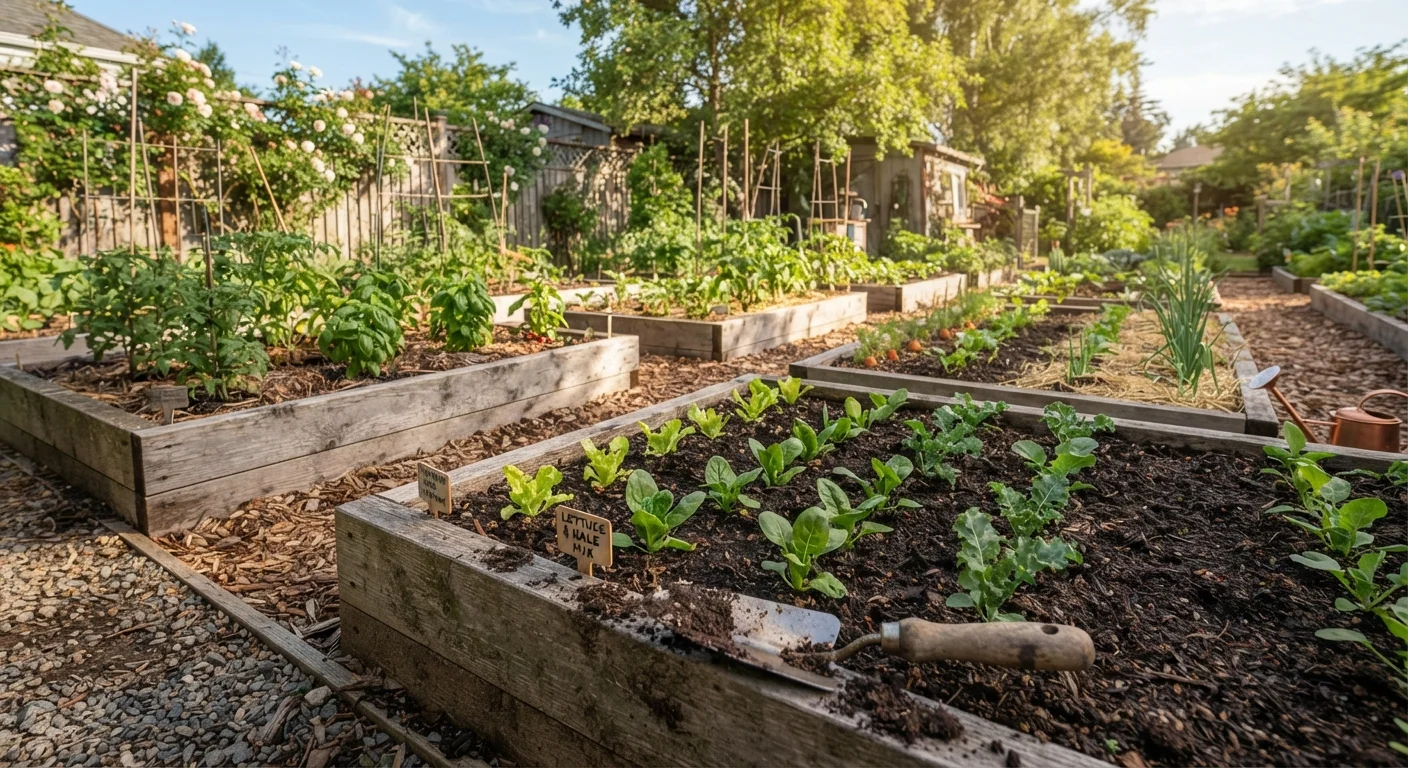
Once you've identified a good location, you'll need to choose between three common garden configurations: raised beds, in-ground plots, and container gardens. Each has genuine trade-offs in cost, maintenance, and flexibility.
Raised bed
A garden growing area built above the existing ground level, typically framed with wood or other material and filled with a custom soil mix for better drainage and root growth.
In-ground plot
A traditional garden bed dug directly into the existing soil, amended as needed, and used for planting vegetables at ground level.
Soil pH
A measure of how acidic or alkaline your soil is, rated on a scale from 0 to 14. Most vegetables thrive in soil that falls between 6.0 and 7.0 on this scale.
Compost
Decomposed organic matter — such as kitchen scraps and yard waste — that is mixed into soil to improve its structure, fertility, and ability to retain moisture.
Frost date
The average date of the last spring freeze or first fall freeze in a given location, used to determine safe planting and harvest windows for temperature-sensitive crops.
Bolting
When a plant shifts from producing leaves or fruit to producing flowers and seeds prematurely, usually triggered by heat or drought. Bolting often makes leafy greens taste bitter.
Raised beds offer excellent drainage and warm up faster in spring, making them popular in regions with heavy clay soils or short growing seasons. In-ground plots have lower upfront costs but may require more soil preparation. Containers work well on patios or where ground space is limited, though they dry out faster and hold fewer plants.
For a detailed comparison of all three approaches — including cost estimates and yield expectations — see Raised Beds, In-Ground Plots, and Container Gardens: A Side-by-Side Look.
Start small. A single 4×8-foot raised bed or two to three large containers is a manageable first-year goal. Overcommitting space is one of the most common reasons new gardeners feel overwhelmed by mid-summer.
Preparing the Soil
Healthy soil is the foundation of a productive garden. Before planting anything, assess what you're working with. A basic soil test — available through most county cooperative extension offices or garden centers — reveals your soil's pH and nutrient levels so you can amend it precisely rather than guessing.
Most vegetables prefer a slightly acidic to neutral pH, roughly between 6.0 and 7.0. If your soil is too acidic, ground limestone can raise pH. If it's too alkaline, sulfur-based amendments can lower it.
For in-ground beds, loosen the soil to a depth of at least 10–12 inches using a garden fork or tiller. Work in 2–4 inches of compost to improve structure, drainage, and fertility. Homemade compost is an excellent soil builder — learn how to start composting at home to turn kitchen and yard waste into a valuable garden resource.
Build Soil Before You Build Anything Else
If you only have time for one preparation step, make it adding compost. Even a 2-inch layer worked into the top 8–10 inches of soil measurably improves drainage in clay soils and moisture retention in sandy soils. Healthy soil means less watering, fewer pest problems, and stronger plants overall — it's the highest-return investment you can make in a new garden.
For raised beds, fill with a blend of topsoil, compost, and an aeration material such as perlite or coarse sand. Avoid using pure native soil in raised beds, as it tends to compact and drain poorly in a confined space.
Choosing What to Grow
The best vegetables to grow in your first year are ones your family will actually eat and that are forgiving enough to teach you without punishing every mistake. Prioritize crops with short time-to-harvest and minimal pest pressure.
Strong beginner choices include:
- Radishes: Ready in as few as three to four weeks; ideal for building early confidence.
- Lettuce and salad greens: Tolerant of partial shade, quick to harvest, and can be cut repeatedly.
- Bush beans: Low maintenance, no staking required, and productive over several weeks.
- Zucchini: Nearly impossible to ignore once growing — produces abundantly with minimal effort.
- Cherry tomatoes: More forgiving than large slicing varieties and faster to ripen.
- Herbs (basil, chives, parsley): High value per square foot and rewarding to use fresh in the kitchen.
Resist the urge to plant a wide variety of ambitious crops in year one. Mastering a handful of plants gives you far more useful experience than struggling with a dozen at once.
Planting, Watering, and Ongoing Care
Follow seed packet or transplant tag instructions for spacing carefully — crowding is one of the most frequent beginner errors and leads to poor airflow, disease, and reduced yields. Plant timing matters equally: cool-season crops like lettuce and peas go in before your last expected frost date, while warm-season crops like tomatoes and squash should only be planted after frost danger has passed. Your local cooperative extension office can provide reliable frost date information for your ZIP code.
For watering, aim for about one inch per week total, including rainfall. Water at the base of plants rather than overhead to reduce disease risk, and water in the morning so foliage can dry during the day. Mulching the soil surface with 2–3 inches of straw or wood chips helps retain moisture and suppresses weeds — two significant benefits for a time-pressed family.
Weed consistently, especially in the first month. Young weeds are easy to pull; established ones compete seriously for nutrients and water. A brief 15-minute walk-through every few days catches problems early and prevents them from compounding.
Don't Skip Spacing Instructions
It's tempting to plant seedlings closer together than recommended — they look small and the bed seems to have plenty of room. But overcrowding is one of the most reliable ways to invite disease, reduce airflow, and limit yields. Follow the spacing guidelines on seed packets or transplant tags, even if the bed looks sparse at first. Plants will fill in quickly once established.
Avoiding Common First-Year Mistakes
Most first-year garden struggles trace back to a small set of avoidable planning and maintenance errors. Understanding them ahead of time gives you a clear advantage.
The most common pitfalls include:
- Choosing a shady location: Insufficient sun is the leading cause of poor vegetable yields. Reassess your site before planting if you're uncertain.
- Overplanting: Starting with too many crops or too large a space leads to neglect. A smaller, well-tended garden outproduces a large, overwhelming one every time.
- Skipping soil preparation: Planting into compacted, nutrient-poor soil without amendment is the fastest way to a disappointing harvest.
- Irregular watering: Inconsistent moisture causes problems like blossom end rot in tomatoes and bolting in lettuce. Consistency matters more than volume.
- Ignoring plant spacing: Seed packets specify spacing for good reason — overcrowded plants compete for light, air, and nutrients.
For a deeper look at planning missteps that undermine vegetable gardens, Garden Planning Errors That Lead to a Struggling Harvest covers the most common mistakes and how to avoid them before you plant a single seed.
Growing your own vegetables is one of the most rewarding things a family can do with outdoor space — and a well-planned first season builds habits and knowledge that compound each year. Start small, prepare your soil well, and pick crops your family loves. The rest follows from there.