

Key Takeaways
Start With the Right Plants in the Right Place
More yard work is created by poor plant selection than almost any other factor. A plant struggling against the wrong climate, soil, or sun exposure will demand constant intervention — extra watering, fertilizing, pest management, or outright replacement.
The foundational principle of low-maintenance design is matching plants to conditions rather than forcing conditions to match plants. Before selecting anything, assess your yard's soil type, drainage, and sun patterns. Then choose plants rated for your USDA hardiness zone that naturally thrive under those conditions.
Native plants deserve particular attention here. Because they evolved in your region, they're adapted to local rainfall, temperature swings, and soil chemistry. Many native perennials establish quickly and then largely take care of themselves.
Think in Layers When Selecting Plants
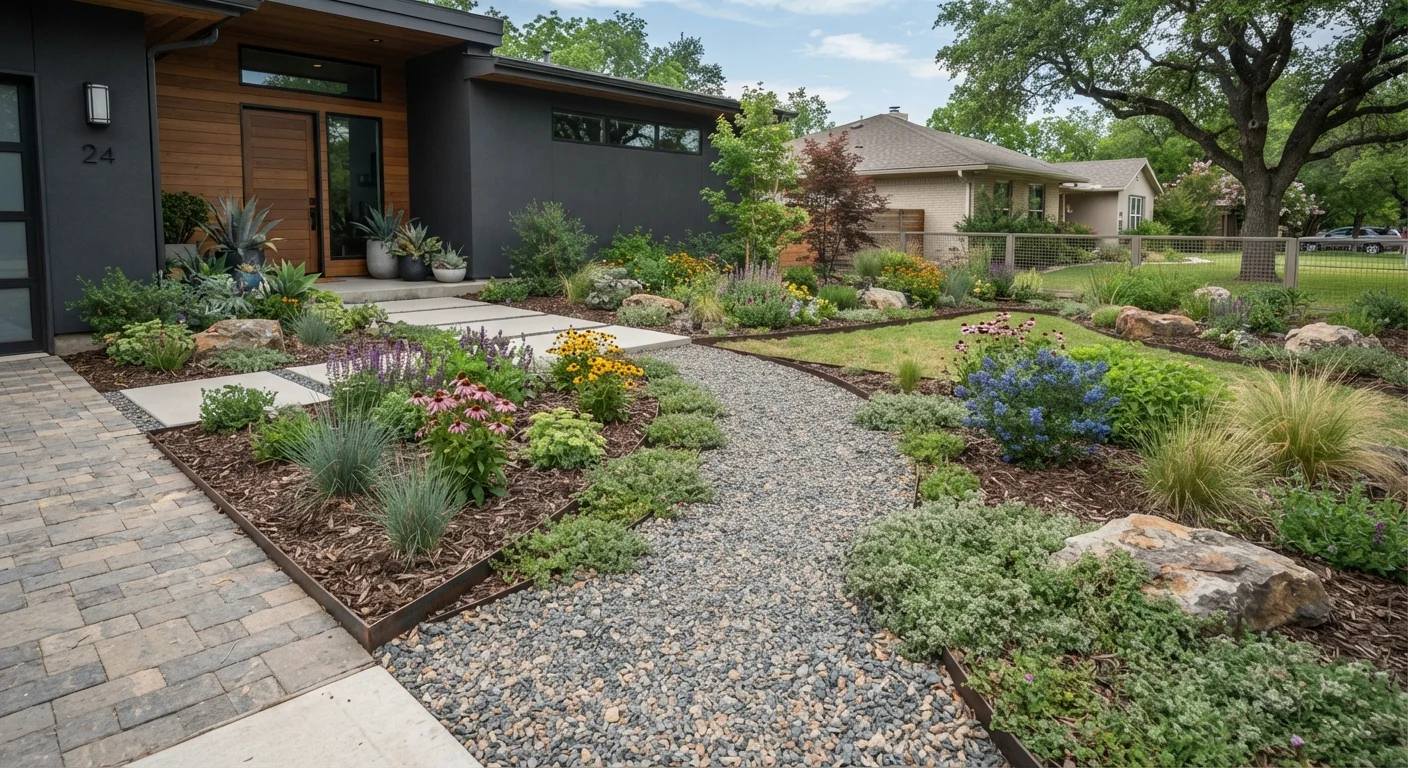
A layered planting plan — with taller shrubs at the back, mid-height perennials in the middle, and low ground covers at the front — creates a self-reinforcing ecosystem where plants shade out weeds for each other. This approach also gives your yard visual depth and year-round structure with minimal intervention.
Slow-growing shrubs and perennials also pay dividends over time. They need less pruning, produce less yard waste, and stay in scale with their surroundings longer than fast-growing varieties that require constant trimming.
Reduce Lawn Area Strategically
Traditional turf grass is one of the most labor-intensive surfaces you can maintain — it requires regular mowing, edging, fertilizing, aerating, and watering. Reducing the total lawn footprint is one of the highest-impact changes a homeowner can make.
40–60%
Estimated reduction in lawn watering with efficient irrigation
According to the U.S. Environmental Protection Agency, switching to drip or targeted irrigation can cut outdoor water use substantially compared to conventional sprinkler systems.
3 inches
Optimal mulch depth for effective weed suppression
University cooperative extension programs across the U.S. consistently recommend a 2–4 inch mulch layer as the most effective range for blocking weed germination and retaining soil moisture.
Consider replacing lawn in low-traffic or hard-to-mow areas with alternatives: ornamental grasses, spreading ground covers like creeping thyme or clover, decorative gravel, or hardscaped patios. Each of these eliminates mowing in that zone entirely.
When you do keep turf, choose a grass variety suited to your region. Warm-season grasses like zoysia or buffalo grass thrive in southern climates with minimal irrigation. Cool-season grasses like fine fescue perform well in northern yards with lower fertilizer demands than traditional Kentucky bluegrass. For guidance on watering what lawn you do keep, see our seasonal watering schedule guide.
Use Mulch and Ground Covers to Do the Work for You
Weeding is one of the most time-consuming recurring yard tasks, and mulch is its most effective deterrent. A 3-inch layer of organic mulch — such as shredded bark or wood chips — blocks sunlight to weed seeds, retains soil moisture, and moderates soil temperature. It also breaks down over time to improve soil structure.
Apply mulch across all planted beds and refresh it annually. This single habit can eliminate the bulk of hand-weeding most homeowners deal with. For a closer look at which materials work best in different situations, our guide to mulch types breaks down the trade-offs.
Ground cover plants serve a similar function in open areas. Low-growing spreading plants like sedum, ajuga, or creeping phlox form a dense mat that crowds out weeds while providing year-round visual interest — with minimal upkeep once established.
Choose plants rated for your specific hardiness zone and site conditions before purchasing.
Plants growing in unsuitable conditions require constant intervention to survive. Selecting zone-appropriate plants means they establish faster and need far less attention over time.
Apply a 3-inch layer of mulch across all garden beds each spring.
Deep mulching suppresses the majority of weed germination, reduces soil moisture loss, and cuts the frequency of watering. It addresses three maintenance tasks with a single annual effort.
Replace difficult-to-mow lawn sections with hardscaping, ground cover, or gravel.
Slopes, narrow strips, and shaded corners are often mowed with difficulty and rarely look their best. Converting them to low-maintenance surfaces eliminates recurring effort in those zones permanently.
Group plants by water need so irrigation can be simplified and targeted.
Mixed plantings with incompatible water needs force compromises that either overwater some plants or stress others. Hydrozoning allows efficient, automated watering without manual adjustment.
Select slow-growing shrubs to reduce pruning frequency.
Fast-growing shrubs quickly outgrow their space, requiring multiple pruning sessions per year and generating significant yard waste. Slow-growing varieties maintain their shape with one annual trim.
Design for Efficient Watering and Seasonal Resilience
Irrigation is a significant time and resource commitment, but thoughtful layout decisions can streamline it considerably. Group plants with similar water requirements together — a practice sometimes called hydrozoning — so you're not over-watering drought-tolerant species to satisfy thirsty neighbors in the same bed.
Drip irrigation and soaker hoses deliver water directly to root zones, reducing waste and the time spent hand-watering. Pairing them with a simple timer removes the task from your weekly routine almost entirely.
Established Plants Have Different Needs Than New Ones
Most low-maintenance plants still require consistent watering and care during their first one to two growing seasons while their root systems establish. Once established, their needs drop significantly. Plan to give new plantings extra attention upfront so they can deliver the low-maintenance results you're expecting in subsequent years.
Seasonal planning also reduces corrective work. A well-prepared yard going into fall requires far less intervention come spring. Our fall yard prep checklist covers the key tasks that pay off across the following growing season.
Finally, think about how your yard fits into the larger picture of your home. Low-maintenance landscaping is a long-term investment that can support ongoing home improvement goals and reduce the physical and financial demands of homeownership over time.