

Key Takeaways
Our Verdict
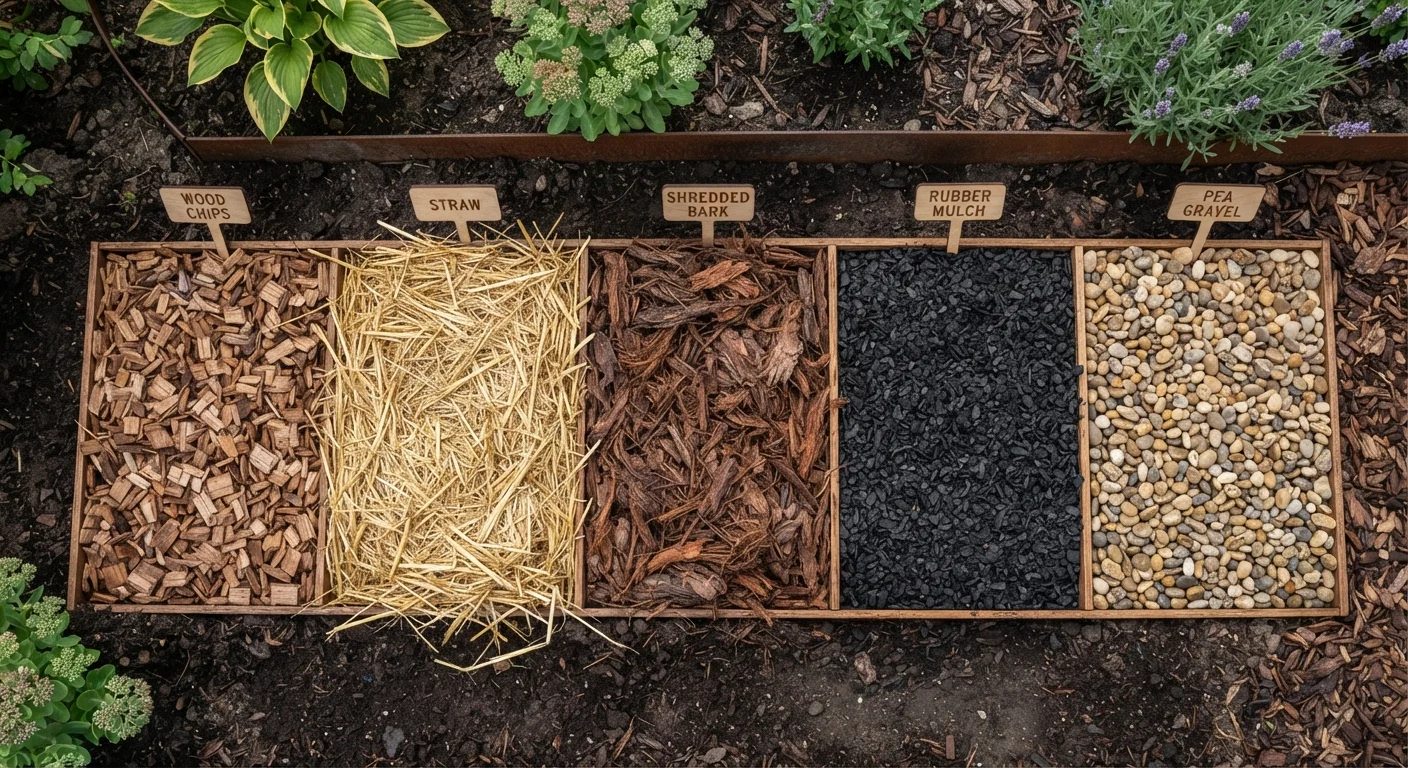
No single mulch is universally best. Organic options like wood chips and shredded bark suit most garden beds because they improve soil over time, while straw excels in vegetable plots. Inorganic choices like gravel or rubber are practical where permanence and low maintenance take priority over soil enrichment.
| Best for | Recommended |
|---|---|
| Homeowners improving soil health in ornamental beds | Shredded bark or wood chips |
| Families growing vegetables and annual crops | Straw mulch |
| Low-maintenance pathways and play areas | Rubber or gravel mulch |
| Water-conscious gardeners in hot, dry climates | Wood chips with a thick application layer |
Why Mulch Choice Actually Matters
Mulch does a lot of quiet, unglamorous work: it holds moisture in the soil, moderates temperature swings, suppresses weed germination, and — depending on type — gradually enriches the ground beneath it. But not every mulch does all of these things equally well, and some can actively work against your garden goals if misapplied.
If you're planning a complete backyard landscaping plan, understanding mulch types is one of the more impactful decisions you'll make. Choosing based on what looks appealing at the garden center — rather than what suits the planting context — is one of the most common and correctable yard care mistakes families make.
25–50%
Soil moisture loss reduced by mulching
University extension programs broadly cite mulch as reducing evaporative soil moisture loss by 25 to 50 percent, depending on material and climate.
3 inches
Recommended mulch depth for most beds
Most cooperative extension services in the US recommend a mulch layer of two to four inches for effective weed suppression and moisture retention.
Organic Mulches: Wood Chips, Shredded Bark, and Straw
Organic mulches come from once-living materials and break down over time, feeding soil biology as they do. They are generally the go-to for garden beds where plant health and long-term soil quality matter.
Wood Chips
Coarse wood chips are among the most effective mulches for ornamental trees, shrubs, and perennial beds. They decompose slowly, providing steady weed suppression and a meaningful buffer against moisture loss. A layer of three to four inches works well in most climates. Keep chips a few inches away from plant stems and tree trunks to prevent rot and discourage rodent nesting.
Shredded Bark
Finer than wood chips, shredded bark knits together on slopes and resists washing away better than loose materials. It's a practical choice for garden beds visible from the street, offering a tidy appearance that lasts a full season or two before needing replenishment. Because it compacts slightly, it can be slightly less permeable to water over time — worth loosening occasionally with a rake.
Straw
Straw (not hay, which contains weed seeds) is the mulch of choice for vegetable gardens. It's light, easy to apply, keeps soil temperature stable, and breaks down fast enough to be tilled in at season's end. It pairs naturally with the soil-building approach described in our guide on composting kitchen and yard waste. Apply two to four inches between rows and around transplants.
Use Aged Wood Chips When Possible
Fresh wood chip mulch from chippers can temporarily tie up soil nitrogen as it begins decomposing, which may slow plant growth in heavily planted beds. If you're sourcing chips from an arborist or municipal program, ask for material that has been sitting for several weeks. Aged chips break down more evenly and present less risk of nitrogen competition near feeder roots.
Inorganic Mulches: Rubber, Gravel, and Landscape Fabric
Inorganic mulches don't decompose, which means they don't feed your soil — but they also don't need annual replenishment. Their durability makes them appealing in specific situations.
Rubber Mulch
Made from recycled tires, rubber mulch is commonly used in children's play areas because of its cushioning properties and resistance to compression. In garden beds, however, it has real drawbacks: it can raise soil temperature to levels that stress plant roots in summer, and it doesn't improve soil structure at all. It's better suited to non-planting zones than active beds.
Gravel and River Rock
Gravel works well around drought-tolerant plants, succulents, and in xeriscaped areas where water conservation is a priority. It doesn't compact, allows excellent drainage, and discourages burrowing pests. The trade-off: it absorbs and radiates heat, which may be too intense for plants with moderate moisture needs. It also becomes permanent — removing gravel once it's settled is genuinely laborious. This makes it a strong fit for low-maintenance yard designs where the layout is unlikely to change.
Landscape Fabric
Often used beneath other mulches, landscape fabric reduces weeds but is not a long-term fix on its own. Organic matter accumulates on top over time, and weeds eventually root into it. Use it selectively, and avoid it in vegetable beds where you'll be planting and digging regularly.
| Wood Chips | Shredded Bark | Straw | Rubber | Gravel | |
|---|---|---|---|---|---|
| Soil enrichment | Yes, over time | Yes, over time | Yes, fast | None | None |
| Weed suppression | Strong | Strong | Moderate | Strong | Moderate |
| Moisture retention | Excellent | Good | Good | Moderate | Low |
| Longevity | 1–3 years | 1–2 years | One season | 10+ years | Permanent |
| Best use | Ornamental beds, trees | Sloped or visible beds | Vegetable gardens | Play areas | Xeriscape, pathways |
| Heat impact on soil | Insulating | Insulating | Insulating | High heat gain | High heat gain |
Applying Mulch Effectively
Even the right mulch underperforms if applied poorly. A few practical guidelines hold across most situations:
- Depth: Two to four inches is the target range. Less than two inches leaves weeds room to germinate; more than four inches can prevent water infiltration and oxygen exchange.
- Spacing from stems: Always leave a gap of two to three inches around plant stems, crowns, and tree trunks. Mulch piled against stems traps moisture and creates conditions where rot and pests thrive.
- Timing: Mulch after the soil has warmed in spring, not before. Applying too early keeps cold soil cold longer, slowing plant establishment.
- Refresh annually: Organic mulches compress and decompose. Check depth each spring and add material to maintain the effective layer.
If you're mulching raised beds or container setups, the same rules apply — see our comparison of raised beds, in-ground plots, and container gardens for how mulch integrates into each growing format. And if you're pairing mulch with an irrigation strategy, our drip irrigation vs. sprinkler systems guide covers how water delivery affects mulch performance.