

Home & Garden

Fall Yard Prep: Tasks That Set Up a Stronger Spring

Share
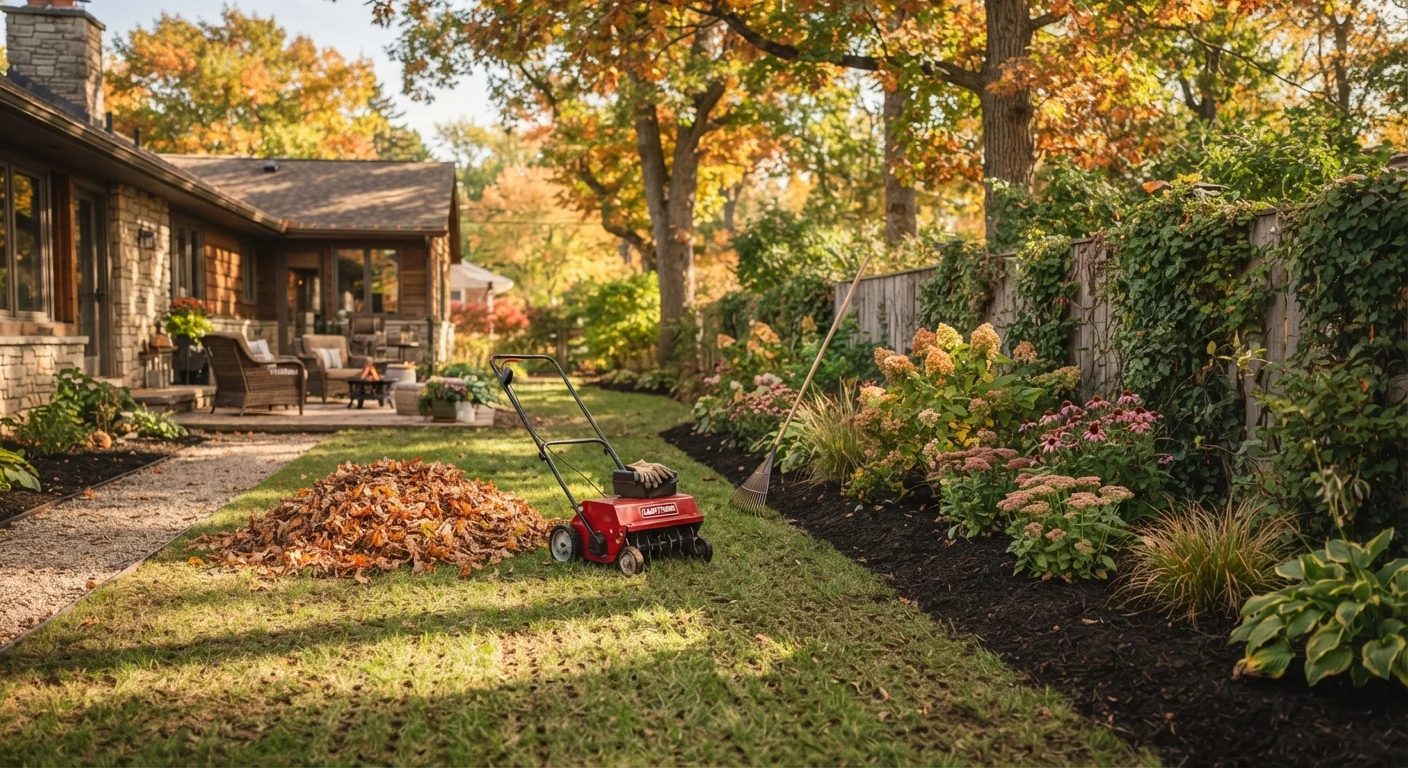
A backyard lawn being prepared for winter with raked leaves, mulched garden beds, and aeration tools in autumn light.

Key Takeaways

Fall is the single most impactful time to feed cool-season grasses and overseed thin patches.
Cutting grass slightly shorter in the final mow reduces winter disease risk without stressing the lawn.
Draining irrigation lines before the first hard freeze prevents costly pipe damage.
Mulching garden beds after the ground cools insulates roots without trapping damaging moisture.
Pruning and wrapping young or vulnerable trees now reduces storm and frost damage over winter.
120–240 min

Summary

22 items · 2–4 hours spread over a weekend

Why Fall Yard Work Pays Off in Spring

Most lawn and garden problems that show up in April and May actually started the previous autumn. Compacted soil, unfed grass, and unprotected perennials all struggle through winter and emerge weakened. A targeted fall prep routine interrupts that cycle.

The checklist below is organized by area of the yard. Work through it zone by zone rather than tackling everything at once — that approach makes the effort manageable across a weekend or two. Before you start, it helps to know your grass type, because timing varies. Cool-season and warm-season grasses have different fall needs, and confusing them is one of the most common mistakes homeowners make.

Lawn Care

Aerate compacted soil using a core aerator to improve root depth and water absorption before winter. Must
Overseed thin or bare patches while soil temperatures are still warm enough for germination (generally above 50°F). Must
Apply a slow-release, phosphorus-forward fall fertilizer appropriate for your grass type after confirming soil temperature. Must
Set your final mow height about one-third lower than your normal cutting height to reduce snow mold risk. Should
Rake or mulch-mow fallen leaves before they mat down and smother grass crowns. Must
Test soil pH and amend with lime or sulfur if results are outside the 6.0–7.0 range suitable for most turf. Should

Garden Beds and Borders

Cut back dead or frost-killed annuals and pull them from beds to reduce overwintering pest habitat. Must
Leave ornamental grasses and seed-head perennials standing through winter to provide wildlife habitat and visual structure. Nice to have
Apply 2–4 inches of organic mulch (shredded leaves, wood chips, or straw) over perennial beds after the ground begins to cool. Must
Divide and replant overcrowded perennials — fall is an ideal time for hostas, daylilies, and many ornamental grasses. Should
Plant spring-flowering bulbs (tulips, daffodils, crocus) before the ground freezes for an effortless spring display. Nice to have

Trees, Shrubs, and Young Plants

Wrap the trunks of young or thin-barked trees (e.g., maples, fruit trees) with tree wrap to prevent frost cracks and sunscald. Should
Apply a 3-inch ring of mulch around tree bases, keeping it several inches back from the trunk to prevent rot. Should
Remove dead, diseased, or crossing branches from trees and shrubs before strong winds and ice loads arrive. Must
Wrap or burlap-screen broadleaf evergreens (rhododendrons, hollies) on windy or exposed sites to reduce winter desiccation. Nice to have

Irrigation and Water Features

Blow out or drain all in-ground irrigation lines using compressed air before overnight temperatures drop below freezing. Must
Disconnect, drain, and store garden hoses in a shed or garage to prevent cracking. Must
Shut off outdoor faucets using interior shutoff valves and leave the exterior valve open to drain any remaining water. Must
Drain and winterize any backyard water features or pond pumps per the manufacturer's guidance. Should

Outdoor Equipment and Storage

Drain gas from lawn mowers, string trimmers, and other small-engine equipment, or add a fuel stabilizer before storage. Must
Clean, dry, and store hand tools in a covered space; sharpen blades before putting them away so they're ready in spring. Should

Tools and Supplies to Have on Hand

Having the right equipment before you begin saves multiple trips to the hardware store and keeps momentum going. The items below cover the full scope of this checklist — not every household will need all of them, depending on yard size and what's already on hand.

Required

Core Aerator

Pulls plugs of soil to relieve compaction and improve root development before winter dormancy.

Required

Broadcast or Drop Spreader

Distributes grass seed and fertilizer evenly across the lawn for consistent coverage.

Optional

Soil Test Kit or Lab Service

Measures pH and nutrient levels so amendments are targeted rather than guesswork.

Optional

Leaf Mulcher or Mulching Mower

Shreds fallen leaves into fine particles that decompose quickly and add organic matter to the lawn.

Required

Compressed Air Blower or Irrigation Blowout Kit

Clears water from in-ground irrigation lines to prevent freeze damage.

Optional

Tree Wrap and Burlap

Protects young tree bark and vulnerable evergreens from frost cracks and winter wind burn.

Required

Garden Pruners and Loppers

Used to remove dead, diseased, or crossing branches from trees and shrubs before winter storms.

Required

Fuel Stabilizer

Added to small-engine equipment fuel tanks to prevent gum and varnish buildup during months of storage.

Irrigation Blowouts Carry Real Risk

Winterizing an in-ground irrigation system with compressed air requires the correct pressure settings for your pipe material — too much pressure can crack heads and fittings. If you haven't done this before or your system is complex, consider having a licensed irrigation technician handle it. The cost of a professional blowout is typically far less than repairing burst lines in spring.

Timing, Common Mistakes, and Long-Term Thinking

The window for most fall yard prep tasks is roughly six to eight weeks before your region's first hard frost (consistently below 32°F). In northern states that might mean September or early October; in the mid-Atlantic and transition zones, late October is often still workable. Warm-season grass regions in the South may need only a subset of these tasks.

Common mistakes to avoid:

  • Fertilizing too late — applying nitrogen after grass has gone dormant feeds weeds, not the lawn, and can contribute to runoff into local waterways. Understand the facts before you apply anything: fertilization myths that quietly damage yards is a useful reality check.
  • Overwatering in fall — grass needs moisture but far less than during summer heat. Adjust your schedule accordingly; our seasonal watering guide has specific fall targets.
  • Skipping the deck — outdoor structures also need fall attention. The deck maintenance seasonal reference walks through what to inspect and treat before cold weather sets in.

If you're thinking further ahead, many of these annual tasks can be reduced through smarter yard design. Low-maintenance yard principles and a shift toward native plants can meaningfully cut down how much seasonal preparation your yard demands over time.

Tree Work Near Utilities: Call First

Before pruning or removing any branches near overhead power lines or close to the house, contact your local utility company. Line-clearing work near electrical infrastructure must be handled by qualified professionals — not as a DIY task. Many utilities offer this service at no charge to homeowners.

Home & Garden Editorial Team is the collective byline for our editorial team and contributor network. Articles published under this byline or an editorial pen name are researched, written, and reviewed according to our editorial standards for clarity, consistency, and independence before publication.

View all articles by Home & Garden Editorial Team →
Disclaimer: The content provided on our blog site traverses numerous categories, offering readers valuable and practical information. Readers can use the editorial team’s research and data to gain more insights into their topics of interest. However, they are requested not to treat the articles as conclusive. The website team cannot be held responsible for differences in data or inaccuracies found across other platforms. Please also note that the site might also miss out on various schemes and offers available that the readers may find more beneficial than the ones we cover.