

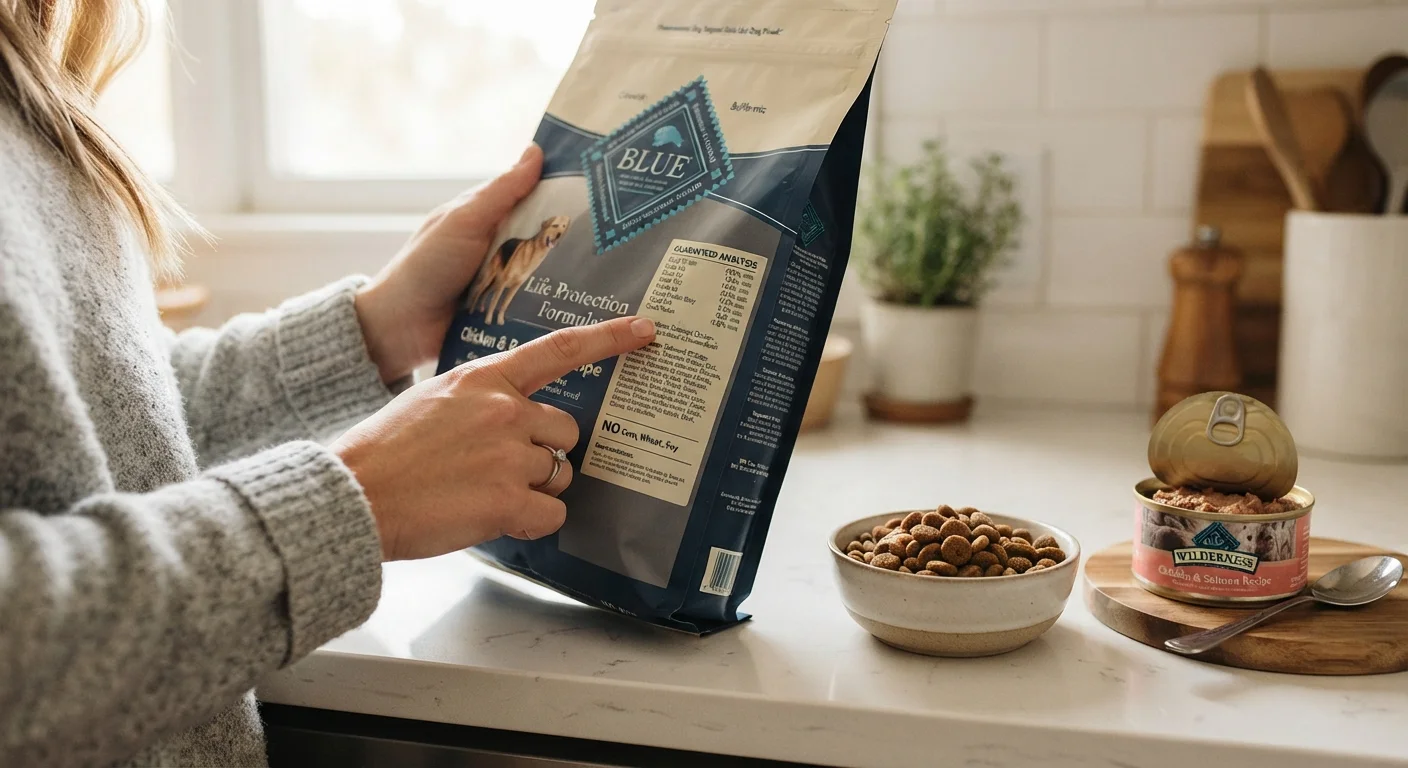
Key Takeaways
Pet Food Nutrition Label
A pet food nutrition label is the panel printed on every commercially sold pet food package that discloses the product's ingredients, nutrient content, and feeding recommendations. It is regulated in the United States by the Association of American Feed Control Officials (AAFCO) and state feed control officials, who set minimum standards for what must appear. Reading this label correctly helps owners choose food that genuinely matches their pet's life stage and health needs.
AAFCO defines two methods for substantiating a nutritional adequacy claim: formulation to a nutrient profile (calculated) or an actual feeding trial. The method used is disclosed in the nutritional adequacy statement on the label.
Why Pet Food Labels Matter
Standing in a pet supply aisle surrounded by colorful packaging and bold claims can feel overwhelming. Yet inside every bag and can is a standardized label that — once you know how to read it — tells you far more than any marketing headline. Pet food sold in the United States must comply with regulations set by the Association of American Feed Control Officials (AAFCO) and individual state feed control agencies, which means the label is one of the most reliable tools you have for evaluating what you're actually feeding your animal.
The stakes are real. A pet fed an unbalanced or inappropriate diet over time can develop nutritional deficiencies or excesses that affect organ function, coat condition, weight, and energy levels. Knowing how to decode the label puts you in control of that outcome. For a broader look at how marketing language can mislead shoppers across product categories, see our guide to misleading label terms.
Marketing Terms With No Regulatory Teeth
Words like 'natural,' 'holistic,' 'human-grade,' and 'premium' are largely unregulated in the pet food industry. AAFCO does provide a loose definition for 'natural' (no artificial flavors, colors, or preservatives), but 'holistic' has no official definition at all. Don't let these terms substitute for reading the actual label content.
The Ingredient List: What It Does and Doesn't Tell You
Ingredients are listed in descending order by weight before processing. This means a food listing 'chicken' first contains more chicken by pre-cooking weight than any other single ingredient — but fresh chicken is roughly 70% water. Once cooked, its actual contribution shrinks considerably. In contrast, a dry ingredient like 'chicken meal' (which is already dehydrated) represents a more concentrated protein source even if it appears lower on the list.
This is why splitting ingredients matters. If a label lists 'ground corn,' 'corn gluten meal,' and 'corn bran' separately, corn may collectively outweigh the protein source listed first. Read the first five to eight ingredients as a group rather than fixating on position alone.
Regarding by-products: AAFCO's definition of 'meat by-products' specifically excludes hair, horns, teeth, and hooves. Named organ meats — liver, kidney, heart — are nutritionally valuable and commonly included. The word 'by-product' alone is not a reliable indicator of low quality.
Look at the First Five Ingredients as a Group
Rather than focusing solely on what's listed first, scan the first five to eight ingredients together. This gives a more accurate picture of the food's primary nutrient sources. If multiple grain or filler ingredients appear across those slots — even under different names — they may collectively outweigh the protein source listed at the top.
Guaranteed Analysis: Reading the Numbers Correctly
The guaranteed analysis panel lists four required values: minimum crude protein, minimum crude fat, maximum crude fiber, and maximum moisture. Notice the qualifiers — minimums and maximums, not exact amounts. The actual nutrient content of a given batch may differ.
The bigger challenge is comparing wet food to dry food using these numbers. A wet food might show 8% crude protein while a dry food shows 28% — but that doesn't mean the dry food has more protein per meal. Wet food contains 75–80% moisture, while dry food contains around 10%. To compare them fairly, you need to convert both to a dry matter basis: subtract the moisture percentage from 100, then divide the nutrient percentage by the result. A wet food with 8% protein and 78% moisture calculates to about 36% protein on a dry matter basis — higher than most kibbles.
75–80%
Moisture content in typical wet pet food
AAFCO regulatory definitions establish wet (canned) pet food as containing more than 78% moisture on average, compared to roughly 10% in dry kibble.
3
AAFCO-recognized pet life stage categories
AAFCO defines growth, adult maintenance, and all life stages — 'senior' is not a regulated category, making it a marketing term rather than a nutritional standard.
~36%
Dry matter protein in an 8%-label wet food
A wet food listing 8% crude protein with 78% moisture converts to approximately 36% protein on a dry matter basis — often higher than most dry kibbles.
For dogs and cats with specific health conditions, your veterinarian may also refer to metabolizable energy (ME), which reflects the calories actually available to the animal after digestion — a more precise measure than crude nutrient percentages alone.
The Nutritional Adequacy Statement: The Most Important Line on the Label
Buried near the bottom of most labels is the nutritional adequacy statement — arguably the single most important piece of information on the package. A typical example reads: ' is formulated to meet the nutritional levels established by the AAFCO Dog Food Nutrient Profiles for adult maintenance.'
This tells you two things: the life stage the food is designed for, and how that was determined. 'Formulated to meet' means the recipe was calculated to hit nutrient targets. A feeding trial statement means the food was actually fed to animals and shown to sustain them — a higher bar of evidence.
If the label says 'for supplemental or intermittent feeding only,' the food is not nutritionally complete on its own and should not be a pet's sole diet. Life stage matters too: a food labeled for 'adult maintenance' is not appropriate for a growing puppy or a nursing cat. For questions about life-stage-specific needs, a veterinarian or board-certified veterinary nutritionist is your most reliable resource. You can explore broader pet health topics through our Pet Health & Vet hub.
Wet vs. Dry Food: Practical Considerations Beyond the Label
Neither wet nor dry food is universally superior — both can be nutritionally complete, and many owners use a combination. The differences that matter most in everyday feeding are moisture content, calorie density, cost, and how a specific pet tolerates each format.
Wet food's high moisture content can support hydration, which is particularly relevant for cats, who have a naturally low thirst drive. Our article on how much water dogs and cats actually need explores this in more detail. Dry food is calorie-dense, shelf-stable, and often more economical for larger dogs. Some owners assume dry kibble cleans teeth — a claim worth examining critically, as pet dental health research tells a more nuanced story.
Feeding guidelines printed on packaging represent averages based on typical body weight. Your pet's actual needs vary by age, activity level, reproductive status, and metabolism. If you're weighing scheduled meals against free-feeding, this comparison of feeding routines walks through the trade-offs for both approaches.
This article provides general educational information about pet food labeling and is not a substitute for personalized veterinary advice. Consult your veterinarian for guidance tailored to your specific pet's health and nutritional needs.