

Key Takeaways
Option A
Free-Feeding
The always-available, low-maintenance approach.
Best for: Cats or pets who self-regulate food intake, or households where strict daily schedules are difficult to maintain.
Option B
Scheduled Meals
The structured, portion-controlled method.
Best for: Dogs, multi-pet households, animals prone to overeating, or pets with specific medical dietary needs.
If you have a dog who eats whatever is in front of them
Scheduled Meals
Dogs are often poor self-regulators. Scheduled portions prevent overconsumption and make weight management far more manageable.
If you have a single, healthy adult cat who naturally grazes
Free-Feeding
Some cats eat small, frequent amounts throughout the day and do not gain weight on free-access dry food — though portion limits still apply.
If you have two or more pets sharing a space
Scheduled Meals
Separate, timed feedings prevent one pet from eating another's food and help you monitor each animal's individual intake.
If your pet has a health condition such as diabetes or kidney disease
Scheduled Meals
Mealtimes allow precise control over quantity and timing — both critical for managing metabolic and chronic conditions under veterinary guidance.
If your household schedule is highly unpredictable day to day
Free-Feeding
For a healthy, weight-stable cat, a measured daily portion left in the bowl can reduce feeding stress when consistent mealtimes aren't feasible.
What Each Feeding Method Actually Means
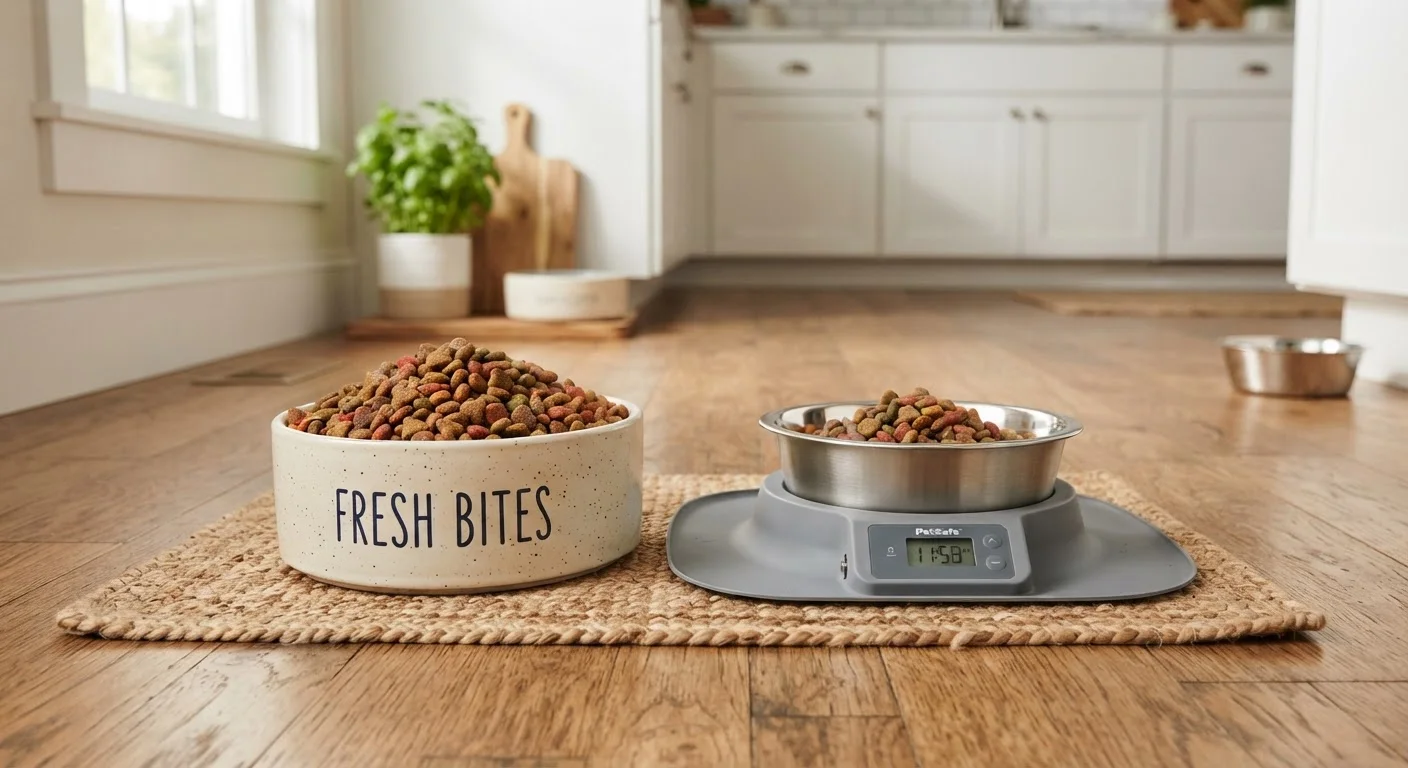
Free-feeding means leaving a supply of food in your pet's bowl throughout the day, allowing them to eat whenever they choose. Scheduled feeding means offering measured portions at fixed times — typically once, twice, or three times daily — and removing any uneaten food between meals.
Neither method is universally superior. Both have legitimate uses depending on species, individual temperament, health status, and your family's daily rhythm. Understanding the practical trade-offs of each is the first step toward building a routine that genuinely supports your pet's long-term wellness. For a broader look at how daily routines shape a dog's wellbeing, see our guide to daily care routines for family dogs.
| Criterion | Free-Feeding | Scheduled Meals |
|---|---|---|
| Portion control | Difficult to monitor | Precise and measurable |
| Obesity risk | Higher for most pets | Lower with correct portions |
| Appetite monitoring | Hard to detect changes | Easy to spot early changes |
| Suitable food types | Dry food only | Dry, wet, raw, or mixed |
| Multi-pet households | Problematic; guarding risk | Well-suited with separation |
| Owner time commitment | Low; refill periodically | Requires consistent timing |
| Best species fit | Some adult cats | Dogs, puppies, kittens, seniors |
The Case for Free-Feeding — and Its Real Limitations
Free-feeding appeals to owners because it removes the pressure of strict timing and suits pets who naturally eat in small, frequent amounts. Grazing behavior is fairly common in cats, whose ancestral hunting patterns involved many small prey meals throughout the day rather than one large one.
The significant downside is weight gain. When food is always present, many pets — especially dogs — will eat out of boredom, habit, or social cues rather than genuine hunger. Veterinary organizations consistently cite obesity as one of the most prevalent preventable health issues in companion animals in the US. Monitoring how much a free-fed pet actually consumes each day is difficult, which also makes it harder to detect appetite changes that can be early indicators of illness.
Free-feeding is also problematic with wet or raw foods, which spoil quickly at room temperature and should never be left out for extended periods. If you're navigating food type choices, our guide to pet nutrition labels explains how different food formats affect feeding logistics.
~60%
US pets estimated to be overweight or obese
The Association for Pet Obesity Prevention has reported in its annual surveys that roughly 60% of cats and dogs in the US are classified as overweight or obese by their veterinarians.
2×/day
Recommended feeding frequency for adult dogs
Most veterinary guidelines suggest adult dogs be fed twice daily rather than once or continuously, supporting digestion and stable energy levels.
Why Scheduled Meals Offer Greater Control
Scheduled feeding gives owners consistent visibility into how much their pet eats at each sitting. When a dog or cat who normally finishes their bowl promptly suddenly leaves food behind, that behavioral shift is worth noting and potentially discussing with a veterinarian. This kind of early observation is harder to make when food sits out all day.
Portion control also becomes straightforward. You measure once per meal, which makes tracking caloric intake practical — especially relevant if your pet is on a weight-management plan or takes medications with meals. Mealtimes create a predictable routine that many dogs find genuinely calming; the anticipation and structure contribute positively to their sense of security.
For multi-pet households, scheduled meals are particularly valuable. Feeding each pet separately at set times prevents food competition and allows you to confirm each animal is eating an appropriate amount. Treats used for training should be factored into this daily caloric picture — our article on using treats as training tools without overfeeding covers how to keep rewards balanced.
Automatic Feeders Can Bridge the Gap
Programmable automatic feeders dispense a set portion at a preset time, combining the convenience of free-feeding with the structure of scheduled meals. They can be a practical tool for households with inconsistent schedules. However, they are not a substitute for regular human observation of your pet's eating habits, which remains one of the most useful health-monitoring tools available to owners.
Making the Right Call for Your Household
The most practical approach is to start with your pet's species, age, and health history. Dogs generally do better on scheduled meals — most veterinarians recommend twice-daily feeding for adult dogs. Cats vary more individually; a healthy adult cat who maintains a stable weight on measured free-access dry food may not need the change, while an overweight cat almost certainly does.
Kittens, puppies, and senior pets often have distinct needs that your veterinarian should guide. Pets with diagnosed conditions such as diabetes, kidney disease, or gastrointestinal disorders typically require precisely timed and portioned meals as part of their overall care plan. If you're still deciding what kind of pet fits your family's lifestyle, our overview of pet options for families can help you think through long-term care demands before committing.
This article provides general educational information about pet feeding methods. It is not a substitute for personalized veterinary advice. Consult your veterinarian before making significant changes to your pet's diet or feeding routine, particularly if your pet has an existing health condition.