

Pets & Animals

Setting Up a Daily Care Routine for a Family Dog

Share
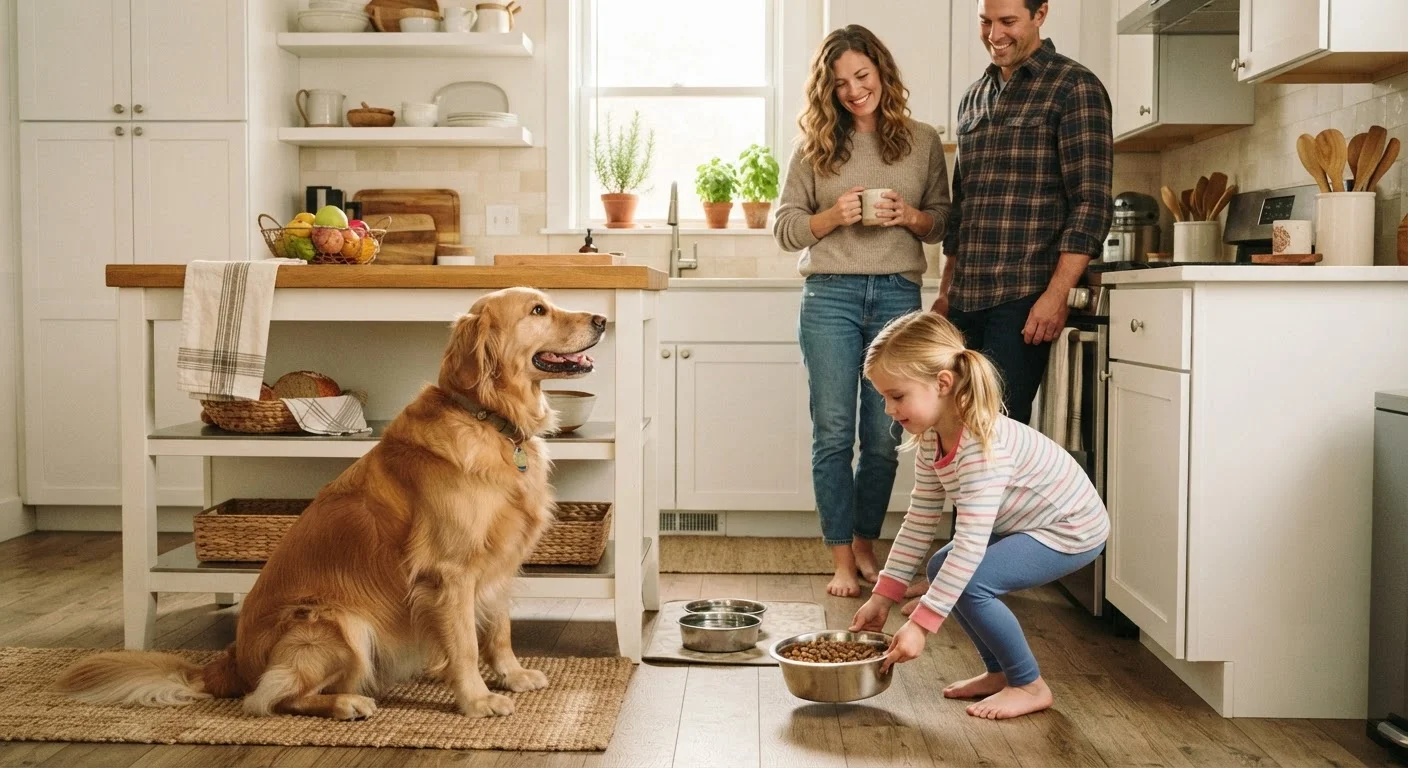
Golden retriever sitting calmly in a family kitchen as a child prepares its food bowl.

Key Takeaways

Dogs thrive on predictability — consistent timing for meals, walks, and rest reduces anxiety and behavioral issues.
A daily routine should cover feeding, exercise, enrichment, grooming checks, and brief health observations.
Families benefit when responsibilities are shared clearly among household members.
Puppies and senior dogs have distinct routine needs that differ from healthy adult dogs.
Routine daily observations help you spot early signs of health changes before they become serious.
20–35 min

Summary

22 items · 20–35 minutes to review and plan

Why a Daily Routine Matters for Your Dog

Dogs are creatures of habit. Research in animal behavior consistently shows that predictable schedules reduce stress hormones in dogs, leading to calmer behavior, better sleep, and improved digestion. When your dog knows roughly when to expect meals, walks, and downtime, they spend less energy being anxious and more energy simply being a good companion.

For families, a structured dog routine also distributes responsibility more evenly. When everyone knows who feeds the dog in the morning and who handles the evening walk, the dog receives consistent care even on busy school or work days. See how a dog routine can complement your household's broader habits in our family morning routine guide.

Keep in mind that life stages matter significantly. A puppy's schedule looks very different from an adult dog's — with more frequent meals, shorter but more numerous potty breaks, and structured nap times. If you're navigating those differences, our article on puppy vs. adult dog care needs covers what changes at each stage.

Morning Routine

Offer fresh water first thing — rinse and refill the bowl to encourage adequate hydration throughout the day. Must
Feed the morning meal at a consistent time, measuring portions according to your vet's guidance for your dog's size, age, and activity level. Must
Take your dog outside for a bathroom break within 15–30 minutes of eating to reinforce healthy digestive habits. Must
Complete a morning walk or active play session to burn energy before the household settles into the day's activities. Should
Do a quick 60-second visual check — scan eyes, coat, and gait for anything that looks or moves differently than usual. Should

Midday Care

Provide a midday bathroom break, especially important for puppies, senior dogs, or dogs left home alone. Must
Offer a second meal if your vet recommends twice-daily feeding — common for many adult and senior dogs. Must
Give a short interactive session — even 10 minutes of fetch, a puzzle feeder, or training practice — to prevent boredom. Should
Check that the dog's resting area is clean, comfortable, and at an appropriate temperature. Nice to have

Evening Routine

Feed the evening meal at least two hours before bedtime to support digestion and reduce overnight bathroom urgency. Must
Take the dog for a longer evening walk — this is typically the primary physical exercise opportunity for working families. Must
Provide a final bathroom break just before the family goes to sleep. Must
Spend 5–10 minutes on calm bonding — gentle petting, quiet play, or basic training reinforcement. Should

Weekly Grooming and Health Checks

Brush your dog's coat at least once per week — more frequently for long-haired or double-coated breeds — to prevent matting and reduce shedding. Must
Check ears for odor, redness, or discharge, which can indicate early infection; clean gently with a vet-approved ear cleaner if needed. Should
Inspect paw pads for cracking, cuts, or debris, especially after walks on hot pavement or rough terrain. Should
Trim nails every 2–4 weeks or when you hear clicking on hard floors — overly long nails can cause discomfort and gait problems. Must
Brush teeth with a dog-safe toothpaste two to three times per week to reduce plaque and support long-term dental health. Should
Review flea, tick, and parasite prevention status to confirm treatments are current according to your vet's recommendations. Must
Log any behavioral or physical changes noticed during the week so you have accurate information ready for your next vet visit. Nice to have

Tools and Supplies to Have Ready

Before building your routine, make sure your household is equipped. Having the right supplies on hand prevents skipped steps and keeps care consistent even when multiple family members are involved.

Required

Measuring cup or kitchen scale

Ensures accurate portioning at every meal, preventing overfeeding or underfeeding.

Required

Stainless steel food and water bowls

Durable, easy to sanitize, and less prone to harboring bacteria than plastic alternatives.

Required

Leash and collar or harness

Required for safe daily walks and outdoor bathroom breaks.

Required

Dog-appropriate brush or comb

Matched to your dog's coat type for effective weekly grooming sessions.

Required

Dog-safe toothbrush and toothpaste

Used for regular dental care — never use human toothpaste, which can be toxic to dogs.

Optional

Puzzle feeder or interactive toy

Provides mental enrichment during midday or quiet periods, reducing boredom-related behavior.

Optional

Pet health journal or app

Tracks meals, bathroom habits, behavioral notes, and vet appointments for easy reference.

Monitoring Health Through Daily Habits

One of the most underrated benefits of a daily routine is that it turns you into a reliable observer of your dog's health. When you're brushing, feeding, and exercising the same dog at roughly the same times each day, you quickly notice when something is off — a change in appetite, unusual stiffness, or a new lump during a petting session.

Don't Dismiss Subtle Changes in Behavior

A dog that suddenly refuses meals, drinks noticeably more or less water, or becomes unusually lethargic may be signaling an underlying health issue. These changes are easy to miss without a consistent routine as a baseline. If a behavioral or physical change persists for more than 24–48 hours, contact your veterinarian rather than waiting for the next scheduled appointment.

Brief daily health checks don't replace veterinary care. Annual wellness exams remain essential, and our overview of what happens at a routine vet wellness exam explains exactly what vets look for and why those visits matter. If you've recently adopted a dog, the first-year vet care roadmap is a helpful companion to this checklist.

This article provides general pet care information and educational guidance only. Always consult a licensed veterinarian for advice specific to your dog's health, breed, age, and medical history.

Pets & Animals Editorial Team is the collective byline for our editorial team and contributor network. Articles published under this byline or an editorial pen name are researched, written, and reviewed according to our editorial standards for clarity, consistency, and independence before publication.

View all articles by Pets & Animals Editorial Team →
Disclaimer: The content provided on our blog site traverses numerous categories, offering readers valuable and practical information. Readers can use the editorial team’s research and data to gain more insights into their topics of interest. However, they are requested not to treat the articles as conclusive. The website team cannot be held responsible for differences in data or inaccuracies found across other platforms. Please also note that the site might also miss out on various schemes and offers available that the readers may find more beneficial than the ones we cover.