

Key Takeaways
Why Treats Work — and Why Balance Matters
Food rewards are powerful motivators because they tap directly into a pet's natural drive to seek nourishment. When paired consistently with a behavior, a treat reinforces that behavior reliably — this is the foundation of positive reinforcement training. However, the same quality that makes treats effective (they're desirable and calorie-dense) is also what makes overuse risky.
Even small daily overages in calories compound quickly. A medium-sized dog that receives just 100 extra calories per day from treats can gain roughly one pound per month, which adds up to significant weight problems over time. Since excess weight in pets is linked to joint stress, diabetes, and reduced life expectancy, maintaining treat balance isn't just about good habits — it's an important part of long-term wellness.
For families managing both a pet's training needs and its dietary health, understanding the "10% rule" is a practical starting point: treats should represent no more than 10% of your pet's total daily caloric needs. Your veterinarian can help calculate your pet's specific daily calorie target.
A Note on Individual Caloric Needs
Caloric requirements vary considerably by species, breed, age, activity level, and health status. A highly active Border Collie and a sedentary senior Chihuahua have vastly different daily energy needs — and therefore very different treat budgets. Always use your pet's specific daily calorie target, ideally confirmed with your veterinarian, rather than package feeding guidelines alone, which are often generalized estimates.
Best Practices for Treat-Based Training
Applying a few consistent strategies lets you use treats generously during training without compromising your pet's nutritional balance.
Break treats into the smallest piece that still motivates your pet.
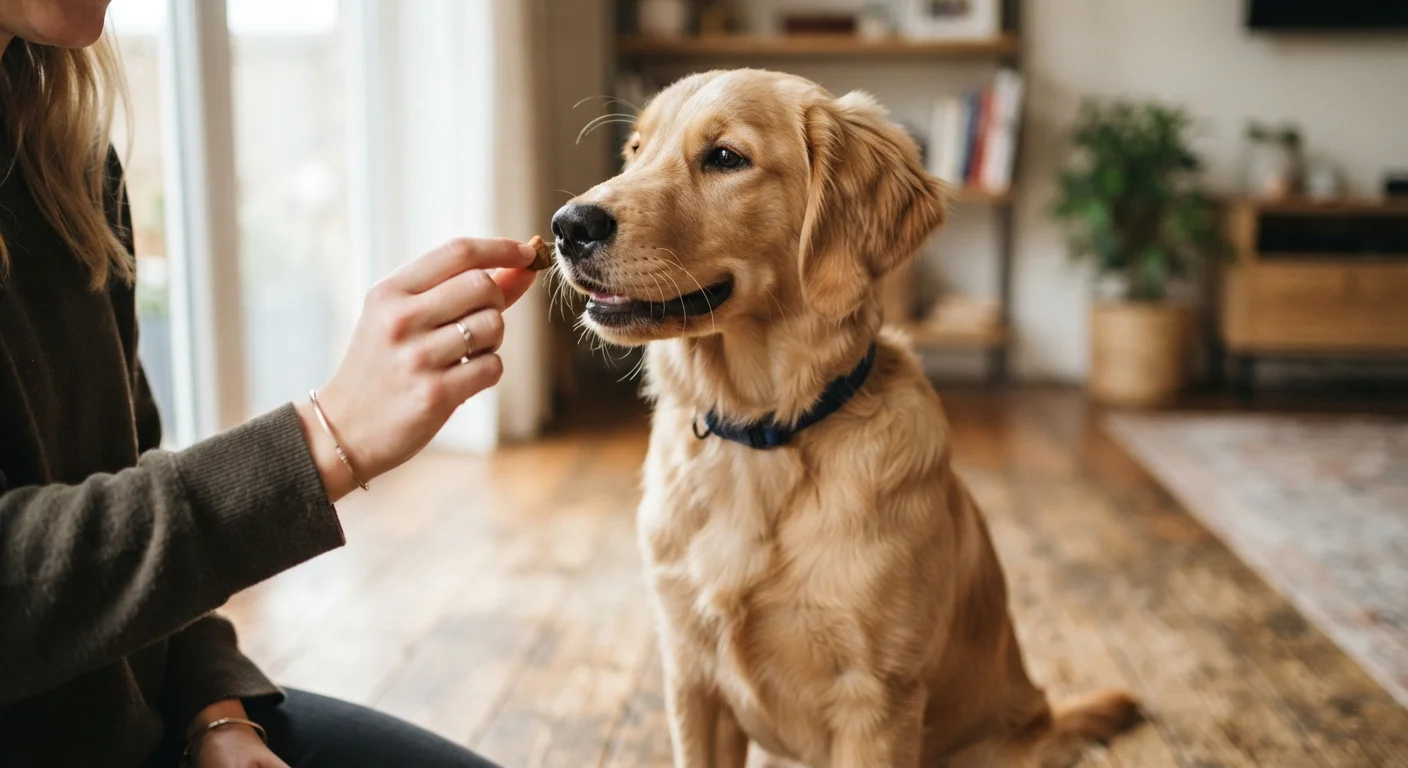
Pets respond to the act of receiving a reward, not its size. A pea-sized piece delivers the same behavioral reinforcement as a full treat while cutting calories dramatically. Over a session of 20–30 repetitions, this can reduce treat calories by 80% or more.
Count treat calories as part of daily intake, not separate from it.
Treats added on top of full meals create a consistent daily surplus. Tracking them alongside meals keeps the full caloric picture accurate and makes it easy to spot when adjustments are needed.
Alternate food rewards with non-food reinforcers like verbal praise or brief play.
Not every repetition needs a food reward to be effective, especially once a behavior is partially learned. Mixing in enthusiastic praise, a quick game of tug, or a favorite toy keeps motivation high while reducing the total treat count per session.
Choose single-ingredient or low-calorie treats for high-repetition training.
Many commercial training treats are calorie-dense by design. For sessions requiring dozens of repetitions, low-calorie alternatives like plain cooked chicken, carrot slices, or green beans give you far more "reward capacity" per calorie.
Reserve high-value treats for teaching new or difficult behaviors.
Novelty and desirability drive motivation. Saving your pet's most coveted treats for challenging tasks makes those moments more impactful, while ordinary rewards maintain familiar behaviors. This tiered approach also prevents habituation — where pets become indifferent to a treat through overexposure.
These practices work together. A training session built on tiny, high-value morsels given frequently — with praise woven in — is both more effective and more calorie-conscious than one relying on full-size commercial treats.
Quick Wins You Can Implement Today
You don't need to overhaul your entire training routine to make treats work smarter. A few immediate adjustments can meaningfully reduce calorie load while keeping your pet just as engaged.
Consistency matters more than complexity. Even one or two of these changes, applied regularly, will make a measurable difference over weeks of training.
Putting It All Together: Treats as Part of a Balanced Routine
Treats are a legitimate and effective training tool when used within a thoughtful framework. The goal isn't to eliminate food rewards — it's to integrate them into your pet's overall daily nutrition rather than treating them as extras on top of full meals.
If your pet has a high-training week (introducing new commands, working through behavioral challenges), consider slightly reducing meal portions that day to accommodate the added treat calories. This kind of flexible thinking — rather than rigid restriction — keeps training rewarding and weight stable. For a broader look at how structured mealtimes affect digestion and behavior, see our guide to free-feeding vs. scheduled meals.
59%
US dogs estimated to be overweight or obese
According to the Association for Pet Obesity Prevention's clinical survey data, a majority of US dogs are classified as overweight or obese by their veterinarians.
10%
Maximum recommended caloric share from treats
Veterinary nutritionists widely recommend that treats account for no more than 10% of a pet's total daily caloric intake to avoid unintended weight gain.
Every pet has individual needs based on age, breed, activity level, and health status. If you have concerns about your pet's weight or the appropriate number of treats for their size, a conversation with your veterinarian is always the right next step. This article provides general educational guidance and is not a substitute for personalized veterinary advice.
“Training with food doesn't have to mean overfeeding. The key is understanding that your pet is responding to the event of receiving a reward — not the quantity. Tiny treats, given consistently, are just as powerful as large ones.”
— Applied Animal Behaviorists — General Consensus, Reflected in guidance from the American Veterinary Society of Animal Behavior on positive reinforcement training