

Key Takeaways
Summary
32 items · 1.5–3 hours (full sweep) or 15–30 minutes per room
How to Use This Checklist
This room-by-room checklist is designed for families doing a full home organization sweep — whether you're starting fresh, recovering from a chaotic season, or building better systems for the long haul. Work through each room in order or jump to your highest-priority space first. Either approach works.
If you're new to home organization or just moved in, our introduction to home organization for first-time homeowners is a strong foundation to read alongside this checklist. For ongoing maintenance after your big sweep, see our seasonal home organization quarterly framework to keep things from sliding back.
Before you begin, gather your tools — having them on hand prevents mid-task interruptions that derail momentum.
Label maker or printable label sheets
Clearly mark bins, shelves, and drawers so every family member knows where things belong.
Donation boxes or bags
Collect items to donate, sell, or discard as you move through each room.
Assorted storage bins and baskets
Corral loose items within drawers, on shelves, and in closets to create defined zones.
Measuring tape
Measure shelves and cabinets before purchasing any new storage containers to ensure a proper fit.
Notepad or phone notes app
Track items to replace, containers to buy, and follow-up tasks as you discover them room by room.
Cleaning supplies
Wipe down shelves and drawers as you empty them — organization and a quick clean go hand in hand.
The Room-by-Room Checklist
Work through each category below. Items marked must are non-negotiable for functional organization; should items deliver major improvements; nice-to-have items polish the system once the essentials are in place.
For a deeper look at how to structure each room strategically, The Complete Guide to Organizing Every Corner of a Family Home expands on every category here. If disagreements among family members make organizing harder than it needs to be, Shared Spaces, Different Standards offers practical strategies for finding common ground.
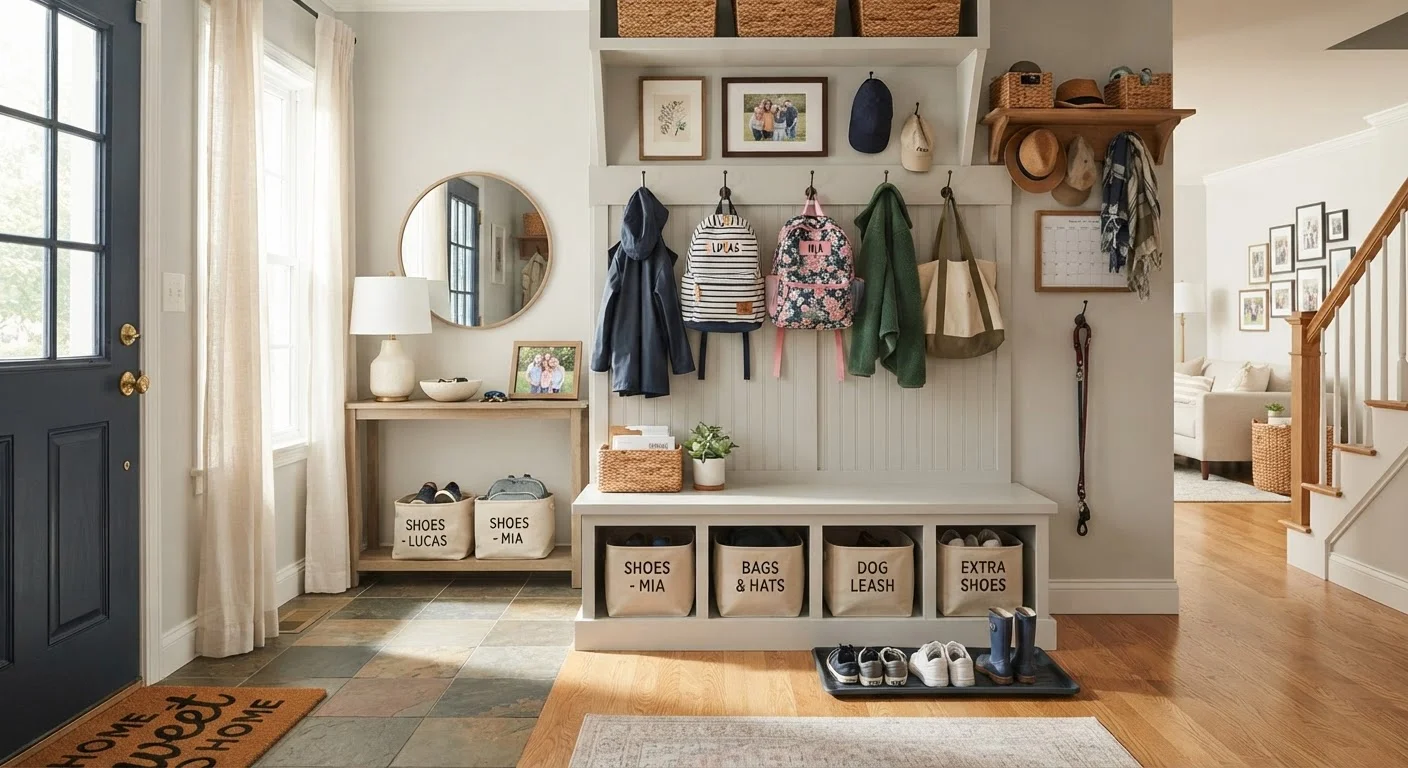
Entryway & Mudroom
Kitchen & Pantry
Living Room & Family Room
Bedrooms & Closets
Kids' Rooms & Playrooms
Bathrooms
Home Office & Paper Zones
Garage, Basement & Storage Areas
Don't Organize Before You Declutter
A common mistake is buying storage solutions before reducing the number of items in a space. Organizing excess belongings just relocates clutter — it doesn't solve it. Always declutter first, then measure and shop for containers. This sequence saves money and prevents cabinets from overfilling within weeks.
One area many families overlook: paper. Mail, school permission slips, and instruction manuals pile up fast. Our guide to tackling paper clutter is worth reading once you've worked through the physical spaces.
Finally, if you want a conceptual framework to apply across every room, zoning — assigning dedicated purposes to areas within a room — is one of the most effective single ideas in home organization.
Hazardous Materials Need Locked, Separate Storage
In garages, basements, and under-sink cabinets, keep all hazardous materials — including cleaning chemicals, paints, automotive fluids, and pesticides — in a locked cabinet that children cannot access. Never store these items in food containers or without their original labeling. Check your local municipal guidelines for proper disposal of expired or unused hazardous products rather than pouring them down the drain.