

Key Takeaways
Start here
Why Organization Matters More in a New Home
Build your foundation
Core Principles Every First-Time Homeowner Should Know
Take action
Which Rooms to Prioritize First
Make it stick
Building Systems That Actually Last
Avoid pitfalls
Common Mistakes and How to Avoid Them
Why Organization Matters More in a New Home
Moving into a first home offers a rare and genuinely valuable advantage: a clean slate. Before furniture crowds corners and drawers fill with miscellaneous items, you have the chance to decide intentionally how your household will function. Habits formed in the first few months of a new home tend to stick — for better or worse.
An organized home isn't just about aesthetics. It reduces daily friction, saves time locating everyday items, and can make a meaningful difference in how calm or chaotic a shared living space feels. For families in particular, clear systems prevent the low-grade stress that comes from constant searching, last-minute scrambles, and shared spaces that never quite feel settled.
If you're also thinking through your household finances during this transition, our guide on building your first family budget can help you align spending priorities — including what to budget for storage and home organization supplies.
Designated home
A specific, consistent location where a particular item always lives. When every item has a designated home, tidying means returning things to their spot rather than deciding where they belong each time.
Decluttering
The process of sorting through belongings to identify and remove items that are unused, broken, duplicated, or no longer serving a purpose in your home.
Organizational system
A set of habits, rules, and physical structures that define where things belong and how they get returned there — turning tidiness into a repeatable process rather than a one-time event.
Like with like
An organizing principle that means grouping similar items together in the same location, so you always know where to find something and where to put it back.
Seasonal reset
A periodic review — typically done quarterly — where you reassess what's working in your organizational systems, remove what's accumulated, and adjust storage to reflect how your family's needs have changed.
Core Principles Every First-Time Homeowner Should Know
Effective home organization rests on a handful of principles that apply regardless of home size, family size, or budget.
- Everything needs a designated home. Items that don't have a consistent place get set down anywhere — and that's where clutter starts. Assign a specific location for every category of item you own.
- Frequency drives placement. Things you use daily belong within easy reach. Seasonal or rarely used items can live in higher shelves, attic storage, or the back of closets.
- Declutter before you organize. Organizing belongings you no longer need just means managing more stuff. Before buying any storage solution, sort through what you own and remove items that are broken, unused, or duplicated.
- Like with like. Grouping similar items together — all batteries in one drawer, all cleaning supplies under one sink — means you always know where to look and where to return things.
- Involve everyone in the household. A system only works if everyone living in the home understands and buys into it. Even young children can learn simple routines when expectations are clear and storage is accessible to them.
Start With a Simple Sorting Rule
When going through any room or drawer, use three categories: keep, donate, and discard. Don't add a 'maybe' pile — it almost always becomes a keep pile by default. Making a firm decision on each item in the moment keeps the decluttering process moving efficiently.
Which Rooms to Prioritize First
Trying to organize your entire home at once is overwhelming and rarely successful. Instead, work room by room, starting with the spaces that affect daily life most directly.
The Kitchen
The kitchen is typically the highest-traffic room in a family home and the one most prone to clutter. Prioritize counter space — clear surfaces make cooking and cleaning faster and easier. Group pantry items by category, dedicate a drawer to frequently used utensils, and establish a recycling and trash system that fits naturally into your workflow.
The Entryway
The entryway sets the tone for the whole home. A hook for bags and keys, a spot for shoes, and a landing zone for incoming mail prevents the chaotic pile-up that often migrates deeper into the house. Even in small entryways, a narrow shelf or a few well-placed hooks can create order.
The Main Living Area
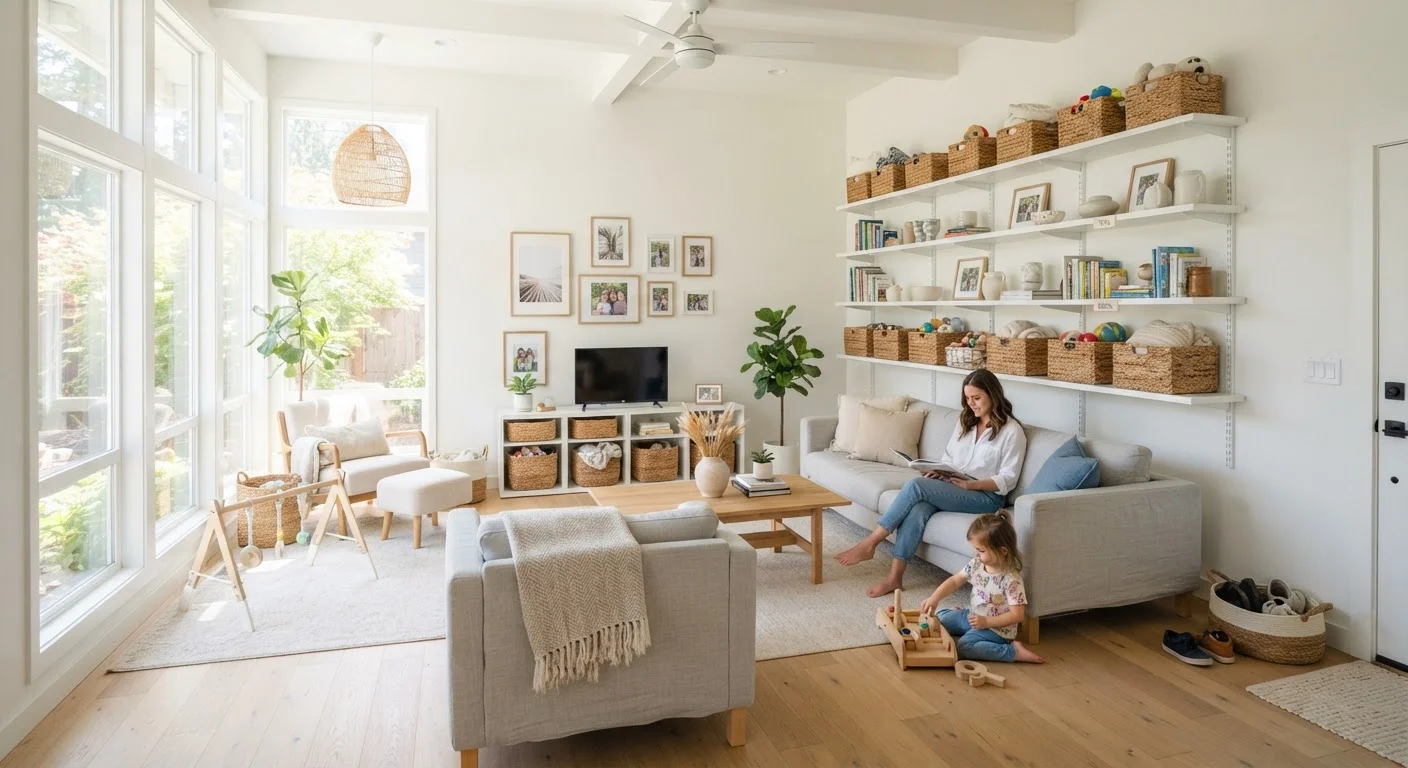
Common living spaces accumulate items from multiple family members. Baskets, ottomans with storage, and designated shelving for books, remotes, and toys keep this space functional without demanding rigid tidiness. The goal is a system everyone can reset in five minutes at the end of the day.
Once these anchor rooms are working well, you can move on to bedrooms, bathrooms, and storage areas. For a comprehensive room-by-room breakdown, see our complete guide to organizing every corner of a family home.
Building Systems That Actually Last
The most beautifully organized home will revert to chaos within weeks if the systems require too much effort to maintain. Sustainable organization is about reducing friction, not adding it.
Design each system around your household's actual behavior. If mail consistently piles up on the kitchen counter, place a small tray there and process it weekly — don't fight the habit, redirect it. If your kids drop backpacks the moment they walk in the door, put hooks at their height near the entry, not across the house in their bedrooms.
Labeling is one of the simplest and most effective tools available. When storage containers, bins, and shelves are clearly labeled, every household member — including guests and children — knows where things belong. This removes the daily mental load of remembering where things go.
Plan for regular resets. A five-minute end-of-day tidy and a more thorough weekly review keep small disorder from compounding into large disorder. The seasonal organization framework is a useful next step once your baseline systems are in place — it prevents the overwhelming whole-house overhaul that many homeowners face when they skip regular maintenance.
Organization and Your Home Budget
Many effective organizational tools are low-cost or free — repurposed containers, clear bins from discount stores, and simple labels go a long way. If you're setting up a new household budget, it's worth allocating a modest, specific amount for organizational supplies rather than shopping without a limit. See our smart spending guidance for more on value-driven purchasing decisions.
Common Mistakes and How to Avoid Them
Even well-intentioned homeowners fall into predictable traps when setting up their first home. Being aware of these patterns makes them easier to sidestep.
- Buying storage before decluttering. This is the most common and expensive mistake. Containers bought speculatively often don't fit the space or the items, leading to wasted money and clutter of their own. Always sort first.
- Optimizing for a magazine photo, not real life. Open shelving looks clean in photos but requires constant maintenance. Closed storage is more forgiving for most families. Build systems you can realistically sustain, not ones that look impressive empty.
- Not revisiting systems as life changes. A system that worked when you moved in may not work after a new baby, a pet, or a change in work schedule. Revisit your organization approach at least seasonally and adjust when something consistently isn't working.
- Ignoring shared responsibility. If one person carries the entire organizational burden, the system will eventually break down. Assign clear ownership of specific areas and involve children in age-appropriate maintenance tasks from early on.
If you find your systems repeatedly reverting to clutter despite genuine effort, the issue is often structural rather than motivational. Understanding why organization systems fail is a helpful next read once you have the basics in place.
Avoid Overcomplicating Your Systems
A system with too many steps or categories will not be maintained — especially in a busy family household. If a routine requires more than a few seconds of thought each time, it's likely too complex. Simpler systems, even imperfect ones, consistently outperform elaborate ones that no one can follow through on.
This article provides general home organization guidance for informational purposes. Costs, timelines, and results will vary based on individual circumstances and home size.