

Key Takeaways
The Perpetual Sale Problem
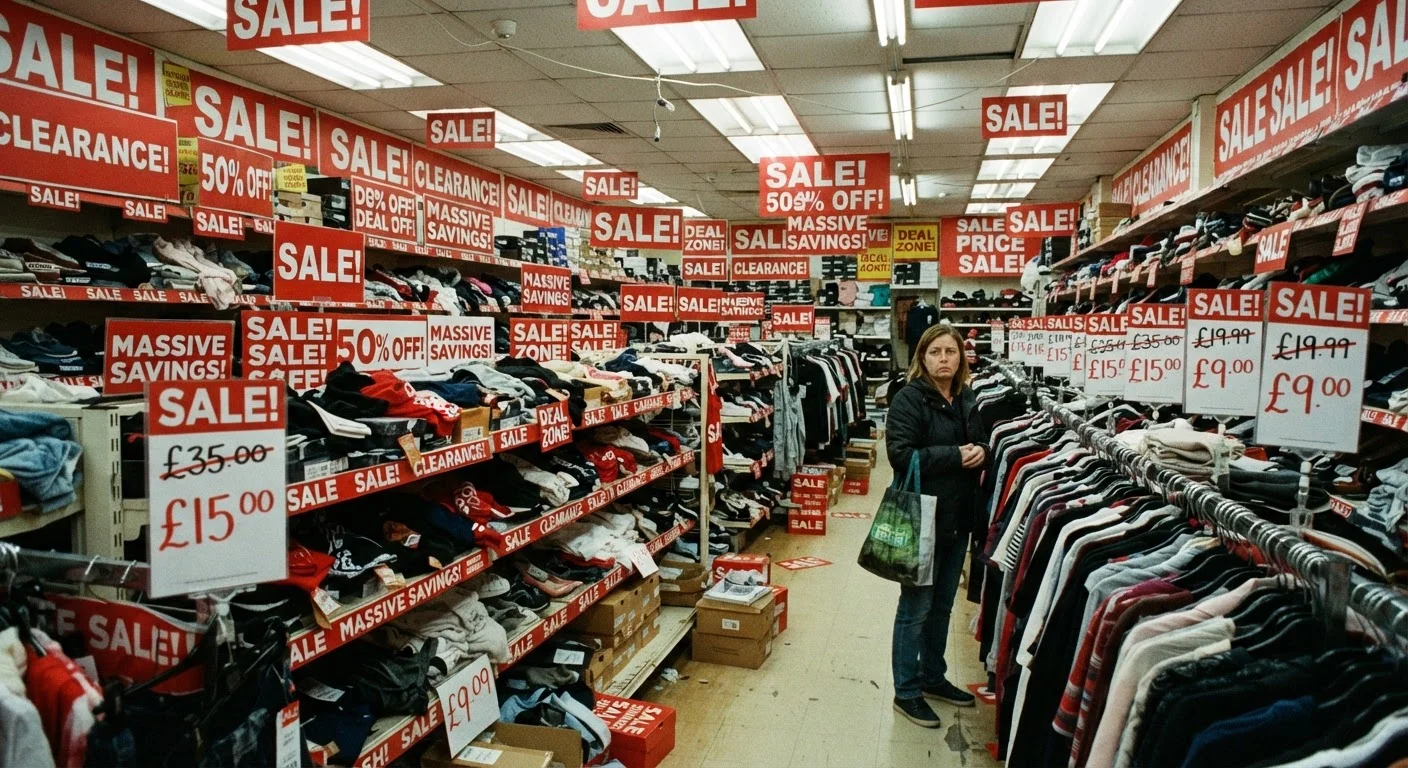
Walk into certain home goods, furniture, or clothing stores on any given Tuesday and you'll find the same scene: bold red 'SALE' banners, crossed-out prices, and urgent signage implying you're catching a rare moment of savings. Return six months later and nothing has changed. The same items carry the same 'was' prices, the same percentage-off stickers, the same manufactured urgency.
This is the perpetual discount — a pricing strategy where a retailer sets an artificially high "original" price and then runs an indefinite sale against it. The crossed-out number is not a price anyone ever paid. It's a theatrical prop. Understanding how this works is the first step toward evaluating what anything actually costs. For a deeper look at how that crossed-out number manipulates perception, see how anchor pricing works against you.
87%
Shoppers influenced by sale signage
Research published in the Journal of Marketing Research found that large sale signs led shoppers to perceive greater savings even when actual price reductions were minimal or absent.
2–3x
Typical markup above market for inflated reference prices
Consumer advocacy analyses of furniture and bedding retailers have found reference prices set significantly above the price at which items ever sold, making advertised discounts misleading.
Mistakes Shoppers Make with Sale Pricing
These errors are extremely common — not because shoppers are careless, but because the tactics are specifically designed to exploit normal human psychology. Recognizing the pattern is most of the battle.
Treating the crossed-out price as a reliable baseline for value.
Why it happens: Retailers present the 'original' price with visual authority — large font, strikethrough formatting — which makes it feel like established fact rather than a number set by the store.
Buying something unneeded because the discount feels too good to pass up.
Why it happens: A large percentage-off figure triggers a fear of missing out, overriding the more important question of whether the item was on the shopping list in the first place.
Assuming a higher 'original' price signals better quality.
Why it happens: People reasonably expect price and quality to correlate. Retailers exploit this by setting inflated reference prices that imply the product is premium, even when it isn't.
Letting sale urgency compress the decision timeline.
Why it happens: Phrases like 'today only' or 'limited quantities' create artificial pressure to decide before thinking. Even when these claims are real, urgency is a poor substitute for research.
Comparing the sale price only to the same store's reference price.
Why it happens: Shoppers often accept the store's own pricing frame as the relevant comparison, when the meaningful comparison is to the external market.
How to Establish What Something Is Actually Worth
The antidote to perpetual discounting is simple, if slightly inconvenient: find out what the item costs elsewhere before you decide whether you're getting a deal.
- Check multiple retailers. Search the identical item — same model number, same specifications — at three or more stores. A price that appears consistently across unrelated retailers is a reliable signal of genuine market value.
- Use price-history tools. Free browser extensions and websites track historical pricing on major retail platforms. If an item has sold at its current "sale" price for 11 of the past 12 months, the "original" price was fictional.
- Calculate cost per use. A $40 item you'll use 200 times is a better value than a $15 item you'll use twice — regardless of what either tag used to say. Total cost of ownership matters far more than the sticker discount.
- Define your ceiling first. Before you browse, decide the maximum you're willing to spend based on the item's role in your life. Then shop. A "60% off" sign means nothing if you haven't anchored your own number first.
The Reference Price Is Set by the Seller
No independent authority verifies that a retailer's 'original' or 'compare at' price is real. The seller sets it, and in many retail categories it is never the actual transaction price. Several U.S. states have truth-in-advertising laws that restrict fictitious reference pricing, but enforcement is inconsistent. Your best protection is external price research, not trust in the tag.
When you're unsure whether a premium version is justified, 'good enough' often beats premium lays out a practical framework for making that call without relying on sale-tag theater.