

Key Takeaways
Why Long Travel Days Feel So Hard — And How to Flip the Script
Whether you're strapped into seats for a six-hour flight or grinding through a road trip that started before sunrise, long travel days with kids can push everyone to their limits. Boredom hits fast, energy oscillates wildly, and the stakes feel high when there's nowhere to escape. The good news: most travel-day meltdowns are preventable with the right mix of preparation and flexibility.
The strategies below work across modes of travel — car, plane, or airport layover — and are designed to keep kids genuinely engaged rather than just sedated by screens. For a broader look at what goes sideways on family trips, see our guide to hidden family travel stressors.
Build an Activity Rotation, Not a Pile
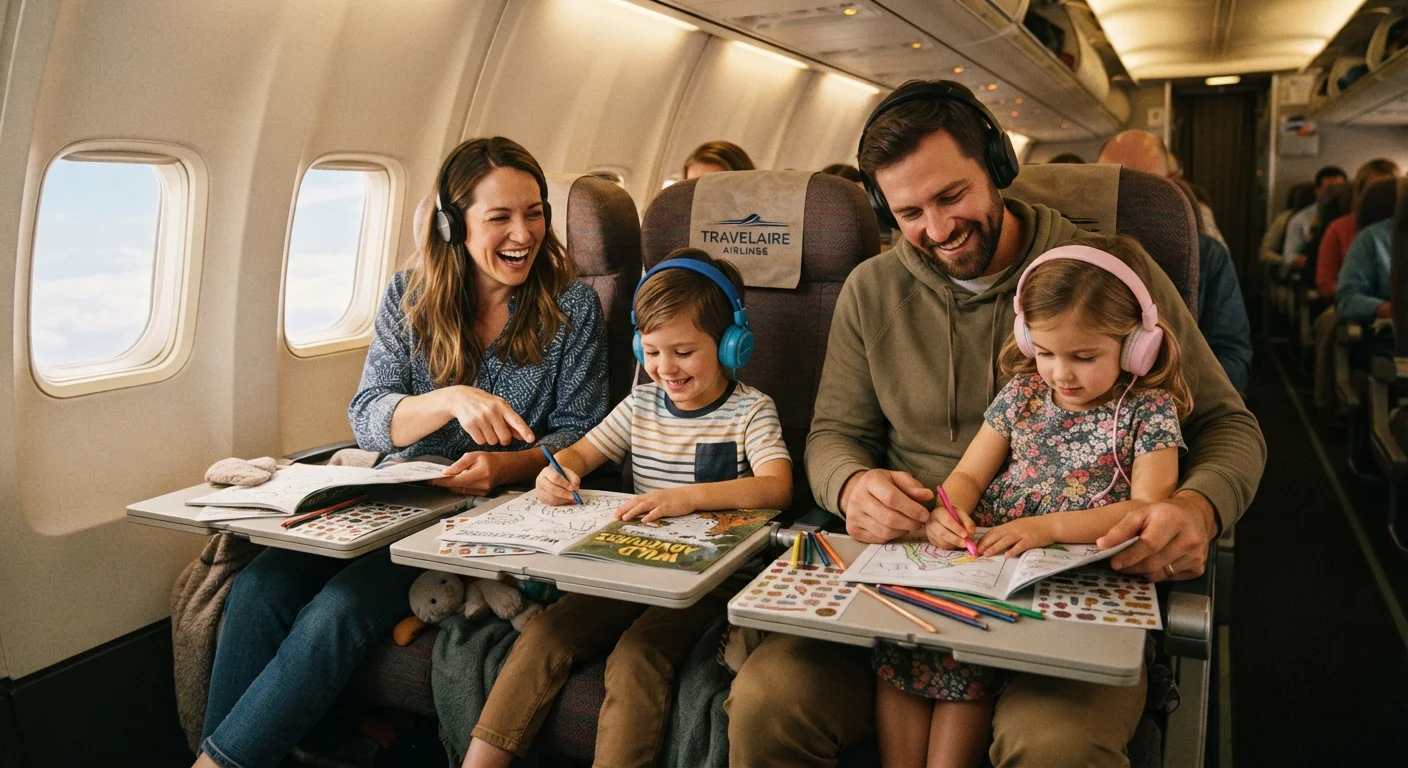
Dumping every toy and game into a bag feels thorough but backfires quickly. Instead, create a loose rotation: something creative (coloring, sticker books), something tactile (putty, a small puzzle), something audio (an audiobook or podcast), and something screen-based. Alternate between them every 30–45 minutes rather than letting one activity run until it collapses into boredom.
For a detailed breakdown of offline entertainment options that hold up on the road, screen time, audiobooks, and activity kits is worth reading before you pack.
A structured rotation keeps kids engaged far longer than an unorganized pile of options.
Use Snacks Strategically, Not Reactively
Snacks are currency on travel days — spend them wisely. Rather than opening everything at once, meter out snacks at deliberate intervals to give kids something to look forward to. Choose a mix of familiar favorites and one or two special travel-only treats that signal this day is different and exciting.
Avoid high-sugar snacks right before confined stretches where you need calm behavior. Protein-forward options — cheese sticks, nut butter packets, trail mix — sustain energy more evenly. Hunger often masquerades as irritability, so a small snack before any long boarding or check-in wait can head off a spiral.
Metering snacks at deliberate intervals gives kids something to anticipate throughout the journey.
Plan Movement Into Every Long Stretch
Kids aren't built for stillness. On planes, build in two or three short aisle walks during cruising. In cars, aim for a movement break every 90 minutes to two hours — a gas station with a patch of grass works fine. Even in airports, a walk to a distant gate or a quick sprint in an open area burns energy that would otherwise surface as climbing on seats or tearful meltdowns.
For road trips specifically, scout rest areas in advance using highway service maps. Choosing stops with playgrounds when possible turns a logistical necessity into a mini-reward kids actually want.
Scheduled movement breaks prevent the restless energy that leads to meltdowns in confined spaces.
Involve Kids in a Simple Travel Mission
Give children a job. Depending on age, this might be tracking the flight path on the in-seat map, keeping the snack bag organized, collecting boarding passes, or spotting license plates. Having a role to play transforms kids from passive passengers into active participants — and that shift in mindset reduces complaints significantly.
Older kids can keep a simple travel journal: sketching what they see out the window, writing one sentence per hour, or rating each snack. It's lightweight, offline, and creates a keepsake they'll actually want to revisit.
Giving kids a simple travel mission turns passive frustration into active participation.
Prepare for Screen Failures Before They Happen
Downloaded content, charged devices, and backup headphones are non-negotiable. Airline Wi-Fi is unreliable, and kids who expect a show and get a frozen screen escalate fast. Download everything — shows, games, audiobooks — at home where your connection is solid. Bring a small portable charger appropriate for your travel mode.
Also consider what happens if a screen breaks or gets left behind. Having at least one compelling offline activity per child means you're never fully stranded. Mess-free art kits, magnetic drawing boards, and card games weigh almost nothing and punch well above their weight in entertainment value.
Offline backups ensure entertainment doesn't collapse the moment technology fails.
Calibrate Your Expectations by Age
A three-year-old cannot hold it together for eight hours with the same resilience as a ten-year-old — and neither can perform like an adult. Matching your expectations to developmental reality is one of the highest-leverage things parents can do. A toddler who wiggles constantly isn't misbehaving; a six-year-old who asks "are we there yet" forty times is developmentally on track.
When parents stay regulated, kids find it easier to regulate too. Build buffer time so delays don't create cascading stress, pack one comfort item per child (a stuffed animal, a favorite blanket), and remind yourself that an imperfect travel day is still a travel day. For age-specific strategies on one of the trickiest travel challenges, traveling with kids across time zones is a solid companion read.
Matching expectations to your child's developmental stage is the single most calming thing a parent can do.
Arrive Ready, Not Just Packed
The groundwork you lay before you leave home shapes everything that follows. Kids who understand what to expect — roughly how long the journey is, what the plan looks like, and what's in their activity bag — travel more cooperatively than kids caught off guard. Give them a little ownership, a little novelty, and a clear signal that the adventure has already started.
Try the 'Surprise Bag' Trick
Wrap three or four small activity items in paper or small pouches and let kids unwrap one every hour or two. The novelty of unwrapping — not the item itself — is what generates excitement. This works for ages 2 through about 9 and costs very little to put together before a trip.
If you're weighing how travel mode affects kid engagement in the first place, road trip vs. flying with kids breaks down comfort, cost, and sanity across different trip types. And if you're traveling with toddlers specifically, flying with toddlers covers the age-specific challenges in detail.