

Key Takeaways
Why Family Travel Stress Often Catches Parents Off Guard
Family travel looks different on Instagram than it does in real life — and that gap is exactly where stress hides. Parents who've traveled solo or as a couple often underestimate how fundamentally children change the travel equation. Schedules slip, emotional needs multiply, and the logistics that felt manageable for two adults become genuinely complex for four.
The good news: most of these stressors are predictable. Once you know where the friction points live, you can build in buffers, set realistic expectations, and actually enjoy the trip you worked so hard to plan. Our guide for first-time family travelers covers some of the early missteps in detail — but this article goes deeper into the hidden pressure points that even experienced family travelers sometimes miss.
Cramming too many activities into each day, leaving no recovery time.
Why it happens: Parents want to maximize the trip's value and make sure kids 'see everything,' especially when travel involves significant cost and effort.
Ignoring how travel disrupts children's sleep and underestimating the behavioral fallout.
Why it happens: Adults adapt to time zone changes and irregular schedules more easily, so parents don't always realize how severely sleep disruption affects small children's temperament.
Underbudgeting by forgetting the 'invisible' costs: resort fees, tips, transportation between attractions, and food markups at tourist destinations.
Why it happens: Families focus on the big-ticket items (flights, hotel, tickets) and assume smaller costs will be minimal — but they accumulate fast.
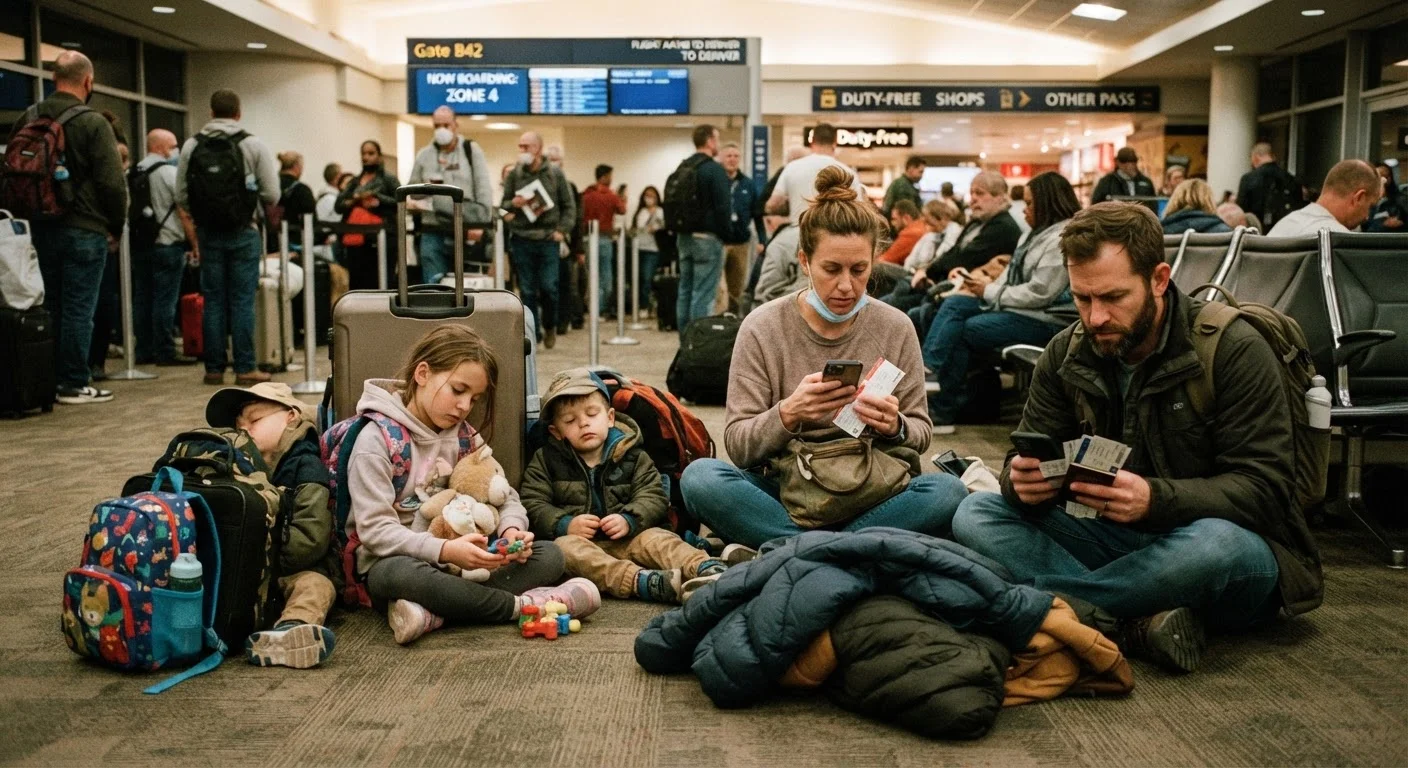
Waiting until the airport to manage boredom and anxiety in children.
Why it happens: Parents assume kids will adapt in the moment, or they don't want to over-prepare for a scenario they hope won't be that bad.
Failing to involve children in any part of the trip planning, then being surprised when kids feel no ownership over the experience.
Why it happens: Planning feels like an adult task, and parents worry kids will ask for things that aren't realistic.
Building a Trip That Bends Without Breaking
Resilience is the most underrated travel skill a family can develop. No itinerary survives contact with a toddler's nap schedule or a delayed connecting flight completely intact — and that's okay. The families who report the most enjoyable trips tend to be the ones who built breathing room into every day, not the ones who executed a perfect plan.
1 in 3
Family trips disrupted by unexpected delays
Travel industry surveys consistently find that a significant share of family vacations are affected by weather, flight delays, or illness — underscoring the value of flexible itineraries.
20%+
Average budget overrun on family trips
Financial planning research suggests families commonly exceed their vacation budgets by 15–25%, largely due to underestimated incidental and food costs at tourist destinations.
Start your planning from a realistic foundation. Our complete family vacation planning guide walks through how to structure an itinerary that accounts for the unexpected, and it's worth reading before you book anything. Think of your daily schedule as a loose framework rather than a contract — pencil in one or two anchor activities per day and leave the rest open to how everyone actually feels.
Budget flexibility matters just as much as schedule flexibility. Many families discover mid-trip that their numbers were optimistic. Understanding how family travel budgets actually work — including the hidden costs most people miss — can prevent financial stress from overshadowing the whole experience.
Don't Skip Travel Insurance for Families
Medical emergencies, trip cancellations, and lost luggage hit differently when children are involved. Review what your existing health and credit card coverage includes before purchasing a separate policy — but don't assume you're automatically covered. Verify the specifics with your provider and check official government travel resources for any destination-specific health considerations.
Whatever destination you choose, lean into what works for your specific kids rather than chasing a picture-perfect trip. For destination ideas calibrated to real family needs, the US family destinations hub is a solid starting point. And remember: a relaxed, present parent is the most valuable thing you can bring on any trip.