

Key Takeaways
Choose Your Flight and Seat Strategically
Your easiest win happens before you ever reach the airport. Booking a flight that overlaps with your toddler's regular nap or bedtime dramatically increases the chances they'll sleep through a chunk of the journey. For choosing between nonstop and connecting options, nonstop is almost always worth the extra cost with a toddler in tow — fewer transitions, less disruption.
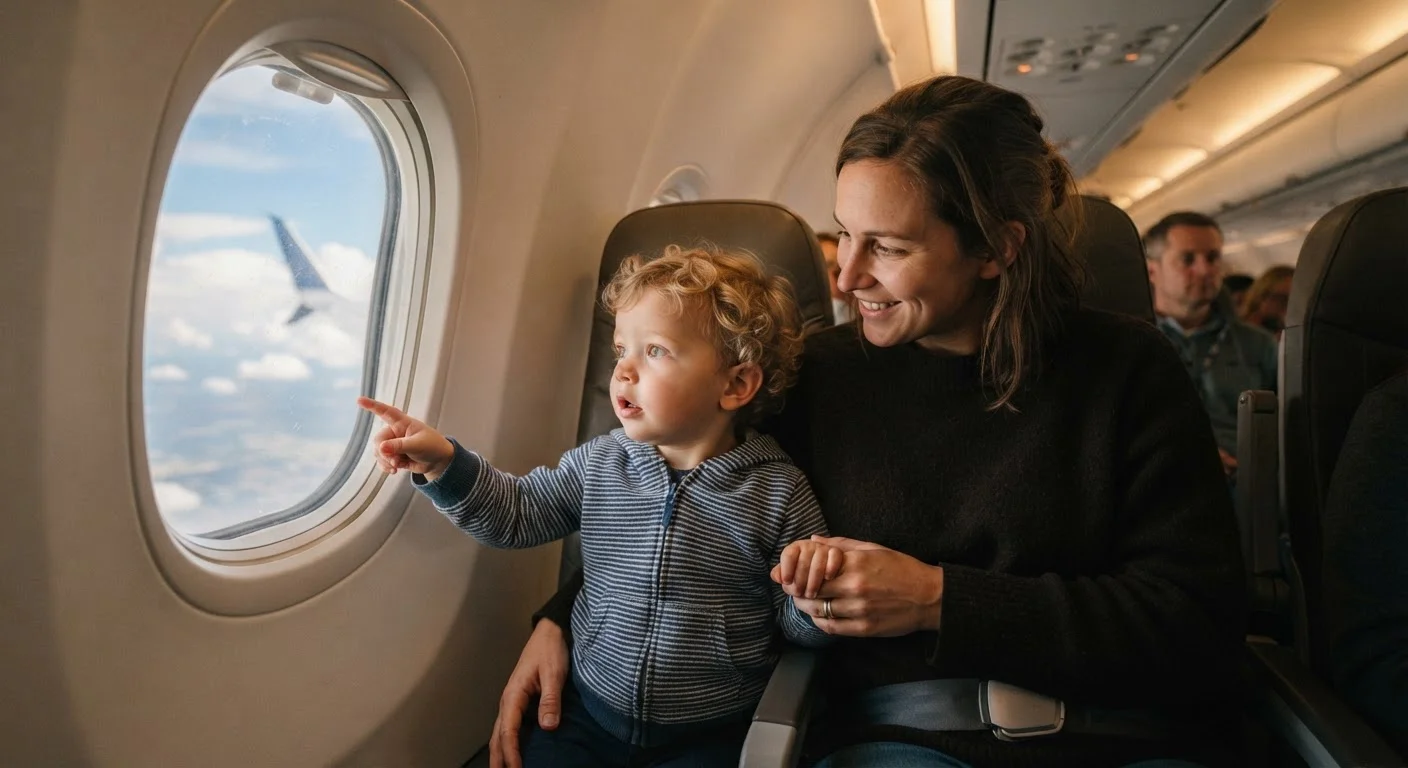
When it comes to seating, the bulkhead row offers extra floor space and, on some international carriers, a bassinet mount for children under a certain weight — always confirm with the airline before booking. Window seats let toddlers peer outside (a genuine source of wonder) and shield them from aisle disruptions. Aisle seats give you faster bathroom access. Many families split the difference by booking a window and an aisle in the same row on a three-seat configuration, leaving the middle seat open — if the flight fills, you simply move over.
Handle Ear Pressure and Physical Comfort
Ear pain during ascent and descent is one of the most common causes of toddler meltdowns on planes. The Eustachian tubes in young children are narrower and more horizontal than in adults, making pressure equalization harder. Encourage swallowing by offering a sippy cup, nursing, or a small snack timed to takeoff and the start of descent. Chewing a soft snack also helps. Avoid putting anything in the ear canal — this does not help and can cause harm.
If your child is congested before travel, consult your pediatrician about whether any steps are appropriate for your specific child — this is a medical question, not one to answer with over-the-counter guesswork.
Ask About Bassinet Availability Early
On longer international routes, many airlines offer wall-mounted bassinets in bulkhead rows for infants and smaller toddlers under a weight limit (typically around 20–25 lbs, though this varies). These must be requested directly with the airline — often by phone — and cannot be reserved through standard seat selection tools. Call as soon as your booking is confirmed, since these spots go quickly.
Physical comfort matters beyond just ears. Dress your toddler in layers you can easily add or remove — airplane cabins swing between warm and cold unpredictably. Bring a small, familiar blanket. Keep a change of clothes (for both of you) in your personal item, not the overhead bin.
Pack Smart: Entertainment That Actually Works
The instinct to pack every toy and gadget you own is understandable but counterproductive. A bag overflowing with options overwhelms toddlers and exhausts parents. Instead, think in layers of novelty. Start with one or two very familiar, comfort items — a favorite small toy or board book. Then introduce new items gradually as the flight progresses, spacing them out over 30-to-45-minute intervals.
Sticker books, washable window clings, a small dry-erase board, and simple finger puppets are lightweight and reliably engaging. A loaded tablet with downloaded shows and simple apps works well but shouldn't be your only tool — screens lose their hold faster than parents expect at this age. For more strategies to manage boredom on extended travel days, layered planning is the consistent theme.
Snacks are underrated entertainment. New-to-them snacks presented as special treats buy genuine engagement time. Pack variety: crunchy, chewy, sweet, savory. Avoid anything that requires refrigeration or creates major mess. If your child has dietary restrictions, our food allergy travel planning guide covers how to approach airline meals and snack logistics safely.
Set Realistic Expectations and Protect Your Own Energy
No amount of preparation guarantees a smooth flight, and experienced family travelers know this. Toddlers are unpredictable. There will likely be a fussy stretch, possibly a tantrum, potentially a blowout diaper at 35,000 feet. Going in with that expectation — rather than hoping for a miracle — actually makes difficult moments easier to handle calmly.
Fellow passengers are generally more understanding than anxious parents fear. A brief, friendly acknowledgment at boarding goes a long way. Focus your energy on staying regulated yourself: your toddler reads your stress level directly. If you can stay calm, their recovery from upset moments is typically faster.
Jet Lag Doesn't End at Landing
Successfully surviving the flight is only part of the challenge when you're crossing time zones. Toddlers can take several days to adjust their sleep rhythms, which affects the start of any vacation. Planning lower-key activities for the first day or two after arrival helps buffer the adjustment period. Always consult your pediatrician before using any sleep aids or supplements for young children.
For families crossing multiple time zones, sleep disruption doesn't end at landing. See our guide on managing jet lag in young children for general adjustment strategies, and check with your pediatrician for guidance specific to your child. And if you're still weighing whether flying is the right call for your family's particular trip, comparing driving vs. flying trade-offs can help you make a clear-eyed decision.