

Key Takeaways
Why 'Healthy' Packaging Can Be Misleading
Walking down the grocery store snack aisle, it's easy to feel reassured by labels that say "made with real fruit," "whole grain," or "no artificial colors." These phrases are carefully chosen to build trust - but they don't always tell the full story about what's inside the package. Marketing terms like "natural" often carry no standardized legal definition, meaning they can appear on products regardless of overall nutritional quality. Our guide to what common label terms actually mean explores this in depth.
This doesn't mean every packaged snack is a poor choice. It does mean that the front of the package is the least reliable place to evaluate a food. Understanding a few key label-reading strategies helps families make more confident decisions at the store - without anxiety or second-guessing every purchase.
Front-of-Package Claims Have Limits
Phrases like "made with real fruit," "whole grain goodness," or "no high-fructose corn syrup" are marketing statements, not nutritional assessments. They can be accurate and still appear on products with high added sugar or low fiber. Always cross-reference with the Nutrition Facts panel and ingredient list before drawing conclusions about a food's overall nutritional value.
Common Nutrition Pitfalls in Popular Kids' Foods
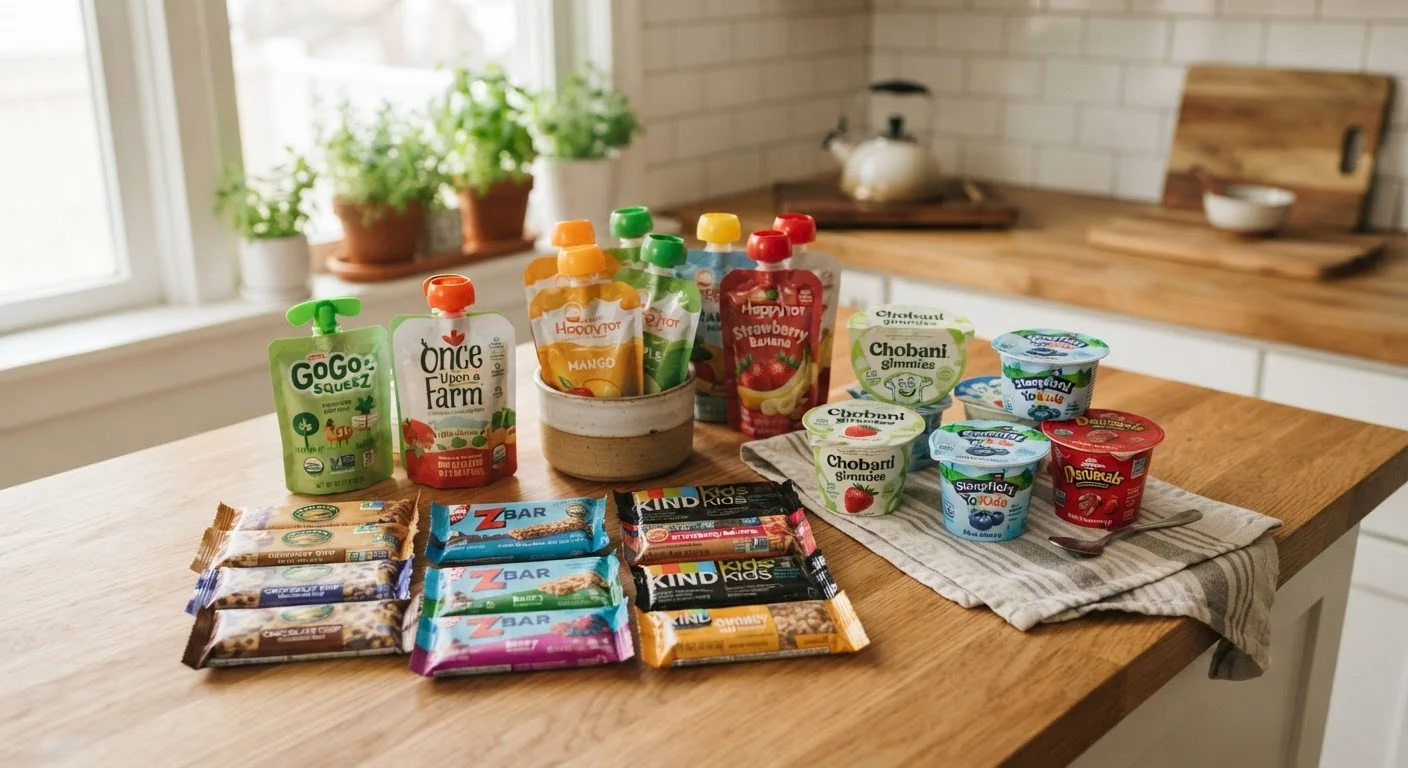
The mistakes below show up repeatedly in foods that families reasonably trust. Recognizing them makes it easier to spot the trade-offs before they reach the lunchbox.
Assuming fruit pouches are equivalent to whole fruit.
Why it happens: Fruit pouches are convenient and made from real fruit, so they feel like a straightforward swap. The "real fruit" claim on the front reinforces that impression.
Overlooking added sugar in flavored yogurts.
Why it happens: Yogurt is widely understood as a nutritious food, and the presence of calcium and protein makes flavored varieties feel like a safe pick. Fruity flavors reinforce the wholesome impression.
Treating granola bars as a nutritionally complete snack.
Why it happens: Granola bars often carry "whole grain" or "oat" branding, which signals health. They're also portable and easy, making them a go-to option for busy families.
Ignoring sodium in savory snacks labeled 'baked' or 'reduced fat'.
Why it happens: Terms like "baked" and "reduced fat" carry a health halo. Parents reasonably assume these versions are broadly healthier than their standard counterparts.
Relying on juice as a fruit serving.
Why it happens: 100% fruit juice has long been associated with health, and it's an easy way to get children to consume something fruit-derived. Many packages emphasize vitamin C content.
Not checking whole grain claims against the actual ingredient list.
Why it happens: "Made with whole grains" on a package sounds definitive. Families reasonably take it at face value without investigating further.
19g
Added sugar in some kids' flavored yogurt cups
Nutrition label comparisons across commonly available single-serve flavored yogurts show added sugar content varying widely, with some reaching levels comparable to dessert foods.
~45%
Of children's juice intake is 100% juice
According to CDC dietary data, a significant share of children's daily fruit intake comes from juice rather than whole fruit, which provides less fiber and more concentrated sugar per serving.
Building Better Label-Reading Habits
The Nutrition Facts panel and the ingredient list are your most reliable tools. A few practical habits make them easier to use quickly:
- Check serving size first. Many snack packages contain two or more servings, which can double the sugar or sodium figures you're looking at.
- Look at added sugars separately. The updated Nutrition Facts label now lists "Added Sugars" as its own line beneath total sugars - focus there. The how hidden sugars appear on labels guide walks through the dozens of names sugar can take in an ingredient list.
- Prioritize fiber and protein. Snacks with at least 2-3 grams of fiber and some protein tend to be more satisfying and nutritionally useful than those heavy on simple carbohydrates.
- Note ingredient order. Ingredients are listed by weight, heaviest first. If sugar - under any name - appears in the first three ingredients of a food marketed as wholesome, that's worth noting.
For a broader picture of how these individual choices fit into overall family eating patterns, the Family Food Plate guide offers age-by-age nutritional context.
Added Sugars Now Have Their Own Label Line
The FDA's updated Nutrition Facts label requires manufacturers to list "Added Sugars" as a separate line item, distinct from naturally occurring sugars. This change makes it easier to evaluate products like flavored yogurt or fruit snacks, where natural and added sugars were previously combined in a single figure. Learning to find this line quickly is one of the most practical label-reading skills a family can develop.
This article is for general informational and educational purposes only and is not a substitute for professional medical or dietary advice. Consult a registered dietitian or your child's healthcare provider for guidance specific to your family's needs.