

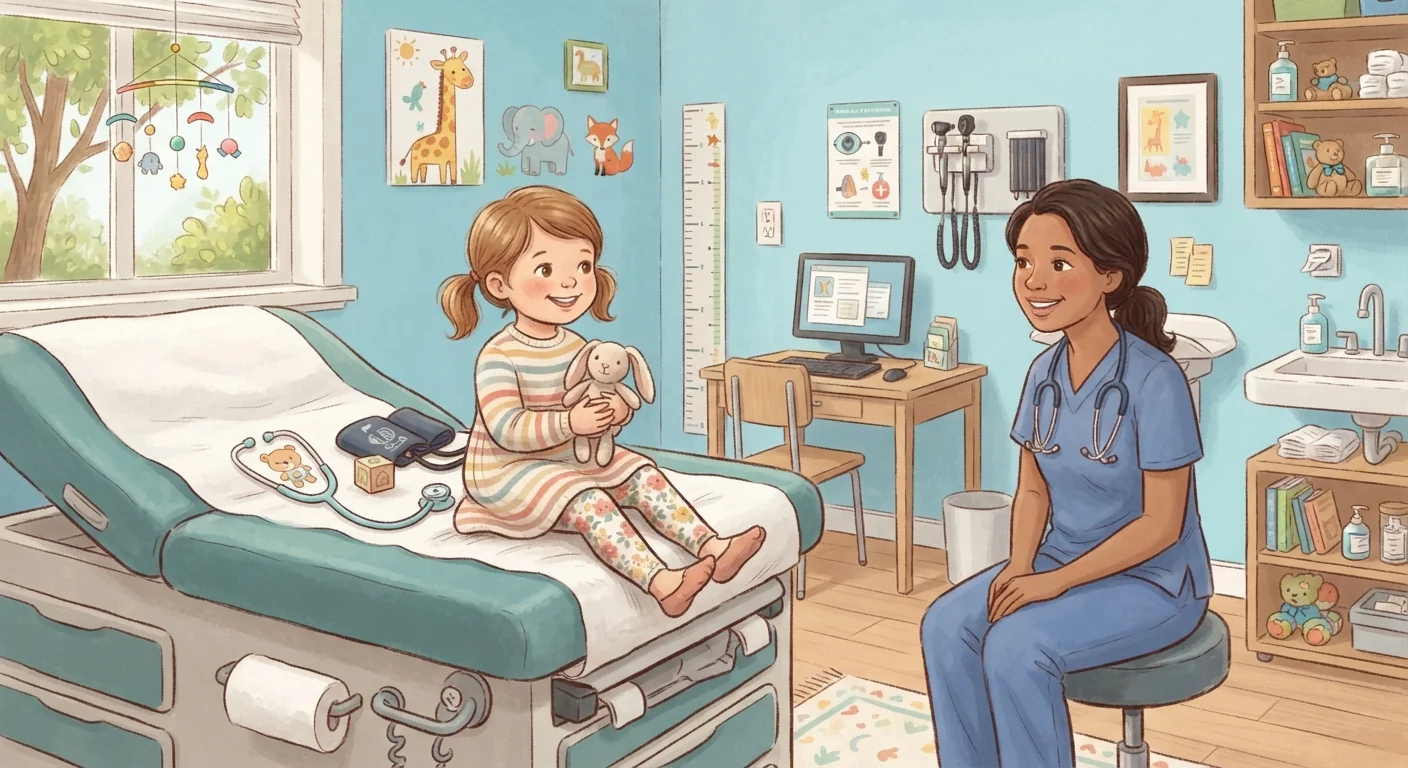
What Well-Child Visits Are - and Why They Matter
Well-child visits, sometimes called health supervision visits or checkups, are scheduled appointments with a pediatrician or primary care provider when a child is healthy - not sick. Their purpose is proactive: tracking growth and development, delivering vaccines on schedule, screening for potential concerns early, and giving parents an open forum to ask questions.
The American Academy of Pediatrics (AAP) recommends a specific schedule of visits from birth through age 21. The timing is intentional, aligned with critical windows of development when screenings are most informative and vaccines are most effective.
Think of these visits as a recurring baseline. Each one builds on the last, allowing the provider to spot trends that a single snapshot might miss. For a deeper look at how growth data is interpreted visit by visit, see how pediatric growth charts actually work.
Infancy: Newborn Through 12 Months
The first year of life has the most densely scheduled checkups - typically at 3-5 days, 1 month, 2 months, 4 months, 6 months, 9 months, and 12 months. This frequency reflects how rapidly newborns change and how quickly problems can escalate if undetected.
At each infant visit, providers generally:
- Measure weight, length, and head circumference and plot them on a growth chart
- Assess feeding - breast milk, formula, or the introduction of solids after 6 months
- Check developmental milestones such as social smiling, tracking objects, and reaching
- Administer vaccines per the CDC immunization schedule
- Screen for jaundice, anemia, and hearing concerns at specific intervals
- Discuss safe sleep practices to reduce SIDS risk
Parents can expect the 9-month visit to include a formal developmental surveillance check, and the 12-month visit typically adds a blood lead screening and autism-specific observation.
Developmental milestone
A skill or behavior most children can perform by a certain age, such as walking by 12-15 months or speaking two-word phrases by 24 months. Milestones are ranges, not hard deadlines.
Developmental surveillance
An ongoing process at every well-child visit where the provider observes and asks about a child's skills, behavior, and family concerns - distinct from a formal screening test.
Immunization schedule
The CDC- and AAP-recommended timetable for childhood vaccines, designed to provide protection at the ages when children are most vulnerable to specific diseases.
BMI (Body Mass Index)
A calculation using height and weight used to track whether a child's weight is within a healthy range for their age and sex. In children, BMI is plotted on age- and sex-specific growth charts.
Fluoride varnish
A concentrated fluoride coating applied to tooth surfaces by a health provider to help prevent early tooth decay, especially when dental care access is limited.
Toddler and Preschool Years: Ages 1-5
Visits continue at 15 months, 18 months, 24 months, 30 months, and annually starting at age 3. Language development becomes a central focus during this window, and providers use validated screening tools to assess communication milestones.
Autism spectrum disorder screening is recommended at the 18- and 24-month visits using standardized questionnaires. A positive screen does not mean a diagnosis - it means a closer look is warranted.
Other routine elements during this stage include:
- Blood pressure measurement (typically begins at age 3)
- Vision screening - formal eye chart testing usually starts around age 3-4
- Dental health discussion; providers often apply fluoride varnish in practices where dental access is limited. Building strong habits early matters - see oral health habits that set children up for life for age-specific guidance
- Body mass index (BMI) tracking beginning at age 2
- Nutritional counseling around the transition from whole milk, iron-rich foods, and limiting juice
What to Bring to Every Visit
Bringing an updated list of any medications, supplements, or vitamins your child takes helps the provider give accurate guidance. It's also helpful to jot down developmental questions or behavioral observations ahead of time - visits can feel brief, and a written list ensures nothing important gets overlooked. If your child has seen any specialists since the last visit, bring those records or contact details.
School Age Through Adolescence: Ages 6-21
Annual visits continue from age 5 onward. The content of each visit shifts to reflect the child's expanding social world, academic environment, and increasing autonomy.
Ages 6-11: Providers assess academic progress, social relationships, screen time habits, and physical activity. Cholesterol screening is recommended once between ages 9 and 11. Hearing and vision checks remain part of the standard visit.
Ages 11-21: Adolescent visits include a confidential portion - time spent with the provider without a parent present - to allow open discussion of topics such as mental health, substance use, sexual health, and relationships. Providers use structured tools to screen for depression, which the AAP recommends beginning at age 12. If you're noticing behavioral changes between visits, recognizing emotional struggles early offers helpful context for parents.
Vaccines continue during adolescence; the HPV series, meningococcal vaccine, and an annual flu shot are among the key additions. Families preparing for the school year can use our back-to-school health preparation checklist to stay organized.
~54%
Children with a preventive visit in the past year
According to the CDC's National Health Interview Survey, roughly half of U.S. children receive a preventive care visit annually, with rates varying by insurance status and geography.
17
Recommended well-child visits from birth to age 21
The AAP Bright Futures schedule outlines approximately 17 recommended visits covering health supervision from newborn through young adulthood.
10-12
Vaccines typically completed by age 2
The CDC childhood immunization schedule protects against a range of serious diseases during the most vulnerable early years of life.
This article provides general health information for educational purposes only and is not a substitute for advice from a qualified healthcare professional. Always consult your child's pediatrician or primary care provider with questions about your child's individual health, development, or care plan.