

Key Takeaways
One-Click Impulse Buying
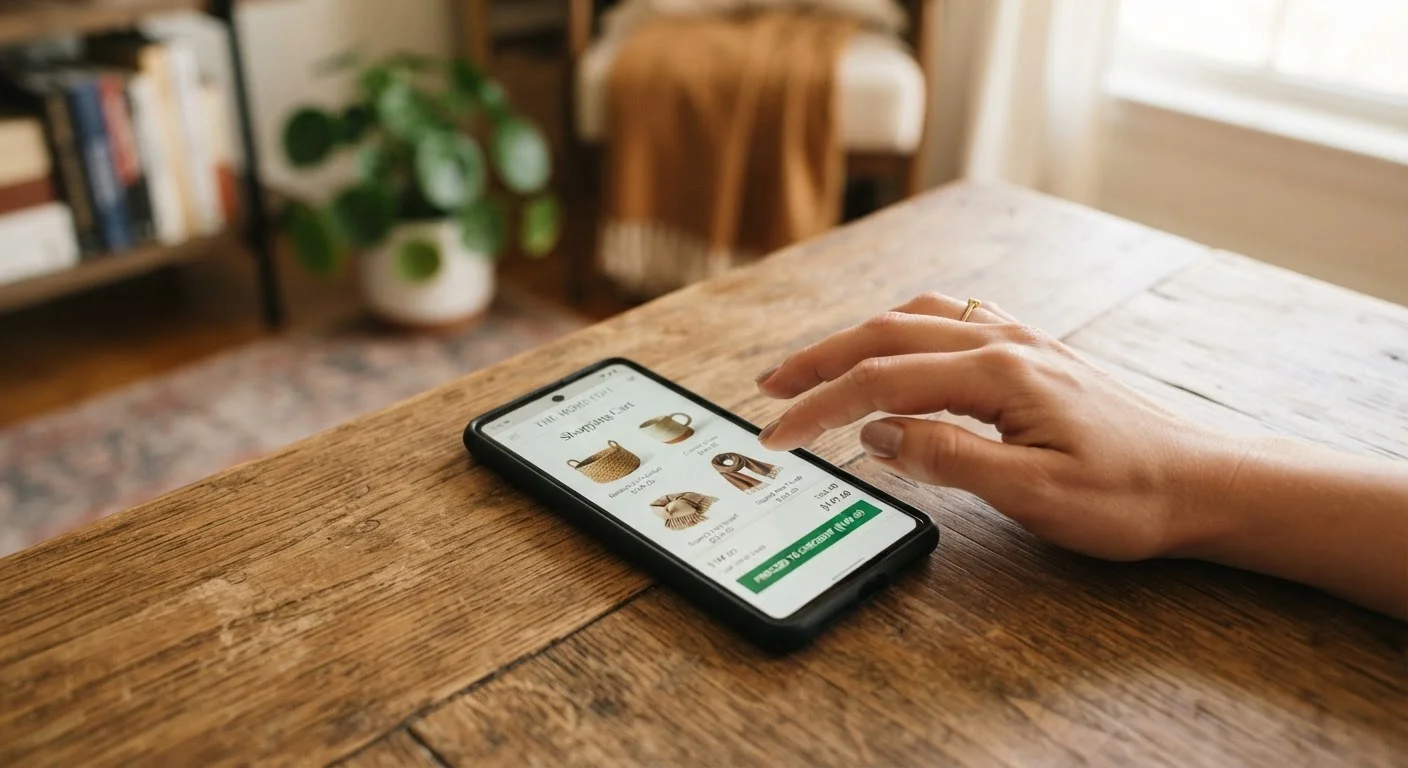
One-click impulse buying describes the unplanned purchase of a product triggered by streamlined digital checkout features - saved payment details, instant buy buttons, and frictionless cart flows - that dramatically reduce the time between wanting something and paying for it. Unlike in-store impulse buys, which require physical presence and cash handling, online versions can happen in seconds from your couch. The result is spending that bypasses the deliberate thinking that helps us decide whether a purchase is actually worth it.
Behavioral economists call this 'present bias' - we systematically overvalue immediate gratification relative to future costs. Frictionless checkout systems exploit this tendency by eliminating natural pause points in the buying process.
How Digital Checkout Rewires Spending Behavior
Traditional retail was full of natural speed bumps: walking to the store, finding the item, standing in line, counting out cash or signing a receipt. Each step gave your brain a moment to reconsider. Online shopping, particularly with one-click checkout, has systematically removed those pauses.
When your card details are stored, your address is pre-filled, and a single tap completes a transaction, the psychological distance between wanting something and owning it collapses to near zero. Platforms have optimized this deliberately - every additional step in a checkout flow reduces the probability of a completed sale, so reducing steps is core business strategy, not incidental convenience.
The consequence for household budgets is real. What might have been a fleeting desire - a gadget spotted in a social media ad at 11 p.m. - becomes a shipped package by the time you've had coffee the next morning. Understanding that this compression is intentional is the first step toward shopping on your own terms. See our guide to retail dark patterns for a closer look at specific design tactics used to steer your clicks.
The Tactics That Accelerate Unplanned Spending
One-click checkout doesn't operate alone. It's embedded in a broader ecosystem of persuasion features that work together to shorten your deliberation window:
- Artificial urgency: Countdown timers and "Only 3 left!" alerts are frequently manufactured rather than accurate. Artificial urgency tactics exploit loss aversion - the fear of missing out overrides careful evaluation.
- Pre-checked add-ons: Warranty upgrades, subscription enrollments, or related items are sometimes added to your cart by default, requiring active effort to remove.
- Personalized recommendations: Algorithms surface items based on your browsing and purchase history at precisely the moments when you're most likely to act - browsing late at night, for instance.
- Frictionless returns messaging: "Free, easy returns" reduces the perceived risk of buying impulsively, even though returning items takes real time and effort most people don't follow through on.
~$314
Average monthly impulse spend per US consumer
Slickdeals' annual impulse spending survey has consistently found Americans report spending over $300/month on unplanned purchases, with online shopping cited as a primary driver.
54%
Online shoppers who regret impulse purchases
Multiple consumer surveys indicate that more than half of online impulse buyers report some level of post-purchase regret, particularly for items bought via mobile devices.
3-5 seconds
Typical checkout time with one-click purchasing
Friction analysis by e-commerce researchers shows that optimized one-click flows can complete a purchase in under five seconds, leaving almost no gap for reconsideration.
Each tactic is individually modest. Together, they form a purchasing environment that consistently produces spending decisions you might not make with a 24-hour gap and a clearer head. For a deeper look at how these tactics differ from deliberate purchasing, see the psychological gap between impulse and considered buying.
Practical Ways to Rebuild Decision-Making Friction
You don't need willpower alone to resist these systems - you need structural changes that make slowing down the default, not the exception.
The Simplest Friction Fix: Remove Your Saved Card
Log into your most-used shopping accounts and delete stored payment information. This one change adds 60-90 seconds to every checkout - enough time for your prefrontal cortex to weigh in before your impulse wins. You can always save the card again, but the habit of re-entering it consistently interrupts automatic buying.
Remove stored payment methods. This is the single highest-impact action. Requiring yourself to retrieve your card and manually enter 16 digits introduces enough delay for second thoughts to surface. It feels inconvenient at first, and that inconvenience is the point.
Use a wish list as a holding zone. Instead of buying immediately, move items to a list and revisit them after 48 hours. Many people find that the desire fades entirely - or confirms that the purchase is genuinely wanted. Our article on why a 48-hour pause changes spending habits explains why this cooling-off window is so effective.
Set a household dollar threshold. Agree as a family that any purchase above a set amount - $50 is a common starting point - requires at least one night before checkout. This isn't about restricting spending; it's about making sure spending reflects actual priorities rather than momentary impulse.
Run a pre-purchase check. Before completing any online order, a quick pre-purchase checklist can help you catch surprise fees, verify the seller, and confirm the item genuinely meets a need.
This article is for general informational purposes only and does not constitute financial advice. Consider speaking with a qualified financial professional about strategies suited to your specific household budget and circumstances.