

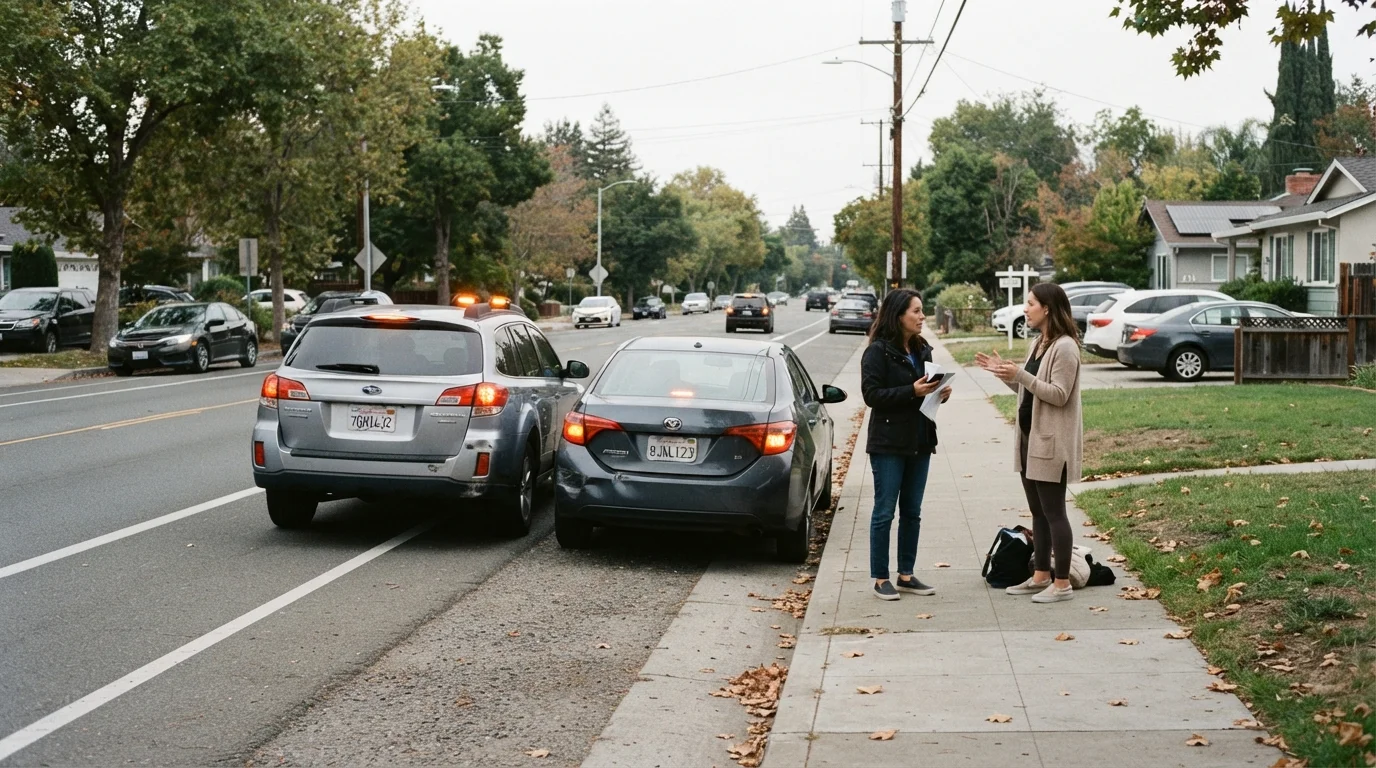
Key Takeaways
Why the First Minutes Matter Most
A collision activates the body's stress response within seconds. Heart rate spikes, perception narrows, and memory becomes unreliable. Research in emergency psychology consistently shows that people in high-stress situations struggle to recall events accurately even minutes after they occur. This is why having a clear mental framework - or a written reference - for what to do can make a meaningful difference in how protected you are afterward.
The actions you take (or don't take) at the scene directly affect your safety, your passengers' safety, your legal standing, and the outcome of any insurance claim. Families with children in the vehicle face additional complexity: managing frightened kids while also managing a crash scene requires calm prioritization. If you frequently drive with young passengers, the guidance in our guide to driving safely with young children covers how to build safer everyday habits that reduce crash risk in the first place.
Store a Crash Info Card in Your Glove Box
Print a simple card listing what to do, what to photograph, and what information to collect. In the stress of an accident, even experienced drivers can forget steps. Keeping this card alongside your registration and proof of insurance means it's always within reach.
Understanding crash dynamics also starts well before an accident occurs. Many collisions stem from preventable behaviors - following too closely is among the most common contributing factors in rear-end crashes.
What You'll Need at the Scene
Being prepared before a crash happens dramatically simplifies what you need to do after one. Keep the following in your vehicle at all times:
Smartphone with camera
Used to photograph the scene, damage, license plates, and insurance documents.
Warning triangles or road flares
Alert oncoming traffic to the presence of stopped vehicles and reduce secondary collision risk.
Basic first aid kit
Provides initial care for minor injuries while waiting for emergency services.
Pen and notepad (or notes app)
Record driver statements, witness names and contact details, and officer badge numbers.
What you will need
If you're helping a new or young driver prepare, our article on car maintenance for new drivers includes guidance on what to keep in your vehicle as part of responsible ownership. Teaching teens what to do after a crash is equally important - our guide for parents teaching teen drivers addresses emergency preparedness as part of supervised driving practice.
Step-by-Step: What to Do After a Crash
Check for Injuries and Call 911 if Needed
Before anything else, take a breath and assess. Check yourself for pain or disorientation, then check any passengers - including children. Ask anyone who can answer: "Are you hurt?" If anyone is injured, call 911 immediately. Even if injuries appear minor, emergency services can evaluate and document them on scene, which matters later.
Move to Safety and Activate Hazard Lights
If the vehicles are drivable and it is safe to do so, move them out of active traffic lanes - to a shoulder, parking lot, or side street. Turn on hazard lights immediately. In some states, leaving a drivable vehicle in a travel lane when a safe alternative exists is a traffic violation. If the car cannot be moved, get occupants to safety behind a barrier or well off the roadway.
Call Police and Request a Report
Even for seemingly minor collisions, a police report creates an official, neutral record of the incident. This document is often required by insurers and is invaluable if liability is disputed later. When officers arrive, provide factual, accurate information. Ask for the responding officer's name, badge number, and how to obtain a copy of the report.
Exchange Information With the Other Driver
Collect and share the following with the other driver:
- Full legal name and contact number
- Driver's license number and issuing state
- Insurance company name and policy number
- Vehicle make, model, color, and license plate
Do this calmly and efficiently. If the other driver becomes hostile or uncooperative, do not escalate - wait for police to facilitate the exchange.
Document the Scene With Photos
Use your smartphone to photograph all visible damage on both vehicles, the overall scene from multiple angles, road conditions, skid marks, traffic signs, and any relevant obstructions. If there are visible injuries (with consent), document those too. Capture license plates and, if they stopped, witness vehicles. This evidence can be critical in resolving disputes about what happened.
Gather Witness Information
If bystanders witnessed the crash, politely ask for their name and phone number before they leave. Independent witnesses carry significant weight with insurers and, if necessary, in legal proceedings. Note what each witness says they observed, as accounts can change over time.
Notify Your Insurance Provider
Contact your insurer as soon as practicable - many recommend doing so from the scene or within hours. Provide factual details only: location, time, vehicles involved, and whether a police report was filed. Prompt reporting helps preserve your claim options regardless of who is at fault.
Never Admit Fault at the Scene
Statements made in shock can be recorded, misinterpreted, and used against you in insurance or legal proceedings. Stick to factual exchanges - name, insurance, contact details - and let investigators determine fault. Even an apologetic comment like "I'm sorry" can be construed as an admission of liability.
After the Scene: Next Steps
Once you've left the crash site, there are a few more immediate priorities:
- Seek medical evaluation even if you feel uninjured. Whiplash, concussion, and soft-tissue injuries frequently present hours after a collision.
- Keep all records - medical visits, repair estimates, rental car receipts, and correspondence with insurers - organized in one place.
- Consult an attorney if injuries are significant, liability is disputed, or you are contacted by the other party's legal representative. This article provides general guidance only and is not legal or insurance advice; your specific circumstances may warrant professional consultation.
This article is for general informational and educational purposes only. It does not constitute legal, insurance, or medical advice. Always consult qualified professionals regarding your specific situation.