

Key Takeaways
Why 'Hands-Free' Became a False Finish Line
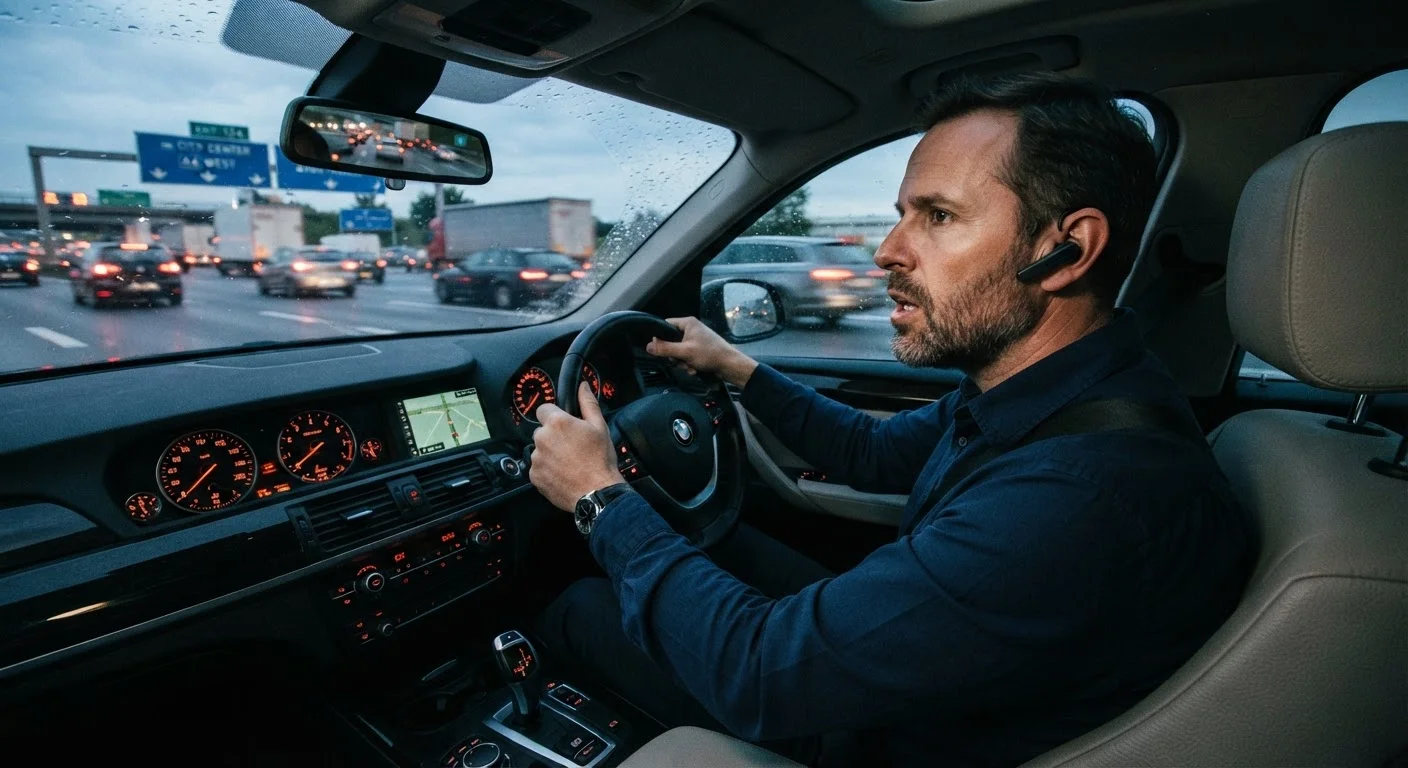
When hands-free calling laws spread across US states, many drivers reasonably concluded the distraction problem had been solved. Put the phone down, use Bluetooth, and you're good to go. That conclusion feels logical - but research consistently shows it misses a critical point about how the human brain works behind the wheel.
Distracted driving has three recognized dimensions: visual (eyes off the road), manual (hands off the wheel), and cognitive (mind off the task). Hands-free technology addresses only the first two. The cognitive load of holding a conversation persists regardless of whether you're holding a device. And it's cognitive distraction that researchers identify as the most underestimated of the three.
Understanding this distinction matters practically for every family driver. It shapes when, how, and whether to take a call at all - not just which device to use. For more on how distraction interacts with other impairment factors, see our piece on how fatigue and impairment compare.
Common Myths - and What the Evidence Actually Shows
Several well-established misconceptions shape how drivers think about phone use. The myth-fact breakdowns below address each one directly, drawing on findings from road safety research organizations and cognitive science.
Myth
Using a hands-free headset or speakerphone is essentially as safe as not using a phone at all.
Fact
Hands-free calls still impose cognitive load that measurably impairs driving performance, including slower reaction times and reduced hazard detection.
Research from the AAA Foundation for Traffic Safety and academic institutions studying driver cognition has consistently found that the act of conversing - not holding the phone - is the primary source of impairment. Studies using driving simulators have recorded reaction time slowdowns and increased rates of missed traffic signals among drivers on hands-free calls compared to those driving without any phone use. Eliminating the physical device does not eliminate the mental engagement of a real-time conversation.
Myth
Talking on the phone while driving is no different from talking to a passenger.
Fact
Phone conversations and in-car conversations place different demands on drivers, and passengers naturally adjust their behavior in ways remote callers cannot.
A passenger shares your visual environment. They can see the traffic light change, notice a cyclist entering the lane, and instinctively pause the conversation. A remote caller has none of that context and will continue talking through the moments that require your full attention. Research has also noted that drivers unconsciously shift more cognitive resources toward a phone call to compensate for the audio-only channel, increasing mental workload compared to face-to-face conversation.
Myth
Voice-to-text and voice commands are safe because they keep eyes on the road.
Fact
Voice-activated systems can generate cognitive distraction for several seconds after the interaction ends, even when used correctly.
Studies commissioned by AAA examined a range of in-vehicle voice systems and smartphone assistants and found that mental workload remained elevated for a period after completing a voice task - a phenomenon sometimes called the attention residue effect. During that window, drivers looked at the road but processed less of what they saw. The complexity of the task matters too: asking a system to compose and send a text message is cognitively demanding even when no hands or eyes leave the driving position.
Myth
A quick glance at your phone - just a second or two - is unlikely to cause a problem.
Fact
At highway speeds, even a two-second glance means traveling the length of roughly half a football field without your eyes processing the road ahead.
The National Highway Traffic Safety Administration (NHTSA) has noted that the average manual text interaction takes around five seconds. At 55 mph, that equates to traveling approximately the length of a football field without meaningful visual attention on the driving environment. Even at lower urban speeds, short glances are long enough to miss a child stepping off a curb, a light turning red, or a vehicle braking suddenly ahead. The brevity of the distraction does not reduce the severity of potential consequences.
Myth
If hands-free calling were truly dangerous, it would be illegal everywhere.
Fact
Laws reflect political and practical constraints, not a complete safety endorsement - many legal activities still carry meaningful risk.
Traffic laws in the United States vary considerably by state and are shaped by enforcement feasibility, legislative consensus, and public acceptance as much as by safety research. The legality of a behavior does not constitute a declaration that it is risk-free. Driving researchers and safety advocates have noted the gap between what legislation prohibits and what the evidence identifies as hazardous. Legal compliance is a floor, not a ceiling, for safe driving practice.
High-Risk Moments Demand Full Cognitive Attention
Merging, navigating construction zones, driving in reduced visibility, and passing through complex intersections are situations where cognitive reserve is not optional - it's what keeps you and others safe. End calls before entering these situations, not during. No conversation is urgent enough to justify divided attention at the wrong moment.
What This Means for Everyday Driving Decisions
Knowing the research is only useful if it changes behavior. A few practical principles follow from the evidence:
- Higher-demand situations require full attention. Merging onto a freeway, navigating an unfamiliar intersection, or driving in heavy rain are moments to end calls entirely - not just switch to speaker. These are precisely the moments when cognitive reserve matters most.
- Conversations are not equal. A brief logistical exchange differs meaningfully from an emotionally charged discussion. Drivers tend to underestimate how much a difficult conversation taxes attention.
- Voice assistants require judgment too. Composing a multi-step message or searching for a destination mid-drive asks more of your brain than a simple one-word command. Assess the task before starting it.
- Passengers self-regulate; phone callers cannot. A passenger in the car instinctively pauses during a complex merge or a pedestrian crossing. A remote caller has no awareness of your driving environment.
4x
Increased crash risk while using a cell phone
The National Safety Council cites research estimating drivers using cell phones are approximately four times more likely to be involved in a crash.
~37%
Of drivers who report hands-free use believing it is completely safe
AAA Foundation for Traffic Safety surveys have found a significant portion of drivers overestimate the safety of hands-free technology relative to the evidence.
Distracted driving doesn't operate in isolation. Habitual overconfidence, including the belief that our own driving is exempt from well-documented risks, is itself a safety hazard. Our article on safe driving habits that erode over time explores how experienced drivers gradually normalize risk - and how to course-correct.
Similarly, the cognitive blind spots created by distraction compound other hazards on the road. Understanding why tailgating is more dangerous than most drivers realize is directly relevant: a distracted driver following too closely has almost no chance of reacting in time when traffic ahead stops suddenly.