

Key Takeaways
Car Depreciation
Car depreciation is the reduction in a vehicle's market value over time. Every vehicle loses value from the moment it's purchased, but the rate varies significantly depending on the make, model, age, mileage, and condition. Depreciation is the single largest cost of vehicle ownership for most buyers, often exceeding fuel, insurance, or maintenance expenses.
Depreciation is calculated as the difference between a vehicle's purchase price and its current market or resale value. Lenders use depreciation schedules when structuring auto loans, which is why loan balances can exceed a vehicle's actual worth - a condition known as being 'upside down' or 'underwater.'
Why Depreciation Is the Cost Most Buyers Overlook
When families compare vehicles, attention usually goes to monthly payments, fuel economy, or sticker price. Depreciation rarely enters the conversation - yet for most buyers, it represents the largest single cost of ownership over a typical three-to-five-year period. Understanding it changes how you evaluate every deal.
Depreciation isn't a fee you pay upfront. It's the gradual erosion of your vehicle's market value - the gap between what you paid and what you'd receive if you sold or traded it in. That gap can be substantial. A vehicle purchased for $40,000 may be worth $24,000-$28,000 after just three years of average use, even in good condition. The $12,000-$16,000 difference is real economic cost, whether or not you notice it month to month.
For a fuller picture of every cost embedded in a vehicle purchase, see our breakdown of every cost line in a car deal. Depreciation works alongside those line items to shape the true price of ownership.
~20%
Average new car value lost in year one
Industry valuation guides consistently show new vehicles losing roughly 15-25% of their purchase price within the first 12 months, with the steepest drop occurring at the point of first registration.
40-60%
Value lost by year five for most vehicles
Standard depreciation models place the five-year cumulative value loss for average vehicles between 40% and 60% of the original purchase price, depending on make, model, and use conditions.
Year 1-3
Steepest depreciation window for new vehicles
The first three years of ownership account for a disproportionate share of total lifetime depreciation, which is why lightly used vehicles often represent stronger value retention for buyers.
When Depreciation Hits Hardest
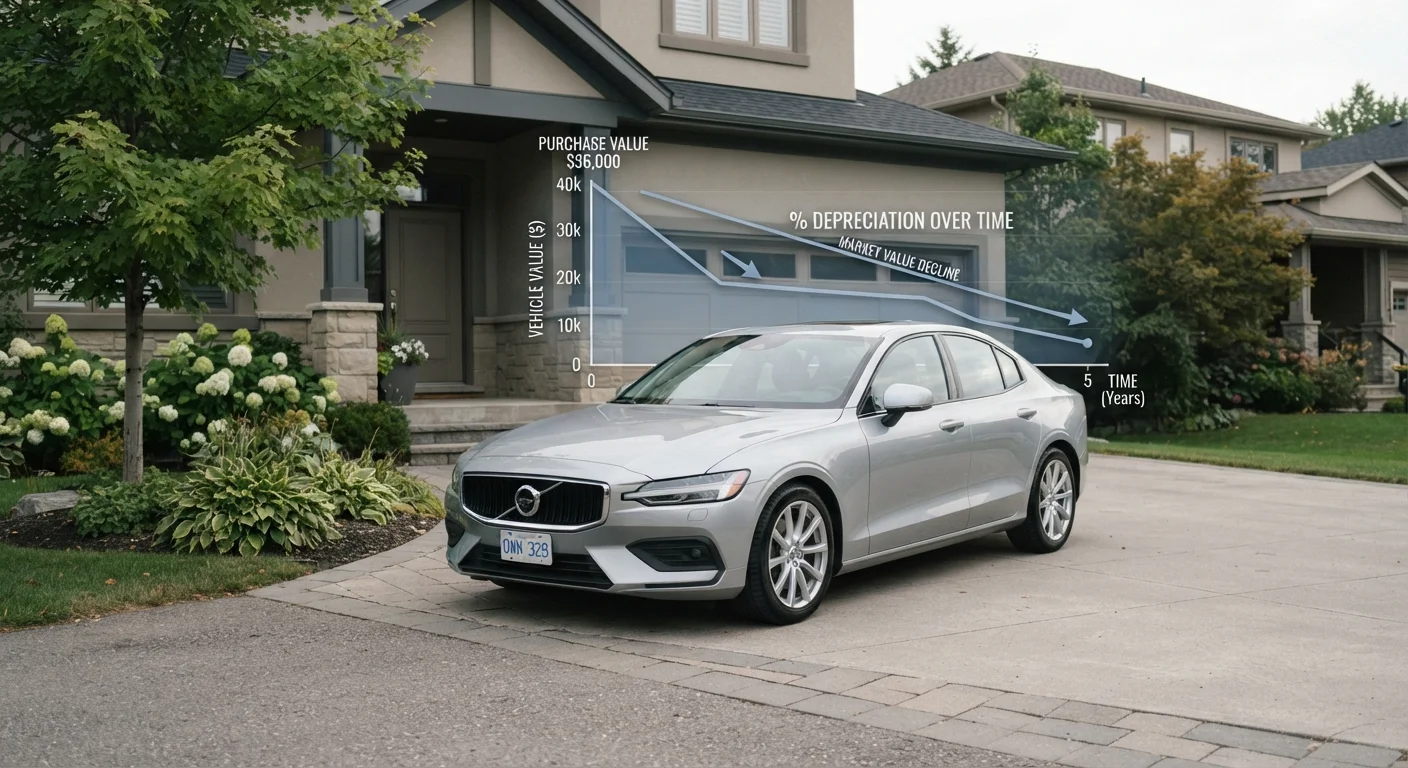
Depreciation doesn't follow a flat line. It front-loads steeply and then flattens as a vehicle ages. The sharpest drop happens in year one, when a new vehicle transitions from retail inventory to a used unit the moment it's registered. Buyers lose access to manufacturer incentives, and the vehicle can no longer be marketed as new - a structural price reset that happens regardless of how carefully the car is driven.
By years two and three, depreciation continues at a meaningful rate, though it begins to level off. Most vehicles reach a more stable depreciation curve between years four and six, after absorbing the largest value losses. This pattern is why a two- or three-year-old vehicle often offers a practical balance: much of the steepest depreciation has already occurred, but the vehicle is still relatively modern, under warranty in some cases, and likely hasn't accumulated excessive mileage.
Certified pre-owned programs are often structured around this window, offering inspected vehicles that have passed their steepest depreciation phase while retaining manufacturer-backed coverage.
Use Depreciation Timing to Your Advantage
If you're considering a used vehicle, researching its depreciation history - not just its current asking price - gives you a clearer picture of remaining value. Third-party valuation tools can show how a specific make and model has historically held its value at different age and mileage points. Pairing that data with seasonal and market timing factors can strengthen your position further.
Factors That Accelerate or Slow Depreciation
Not all vehicles depreciate at the same pace, and several factors within a buyer's control - or research - can significantly influence the curve.
- Mileage: Higher mileage reduces market value faster. Vehicles driven well above the average 12,000-15,000 miles per year typically depreciate more quickly than lower-mileage equivalents.
- Condition: Physical wear, interior damage, and deferred maintenance all accelerate value loss. Well-maintained vehicles with documented service histories hold value better in the used market.
- Market demand: Popular body styles, fuel types, and configurations depreciate more slowly when buyer demand is strong. Vehicles falling out of consumer favor - due to shifting fuel preferences or changing market trends - tend to lose value faster.
- Color and trim: Neutral, widely preferred colors and well-equipped trim levels generally perform better at resale than unusual configurations.
- Accident history: Even properly repaired vehicles with accident records typically sell for less than comparable clean-history units. This is captured in a vehicle history report, which any serious used-car buyer should review.
How Depreciation Shapes the New vs. Used Decision
Depreciation is central to one of the most consequential choices in car buying: new versus used. A new vehicle offers the full manufacturer warranty, no ownership history concerns, and the latest features - but the buyer absorbs the first and steepest phase of depreciation. A used vehicle transfers some or all of that depreciation cost to the previous owner, which is why used vehicles can represent stronger value per dollar in many scenarios.
This trade-off is worth quantifying before you commit. If a three-year-old vehicle costs significantly less than its new equivalent and still meets your family's needs, the depreciation math often favors the used option - even after accounting for any differences in financing rates or remaining warranty coverage.
The decision also intersects with how you plan to finance. First-time buyers especially benefit from understanding that a loan taken on a rapidly depreciating vehicle can quickly result in negative equity, meaning you owe more than the car is worth. This isn't a reason to avoid new cars entirely, but it is a reason to factor depreciation into your loan term and down payment decisions.
Depreciation is also one reason the path you choose to buy a used vehicle matters - prices can vary between private sellers and dealerships, and understanding what a vehicle is actually worth at that stage of its depreciation curve gives you a grounded negotiating position.
This article provides general educational information about vehicle depreciation and is not personalized financial or purchasing advice. Consult a qualified financial professional for guidance specific to your situation.