

Key Takeaways
Our Verdict
Neither buying channel is universally superior. Private sellers can offer genuine value for experienced buyers who are comfortable with due diligence and accept the absence of formal protections. Dealerships provide structure, financing access, and consumer safeguards that make the process more predictable, though often at a higher cost. Matching the channel to your priorities, risk tolerance, and preparation level is the most reliable way to make a sound decision.
| Best for | Recommended |
|---|---|
| Budget-conscious buyers with mechanical knowledge or access to a trusted mechanic | Private Seller |
| Families seeking financing options, warranties, and a documented paper trail | Dealership |
| First-time buyers who want guided support through the purchase process | Dealership |
| Buyers targeting a specific older model at a lower price point | Private Seller |
The Core Difference: Structure vs. Flexibility
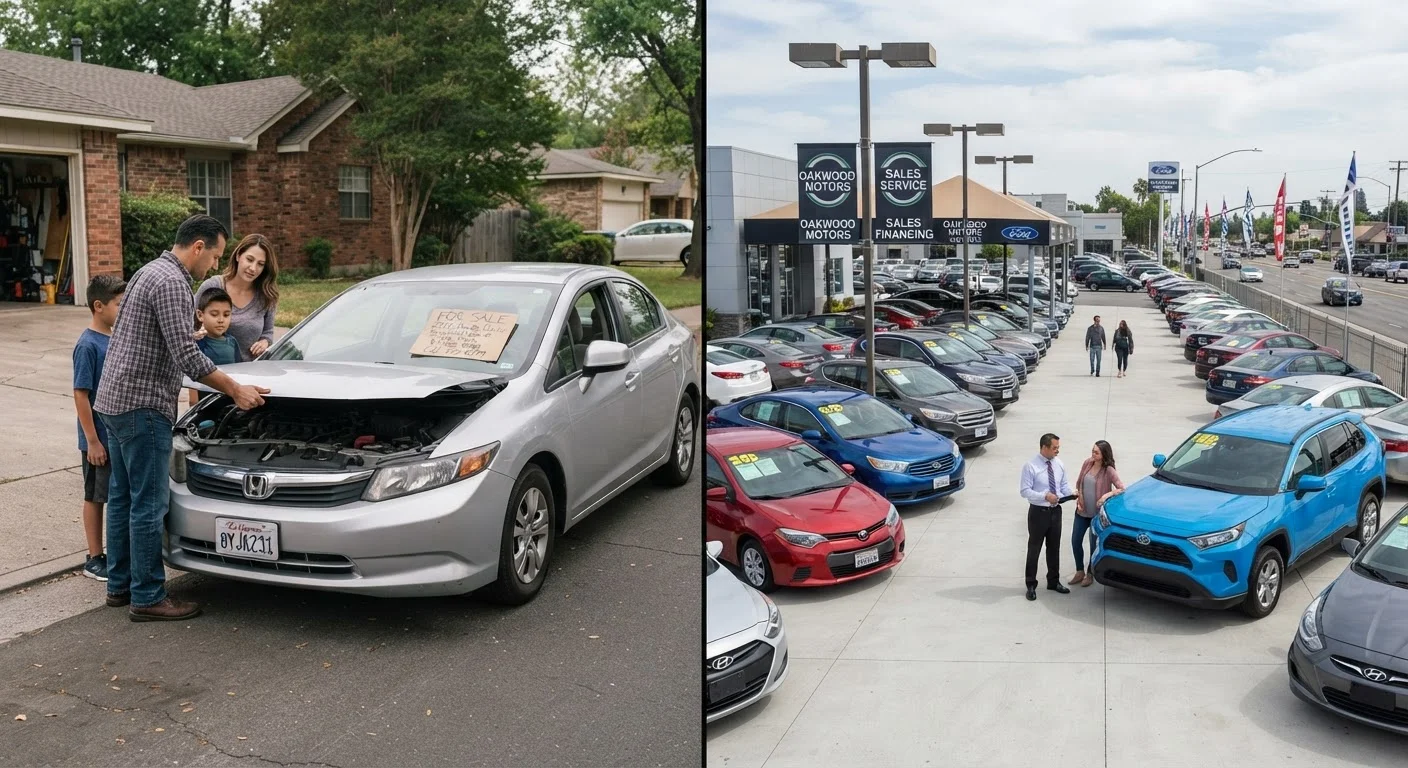
When shopping for a used vehicle, your two primary channels are private sellers and franchised or independent dealerships. The fundamental distinction comes down to structure. Dealerships operate within a regulated commercial framework; private sellers do not. That single fact ripples through every aspect of the transaction-price, paperwork, recourse, and risk.
If you're new to the used car market, our comprehensive first-time buyer guide covers the broader landscape before you dive into channel-specific decisions. For everyone else, understanding where these two paths diverge helps you enter negotiations with clear expectations.
Price and Negotiation
Private sellers generally list vehicles below dealership asking prices. Without the overhead of a sales floor, reconditioning costs, and staff commissions, individual sellers can afford to price more competitively. There is also typically more room to negotiate directly-especially if the seller is motivated by a quick sale.
Dealerships build margin into their pricing to cover certification processes, lot costs, and profit targets. That said, the sticker price is rarely the final word. Knowing how to negotiate effectively at a dealership can close much of the gap. Dealers may also bundle value through add-ons like remaining factory warranty, free oil changes, or roadside assistance-benefits that should be factored into any price comparison.
| Private Seller | Dealership | |
|---|---|---|
| Typical Price | Generally lower | Generally higher |
| Negotiation Flexibility | Often more flexible | Structured, but negotiable |
| Consumer Protections | Minimal; usually as-is | State laws & implied warranties may apply |
| Financing Options | Buyer arranges independently | On-site financing available |
| Title & Paperwork | Buyer and seller manage | Dealer handles most paperwork |
| Warranty | Rarely included | Certified pre-owned or limited warranty possible |
| Vehicle Selection | Single vehicle listings | Multiple options in one location |
| Fraud Risk | Higher; verify carefully | Lower; regulated business entity |
Understanding how a vehicle's depreciation curve affects its real-world value is also worthwhile before making an offer in either setting. See our guide to car depreciation for a clearer picture.
Consumer Protections and Legal Recourse
This is where the channels diverge most sharply. When you buy from a licensed dealership, state consumer protection laws generally apply. Depending on your state, dealers may be required to disclose known defects, provide a limited implied warranty under the Magnuson-Moss Warranty Act, and honor lemon law provisions in some circumstances. You also have a named business entity to contact if problems arise after the sale.
Private sales, in most states, are conducted under as-is terms. Once the title transfers, the seller typically has no further legal obligation to you. If undisclosed problems emerge a week after purchase, your options for recourse are narrow. This does not make private sales inadvisable-but it does require more preparation on the buyer's side.
Private Sales Offer Little Post-Sale Recourse
In most states, private vehicle sales are completed on an as-is basis, meaning the seller bears no legal obligation for defects discovered after the transaction closes. Before purchasing privately, confirm the title is free of liens, run a vehicle history report, and have a trusted mechanic complete an independent inspection. These steps are your primary safeguards in the absence of formal consumer protections.
Financing and Documentation
Dealerships can arrange financing on-site, giving buyers access to multiple lenders through a single application. This convenience has real value, particularly for families who haven't secured a pre-approval elsewhere. However, dealer-arranged financing is not always the most competitive rate available-comparing offers from your own bank or credit union before visiting is sound practice.
Private sales require the buyer to arrange financing independently, typically through a bank, credit union, or online lender. Some lenders are cautious about lending on older, higher-mileage vehicles commonly found in private listings, which can limit options.
Documentation is more straightforward at dealerships: they handle title transfer, registration paperwork, and in some states, sales tax remittance. In a private sale, the buyer and seller must manage this process themselves, including verifying the title is clean and lien-free before any money changes hands. Protecting yourself from fraud in peer-to-peer transactions is a critical step often underestimated by buyers.
Inspection, Vehicle History, and Due Diligence
Regardless of where you buy, an independent pre-purchase inspection by a qualified mechanic is one of the most protective steps you can take. Dealerships that resist this request are worth approaching cautiously. Private sellers who decline should be viewed as a significant red flag.
Vehicle history reports (such as those available through services that aggregate title, accident, and odometer records) are useful in both contexts, though they have known gaps. A report showing a clean history does not guarantee the vehicle is problem-free. A thorough physical inspection checklist remains essential alongside any digital report.
Always Request an Independent Inspection
Whether buying privately or from a dealership, arrange for a qualified mechanic to inspect the vehicle before you finalize any agreement. A pre-purchase inspection typically costs between $100 and $200 and can surface mechanical, safety, or structural issues that affect both the vehicle's value and your family's safety. This step is non-negotiable regardless of how confident the seller appears or how clean the vehicle history report looks.
If you ultimately decide to purchase through a dealership, reviewing a pre-signing checklist helps ensure you understand every element of the paperwork before you commit.