

Key Takeaways
Why Subscription Creep Happens to Almost Every Household
Subscription creep — the gradual accumulation of small recurring charges that collectively drain a meaningful portion of your monthly budget — is a near-universal problem for US families. It's not the result of carelessness; it's the result of deliberate product design. Services are built to be easy to start and inconvenient to stop, with low per-month pricing that keeps each individual charge below the threshold of concern.
The math, however, is unambiguous. A household carrying eight subscriptions averaging $12 per month is spending $1,152 per year on recurring services alone. If two or three of those go largely unused, the waste is immediate and real. Research consistently shows that consumers underestimate their total subscription spending when asked to recall it from memory — the actual statement total is typically higher.
Subscription creep shares DNA with other hidden spending patterns. The same impulse that leads families to undercount recurring charges also drives overlooked costs in major purchases — something explored in depth in our guide to hidden costs families overlook when making big purchases. Both problems respond to the same fix: a deliberate, structured review rather than relying on memory.
Use a Dedicated Card for Subscriptions
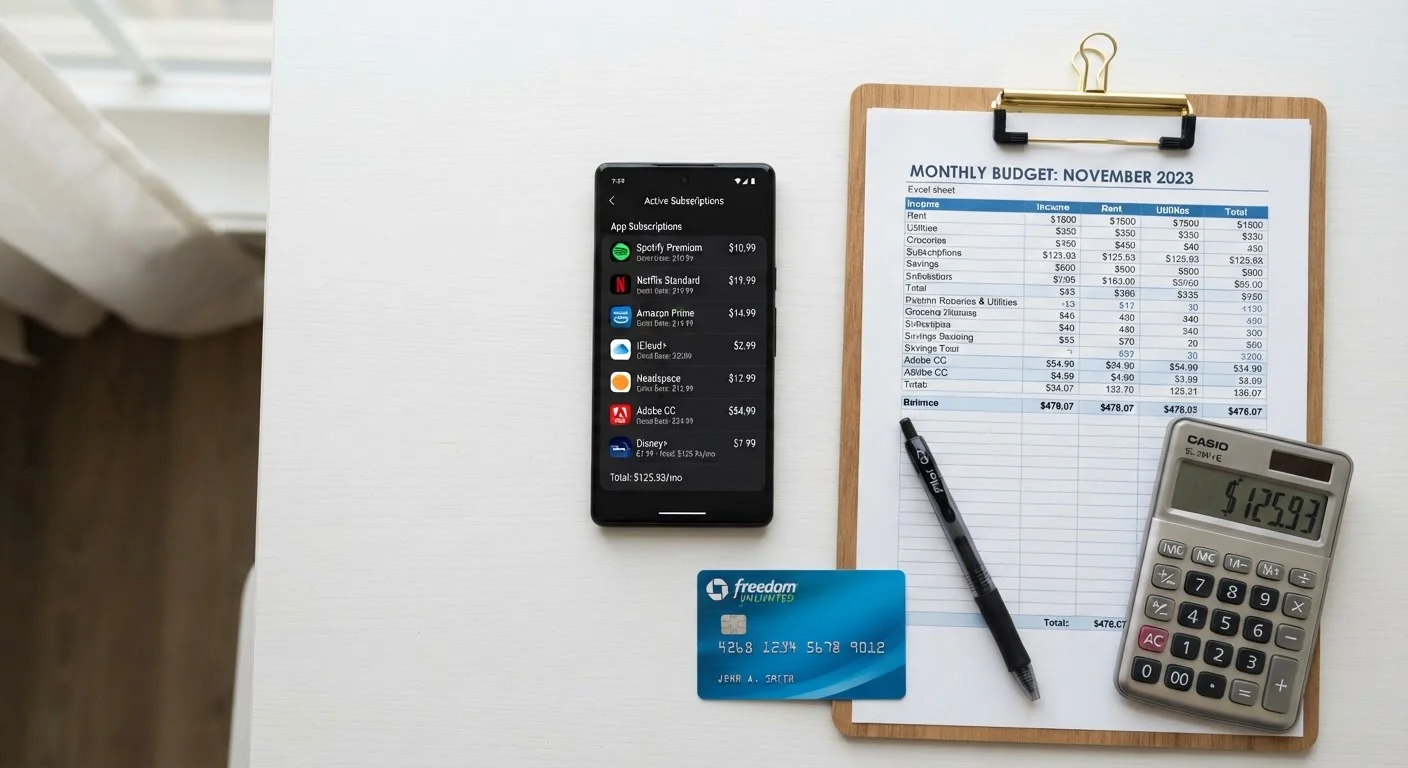
Routing all recurring charges to a single credit or debit card makes auditing far simpler — everything appears in one place. It also makes it immediately obvious when a new charge appears that you didn't authorize or remember signing up for.
What You'll Need Before You Start
The audit process is straightforward, but having the right materials in front of you before you begin makes the difference between a thorough review and a partial one. Gaps in your statements mean gaps in your subscription list.
What you will need
Bank and credit card statements (12–13 months)
Primary source for identifying every recurring charge, including annual subscriptions.
Spreadsheet or note-taking app
Tracks each subscription found, its monthly cost, last use date, and keep/cancel decision.
Email search (terms: 'receipt', 'invoice', 'subscription', 'renewal')
Catches subscriptions that don't appear on statements yet or where billing emails were missed.
Calendar or reminder app
Sets future alerts before trial periods end and schedules quarterly subscription audits.
Free Trials Become Paid Subscriptions Automatically
Most free trials convert to paid subscriptions without sending a reminder. If you signed up for a trial and did not set a cancellation reminder, assume you are already being charged. Check your statements before assuming a trial is still free.
How to Audit and Trim Your Subscriptions
Follow these steps in order. The process is designed to be completed in a single sitting for most households, though larger families with multiple cardholders may need additional time to consolidate statements.
Watch for Annual Charges You've Forgotten
Some subscriptions bill once per year rather than monthly, making them easy to overlook in a routine statement scan. Pull statements from at least 13 months back — not just the current month — to catch annual renewals that may have slipped through.
Pull your statements — all of them
Download or print 13 months of statements from every bank account and credit card your household uses. Thirteen months, not twelve, ensures you catch subscriptions billed annually. If multiple family members make purchases, gather statements for each card used.
List every recurring charge you find
Go line by line and flag any charge that repeats — weekly, monthly, quarterly, or annually. Record the merchant name, charge amount, frequency, and the date it first appeared. Don't skip small amounts; a $2.99 charge appearing monthly is $35.88 per year.
Search your email for billing confirmations
Run searches in your primary inbox using terms like receipt, invoice, your subscription, and renewal notice. This step surfaces services you signed up for with a different payment method, free trials that converted without a statement charge yet, and app store subscriptions billed through Apple or Google rather than directly.
Evaluate each subscription against actual use
For each item on your list, answer two questions: How often did someone in the household use this in the past 30 days? and Could you get the same value free or cheaper elsewhere? Mark each as Keep, Cancel, or Pause. Be honest — a service you intend to use is not the same as one you do use.
Cancel everything in the 'Cancel' column — now
Don't defer cancellations. The psychology of subscription services counts on delay. Work through your cancel list immediately while you have the motivation. Most cancellations are completed online in under two minutes; some services require a phone call or chat session. Note any that attempt to retain you with a pause or discount offer — evaluate those offers only if you genuinely want to keep the service.
For more on the tactics services use to make cancelling harder, see why subscription traps are so hard to escape.
Schedule a recurring audit every quarter
Add a recurring calendar reminder every three months titled 'Subscription Audit.' New subscriptions accumulate quickly — app trials, seasonal services, software upgrades. A quarterly check prevents the list from growing back to its previous size without your noticing.
Once your audit is complete, it's worth applying the same scrutiny to future purchases. Many large purchases come bundled with trial subscriptions or optional service plans that quietly auto-renew — see fees that appear only at checkout for a broader look at where hidden charges tend to hide. For ongoing budgeting support, the family budgeting hub offers practical frameworks for managing all household expenses, not just subscriptions.