

| Primary tactic name | Drip pricing (FTC consumer protection terminology) |
| Common hotel fee range | $20–$50 per night (Industry survey estimates; varies by market) |
| Ticket service fee typical range | 20–30% above face value (Consumer Reports, general industry estimates) |
| Regulatory body (US) | Federal Trade Commission (FTC) (FTC has taken enforcement action against drip pricing practices) |
| Most common drip-pricing industries | Hotels, airlines, ticketing, utilities (FTC and consumer advocacy reports) |
Why Checkout Fees Are a Systemic Problem
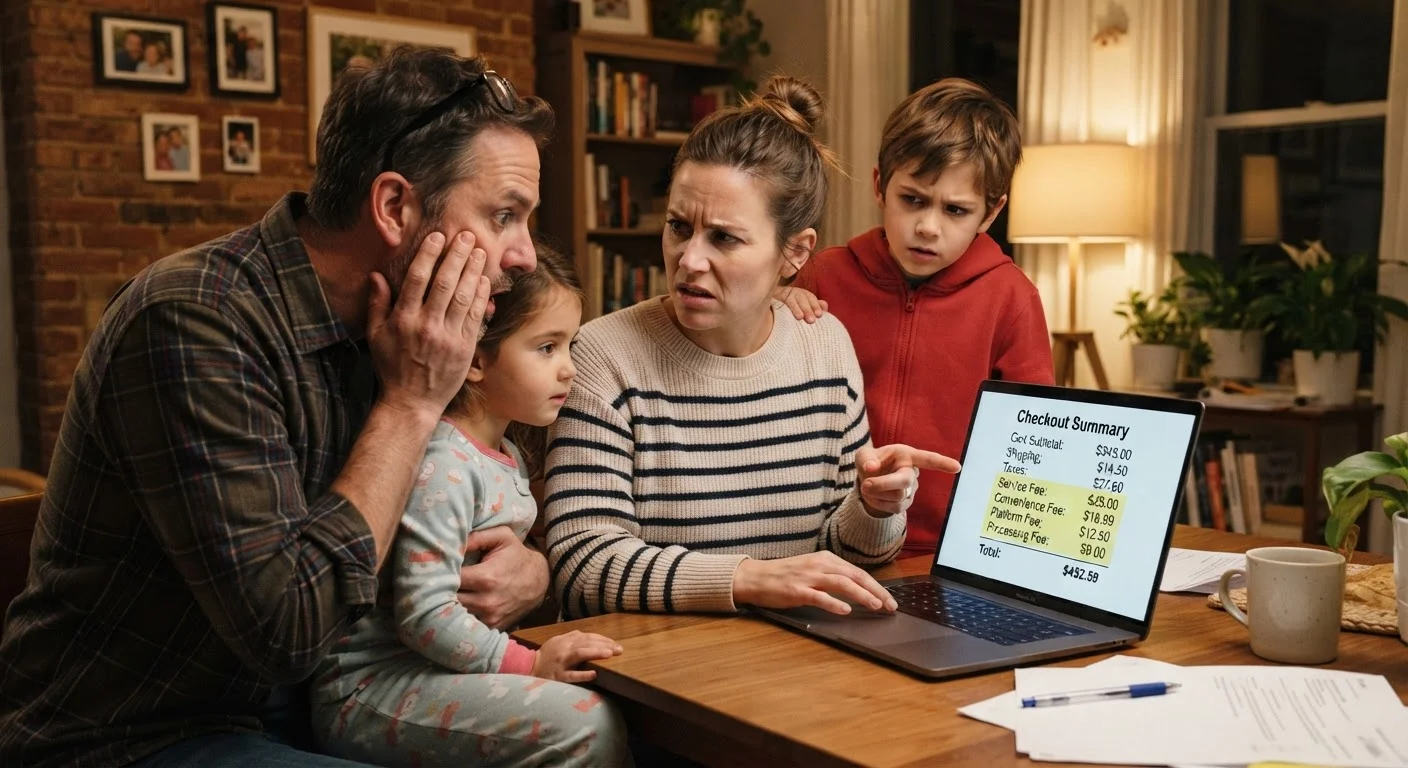
You search for a hotel room at $89 a night. You enter your dates, pick a room, enter payment details — and the final screen shows $137. That $48 gap didn't appear because of tax alone. It came from a resort fee, a destination fee, and a 'booking service' surcharge that weren't visible until the last possible moment.
This practice — sometimes called drip pricing — is deliberate. Research in consumer behavior consistently finds that buyers anchor to the initial price they see and are less likely to abandon a purchase when costs are revealed late in the process. The strategy exploits sunk-cost psychology: you've already invested time in the search, so you click through anyway.
The Federal Trade Commission has taken enforcement actions against drip pricing in industries ranging from hotels to ticket sales, but the practice remains widespread. Understanding the playbook is the most reliable defense. See our guide to hidden purchase costs for a broader look at expenses that appear after the sale is made.
| Primary tactic name | Drip pricing (FTC consumer protection terminology) |
| Common hotel fee range | $20–$50 per night (Industry survey estimates; varies by market) |
| Ticket service fee typical range | 20–30% above face value (Consumer Reports, general industry estimates) |
| Regulatory body (US) | Federal Trade Commission (FTC) (FTC has taken enforcement action against drip pricing practices) |
| Most common drip-pricing industries | Hotels, airlines, ticketing, utilities (FTC and consumer advocacy reports) |
A Field Guide to Common Checkout Fees
These are the fee categories most likely to inflate your total — and the questions to ask before you reach the payment screen.
Drip pricing
A pricing strategy where a low initial price is shown but mandatory fees are added incrementally during checkout, inflating the final total. The practice exploits the psychological tendency to anchor to the first price seen.
Resort fee
A mandatory daily charge added by hotels — especially in resort or tourist-heavy markets — that covers amenities regardless of guest usage. Often not included in the nightly rate displayed during initial search.
Service fee
A surcharge applied by ticketing platforms or service businesses on top of the listed price, ostensibly to cover transaction costs. Can significantly increase the final amount paid.
Convenience fee
A charge added when a consumer pays by credit card rather than a lower-cost method such as a bank transfer. Common in government payments, utilities, and some online retailers.
Order processing fee
A separate line-item charge for handling the transaction itself, distinct from a service fee. Found most often in ticketing and travel booking platforms.
Hospitality & Travel
- Resort fees / destination fees: Flat daily charges — often $25–$50 — bundled under the premise of offering amenities like pool access or Wi-Fi, regardless of whether you use them.
- Facility charges: Venue-specific surcharges added by hotels in major cities, separate from and in addition to standard taxes.
- Seat selection fees: Airlines often separate a base fare from the cost of choosing any specific seat, including standard economy rows.
Ticketing & Events
- Service fees: The most common complaint in ticket purchasing. These can add 20–30% to the face value of a ticket.
- Order processing fees: A separate charge for processing the transaction, distinct from the service fee.
- Delivery fees: Charged even for electronic (PDF or app-based) tickets on some platforms.
E-Commerce & Retail
- Convenience fees: Added for paying by credit card rather than ACH bank transfer — common in utility billing and government payment portals.
- Small order fees / surcharges: Threshold-based fees that appear if your cart falls below a minimum — sometimes shown only at checkout.
These fees compound. A family booking two airline tickets plus a hotel for a long weekend can encounter four or five separate fee categories before checkout is complete. That's why it's worth building fee-scrutiny into your process before entering any payment information, not after. For recurring charges that work the same way, our subscription creep article covers how small ongoing costs build the same way.
How to Counter the Playbook
The most effective approach is structural: build a habit of checking the itemized total before reaching the payment page, not after.
- Search for the fee policy before booking. For hotels, search the property name plus 'resort fee' or 'destination fee.' Many properties publish these amounts on their own websites even if booking platforms obscure them.
- Use the 'total price' filter where available. Some travel search tools offer a display setting that shows the all-in cost from the first result. Prioritize these views.
- Screenshot the advertised price. If you're charged more than what was displayed at the start of checkout, you have documentation for a dispute with your card issuer or the relevant consumer protection agency.
- Check state and city consumer protection rules. Some states require all mandatory fees to be disclosed upfront in the advertised price. Knowing your rights changes the conversation if you're charged after the fact.
- Ask directly before committing. For in-person purchases — installation services, contractor bids, delivery quotes — ask explicitly: 'Is there anything that will be added to this total that isn't in writing right now?'
None of these steps eliminates fees entirely, but they shift the moment of discovery from after payment to before it — when you still have options. For a deeper look at how advertised prices consistently understate true ownership costs, see The Lifetime Cost Trap.
When Fees Are Legally Required to Be Disclosed
Some US states and cities have enacted laws requiring all mandatory charges to be included in the advertised price, making hidden-fee-style drip pricing illegal for certain business categories. The FTC has also proposed broader rules on junk fees in several industries. Requirements vary significantly by state and sector — check your state attorney general's consumer protection page for current rules that apply in your jurisdiction.