

Key Takeaways
Option A
Store Brands (Private Label)
The cost-efficient, retailer-controlled alternative.
Best for: Families looking to reduce everyday spending without compromising on categories where formulation or performance is largely standardized.
Option B
Name Brands (National Brands)
The established, heavily marketed benchmark product.
Best for: Shoppers who prioritize consistency, specific formulations, or performance in categories where product differences are measurable and meaningful.
If you want to reduce grocery spending without noticeable trade-offs
Store Brands (Private Label)
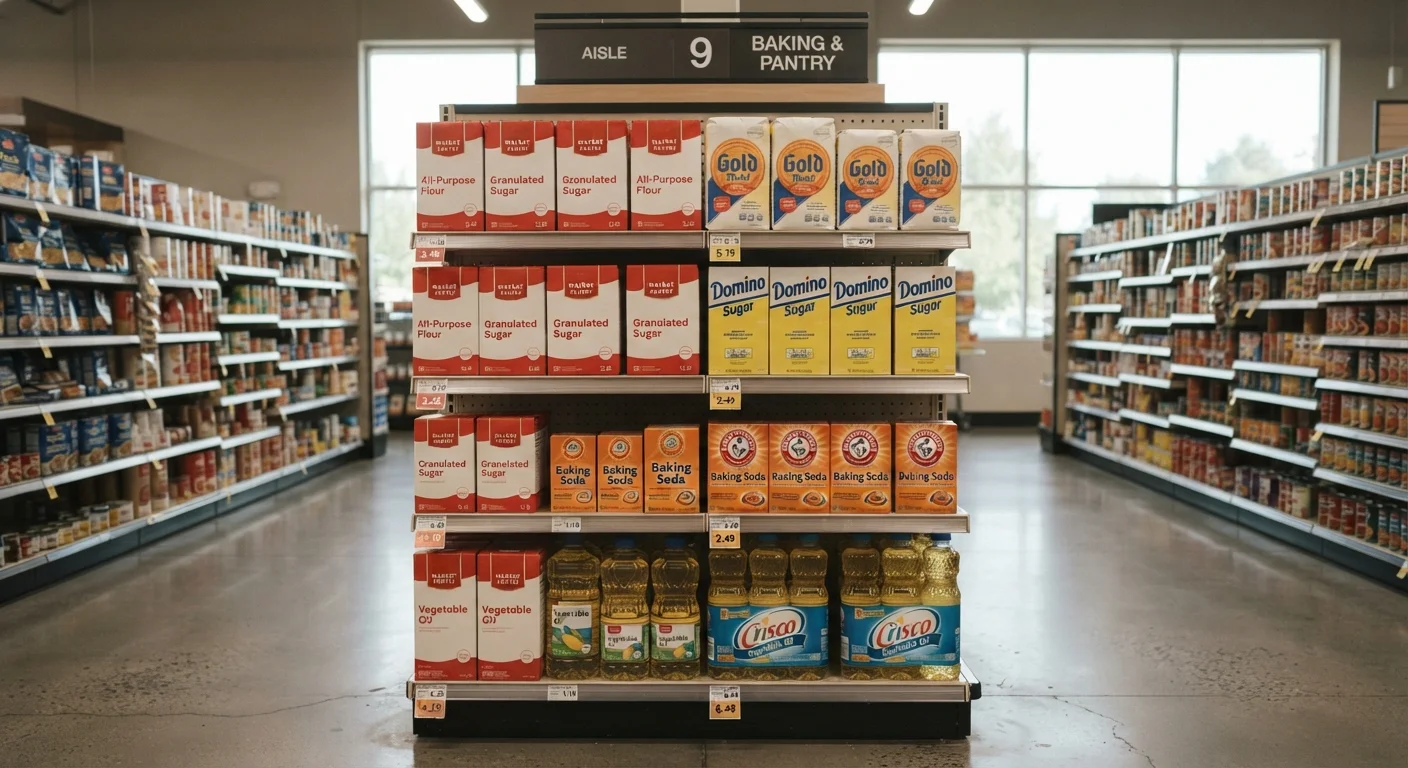
Pantry staples, cleaning products, and generic medications are strong candidates where store brands frequently match name-brand quality at meaningfully lower prices.
If consistent flavor or texture matters in a specific food product
Name Brands (National Brands)
Categories like condiments, snacks, and beverages often involve proprietary recipes where taste differences are real and subjective preferences run strong.
If you're buying over-the-counter medications or supplements
Store Brands (Private Label)
Generic OTC drugs must meet the same FDA active-ingredient standards as their name-brand equivalents, making store brands a reliable choice in this category.
If you need a product that must perform under stress — tools, appliances, or heavy-use household goods
Name Brands (National Brands)
Durability and materials quality can diverge significantly in non-food categories; the savings may not hold up if a store-brand item fails sooner.
If you're buying for young children and have concerns about ingredient consistency
Name Brands (National Brands)
For baby food, infant formula, and similar products, consult a pediatrician and verify regulatory compliance before switching; this is not a category to optimize purely on price.
The Core Difference: What You're Actually Paying For
Store brands — also called private-label products — are manufactured and sold under a retailer's own label rather than a national manufacturer's brand. What many shoppers don't realize is that a significant portion of private-label goods are produced in the same factories that make name-brand versions, sometimes on the same production lines. The price difference rarely reflects a fundamental quality gap; it more often reflects the absence of national advertising spend, celebrity endorsements, and brand-building costs baked into name-brand pricing.
That said, "store brand" is not a monolithic quality tier. Retailers range from deep discounters to premium grocers, and their private-label quality standards vary accordingly. Understanding what value really means for your family before comparing labels helps you avoid both overpaying for a name and dismissing a genuinely better product.
| Criterion | Store Brands | Name Brands |
|---|---|---|
| Average price difference | 20–40% lower on average | Baseline price point |
| OTC medications | Equivalent (same FDA standards) | Same active ingredients, higher cost |
| Pantry staples | Typically equivalent quality | Rarely meaningfully different |
| Flavor-sensitive foods | Variable; may differ noticeably | Consistent proprietary formulation |
| Non-food durables | Material quality can vary widely | More consistent build standards |
| Personal care products | Formulation concentration varies | Standardized, tested formulations |
| Marketing overhead in price | Minimal | Significant |
Where Store Brands Hold Up Well
Certain product categories are inherently standardized — meaning the formula, ingredient list, or performance standard is regulated or broadly consistent across producers. In these areas, store brands frequently deliver equivalent value:
- Over-the-counter medications: The FDA requires generic drugs to contain the same active ingredients in the same dosage as their brand-name counterparts. A store-brand ibuprofen is held to the same standard as the name-brand version.
- Pantry staples: All-purpose flour, sugar, salt, canned beans, and similar commodities are defined more by grade standards than by brand. Differences in taste are rarely detectable in these categories.
- Cleaning supplies: Many store-brand household cleaners use the same active chemical agents as name-brand products. Check the label for active ingredients rather than the logo.
- Paper products and storage bags: While thickness and durability can vary, mid-tier store brands in this category tend to perform adequately for everyday household use.
This is also where bulk buying strategies intersect well — store-brand staples bought in quantity can compound your savings substantially.
20–40%
Typical store-brand price savings
Private Label Manufacturers Association data consistently shows store brands priced 20–40% below comparable name-brand products across major retail categories.
~60%
Share of US shoppers buying store brands regularly
Consumer research from the Food Marketing Institute has found a substantial majority of US shoppers regularly include store-brand items in their grocery purchases.
Same facility
Many store brands share production with name brands
Industry reporting and retailer disclosures indicate a significant share of store-brand products are manufactured by the same companies that produce major national brands.
Where the Quality Gap Can Be Real
Not every category is created equal. In some product areas, formulation complexity, ingredient sourcing, or manufacturing precision does create meaningful differences between store and name brands:
- Flavor-sensitive foods: Condiments, sauces, snacks, and beverages often rely on proprietary recipes. Consumer taste preferences in these categories are strong and well-documented — if a specific flavor profile matters to your household, a store-brand substitution may not satisfy.
- Complex personal care products: Shampoos, skin care, and similar items with specialized active ingredients can vary in formulation concentration, which affects performance. Reading ingredient lists rather than relying on price alone is important here.
- Non-food durables: Store-brand versions of tools, small appliances, or storage systems may use lower-grade materials. As our guide on when "good enough" actually beats premium notes, shorter product life erodes savings quickly.
- Baby and infant products: This category warrants extra caution. For formula, food, and similar products for very young children, consult a pediatric healthcare provider before switching brands based on price alone.
Infant Formula: A Special Case
Infant formula is regulated by the FDA, which sets minimum nutritional standards all marketed formulas must meet. However, formulations can still differ beyond those minimums. Before switching an infant from a name-brand formula to a store-brand version — or vice versa — consult your child's pediatrician. Price should not be the primary driver in this category. This article is for general informational purposes only and is not a substitute for professional medical advice.
When evaluating unfamiliar store brands, comparing products on specific attributes — ingredients, certifications, and unit size — rather than packaging claims will give you a cleaner read on actual equivalence.
A Practical Framework for Switching Smartly
Rather than making a sweeping decision to buy only store brands or only name brands, treat each category as its own decision. A few principles help:
- Test one product at a time. Buy a single store-brand item, use it fully, and evaluate honestly before switching other products. This avoids waste and gives you real data on your household's preferences.
- Anchor on active ingredients and unit specs, not packaging. For cleaning products and medications especially, the ingredient list tells you more than the label design.
- Track your actual savings. If switching 10 staple items from name to store brand saves $15–$25 per shopping trip, that's a meaningful annual figure — but only if the products are actually used.
- Accept that some name-brand loyalty is legitimate. If your household genuinely prefers a specific pasta sauce or cereal, the cost of eating food nobody enjoys isn't a saving. Protecting a few name-brand preferences while switching the rest is a reasonable strategy.
This kind of category-by-category analysis is the core of buying smart — applying structured thinking instead of habit or marketing influence to every purchase decision.