

Key Takeaways
Why Meal Planning Is Fundamentally a Money Problem
Most families think of meal planning as a solution to the 5 p.m. question: what are we having for dinner? That framing undersells it. Approached systematically, meal planning is one of the most accessible levers a household has for reducing recurring monthly costs — no income change required.
The financial mechanism is straightforward. Grocery overspending falls into two categories: buying food you don't use (waste) and buying food you didn't plan for (impulse). Meal planning structurally addresses both. When every item on your list has a designated meal, unplanned purchases become visible as anomalies rather than the norm.
Food Waste Is a Hidden Budget Drain
According to the USDA, the average American household discards a significant portion of the food it purchases. Uneaten food represents money already spent with no return. Meal planning directly addresses this by ensuring purchases are tied to specific planned uses before you shop, not after.
For families working within a constrained budget, food is often one of the few truly variable line items each month — meaning it's one of the few places where intentional behavior can produce near-immediate results. That's a significant opportunity, and it doesn't require couponing, loyalty card strategies, or any particular store. It requires planning before shopping, not after. This article is part of a broader approach covered in our complete household spending guide.
Tools and Setup Before You Start
You don't need specialized software to plan meals effectively, but a few simple resources make the process faster and more consistent.
What you will need
Weekly meal planning template (paper or digital)
Maps out all planned meals for the week so purchases stay tied to actual intended use.
Store weekly sales circulars
Identifies discounted proteins, produce, and staples to anchor your menu around before writing a list.
Running pantry inventory list
Prevents duplicate purchases and reveals what ingredients you already have to build meals around.
Grocery budget tracker (app or spreadsheet)
Records actual spending versus your planned budget so you can identify and close gaps over time.
The most important shift is treating planning as a weekly ritual — ideally the same day each week — rather than an ad hoc activity. Even 30 to 45 minutes on a Sunday morning, as outlined in a structured weekend prep approach, is enough to organize an entire week of purchasing decisions. That consistency is what moves the financial needle over time.
Let Sales Drive the Menu, Not Vice Versa
Before deciding what you want to eat, check your store's weekly circular first. Building even two or three meals per week around marked-down proteins or produce can reduce your grocery bill without any sense of deprivation. This single habit shift is where most of the financial leverage lives.
Step-by-Step: Planning Meals Around Financial Goals
The following steps are designed to be completed in sequence the first time, then compressed into a single weekly session once the habit is established. The focus is on building a plan that cuts spending without requiring extraordinary effort or culinary skill.
Audit last month's grocery spending
Pull your last 30 days of grocery receipts or bank/card statements. Total your food spending — including grocery stores, warehouse clubs, and any meal-kit subscriptions. This baseline is your target to beat. Without it, you're optimizing without a reference point.
Check the weekly sales circular before planning anything
Before deciding on a single meal, review what proteins and produce are on sale this week. Chicken thighs, ground beef, pork shoulder, and seasonal vegetables often rotate through significant discounts. Identify two or three sale items you can reasonably cook with, then build that week's menu around them.
Inventory your pantry and freezer before writing a list
Spend five minutes checking what you already have — canned goods, frozen proteins, dry staples like rice, pasta, and beans. Many households routinely re-buy items already on hand. Build at least one or two meals per week around existing inventory before adding anything new to your list. See how to audit and organize pantry staples for a systematic approach.
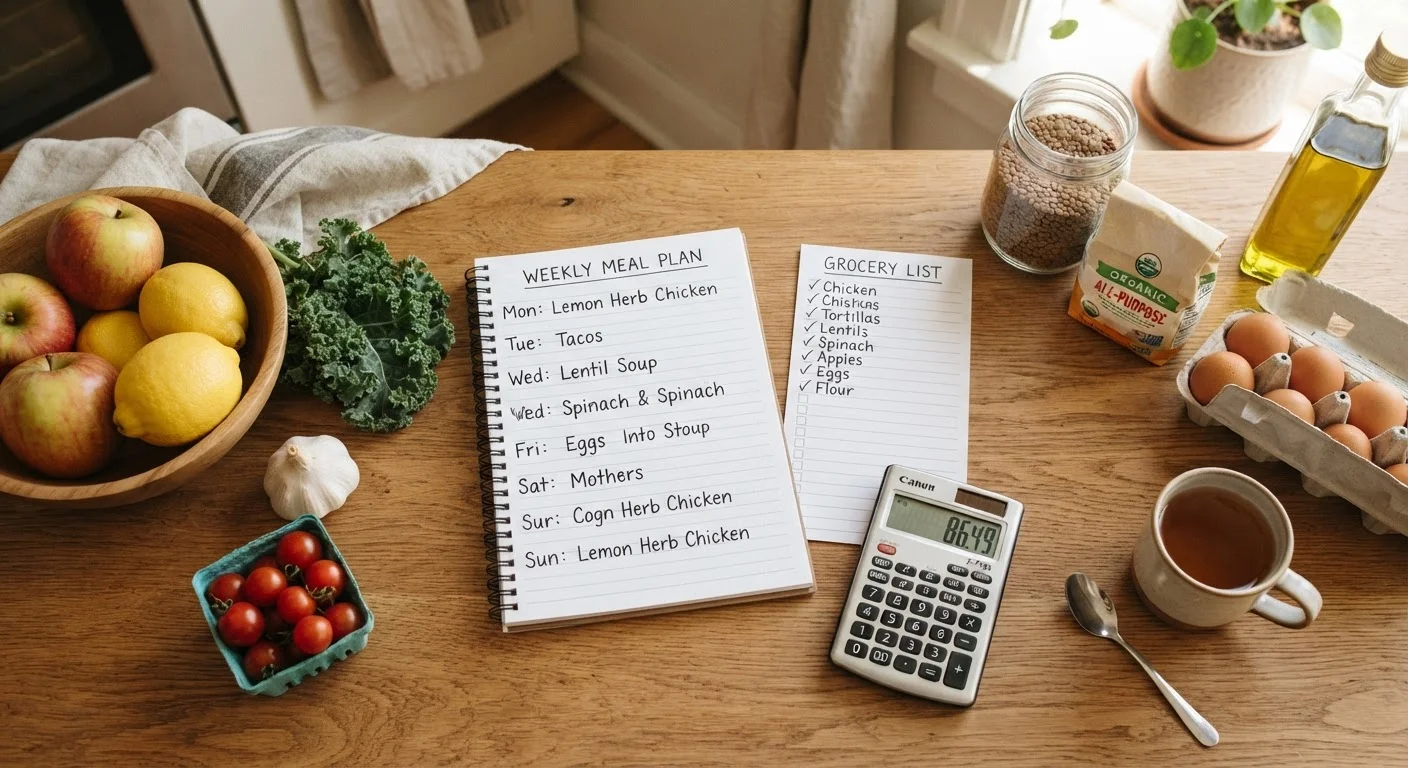
Build a seven-day meal map with flexibility baked in
Assign a planned dinner to each night of the week, leaving one or two nights designated for pantry meals or planned leftovers. For structuring a weekly family meal plan, aim for a mix of batch-friendly recipes (soups, casseroles, grain bowls) that stretch across multiple servings. Lunch can often be sourced from dinner leftovers, cutting the cost of a separate mid-day meal purchase.
Write a specific, list-only grocery list and stick to it
Translate your meal map into a precise grocery list organized by store section. General items without a defined meal purpose — 'snacks,' 'something for lunch' — are where impulse spending enters. Every item on the list should correspond to a specific meal or a known replenishment need. Leave the store with only what's on the list.
Track actual spending against your plan each week
After each shopping trip, compare what you spent against your budget target. Note any unplanned purchases and what prompted them. Over four to six weeks, patterns emerge — a particular store section, a shopping day, a planning gap. Closing even one or two recurring leaks compounds into meaningful monthly savings over time. If you're working toward broader savings goals, see how to build a savings plan on a tight budget for integrating grocery savings into a household financial plan.
Don't Plan for Perfection
Overly rigid meal plans that don't account for busy evenings, social plans, or changing preferences often get abandoned. Build in one or two flexible nights each week — a reliable pantry meal or simple fallback — so the plan bends rather than breaks when life intervenes.
Families who engage all household members in the planning process — even briefly — typically see better adherence and less mid-week deviation. When people know what's coming, they're less likely to detour to takeout. For budget-wide context on where grocery savings fit into the bigger financial picture, the family budgeting hub offers additional frameworks and tools.