

Key Takeaways
Why a Sunday Prep Session Changes Weeknight Dynamics
The gap between intending to cook nutritious meals and actually doing so on a Tuesday evening after work and school is well understood by most families. Fatigue, limited time, and the mental load of deciding what to cook all push households toward convenience options that may be higher in sodium, saturated fat, or added sugar than home-cooked alternatives.
A structured weekend prep session addresses this by shifting the labor to a time when it's more manageable. Rather than cooking full meals from scratch each night, a family that has prepped grains, proteins, and vegetables in advance simply assembles and reheats - a process that typically takes 15 to 20 minutes. Research in behavioral nutrition consistently points to reduced decision fatigue as one of the most powerful drivers of healthier eating patterns in busy households.
This approach also supports shared family mealtimes, which are associated in the literature with better dietary variety among children and stronger family communication. When dinner doesn't feel like a stressful production, families are more likely to sit down together.
What you will need
What to Prep and How to Use It
The goal of a prep session is not to make complete, finished meals - it's to build flexible components that combine in different ways across the week. A batch of roasted chicken can become a grain bowl Monday, a taco filling Wednesday, and a pasta topping Friday. This prevents the monotony that often derails prep habits after a few weeks.
Focus your effort on three categories:
- Whole grains or starchy bases: Brown rice, quinoa, farro, or whole-grain pasta. These form the energy-dense foundation of weeknight plates and align with USDA dietary guidelines recommending that at least half of daily grains be whole grains.
- Proteins: Choose two or three sources that suit your family's preferences - poultry, eggs, legumes, or fish for later in the week.
- Vegetables: A mix of roasted and raw, covering a range of colors to support micronutrient variety.
Glass or BPA-free airtight containers (multiple sizes)
Store prepped grains, proteins, and vegetables safely in the refrigerator or freezer.
Large sheet pans
Roast multiple trays of vegetables simultaneously to maximize oven efficiency.
Instant-read food thermometer
Verify that proteins reach safe internal temperatures during cooking.
Masking tape and a marker (or reusable labels)
Label containers with contents and date to manage freshness easily.
Large stock pot or rice cooker
Cook a large batch of grains or legumes hands-free while other prep continues.
Food processor or box grater
Quickly shred, slice, or chop vegetables to reduce manual knife work.
Families interested in expanding their plant-based options can find nutritional context in our article on plant-based eating for families.
Make Prep a Family Activity
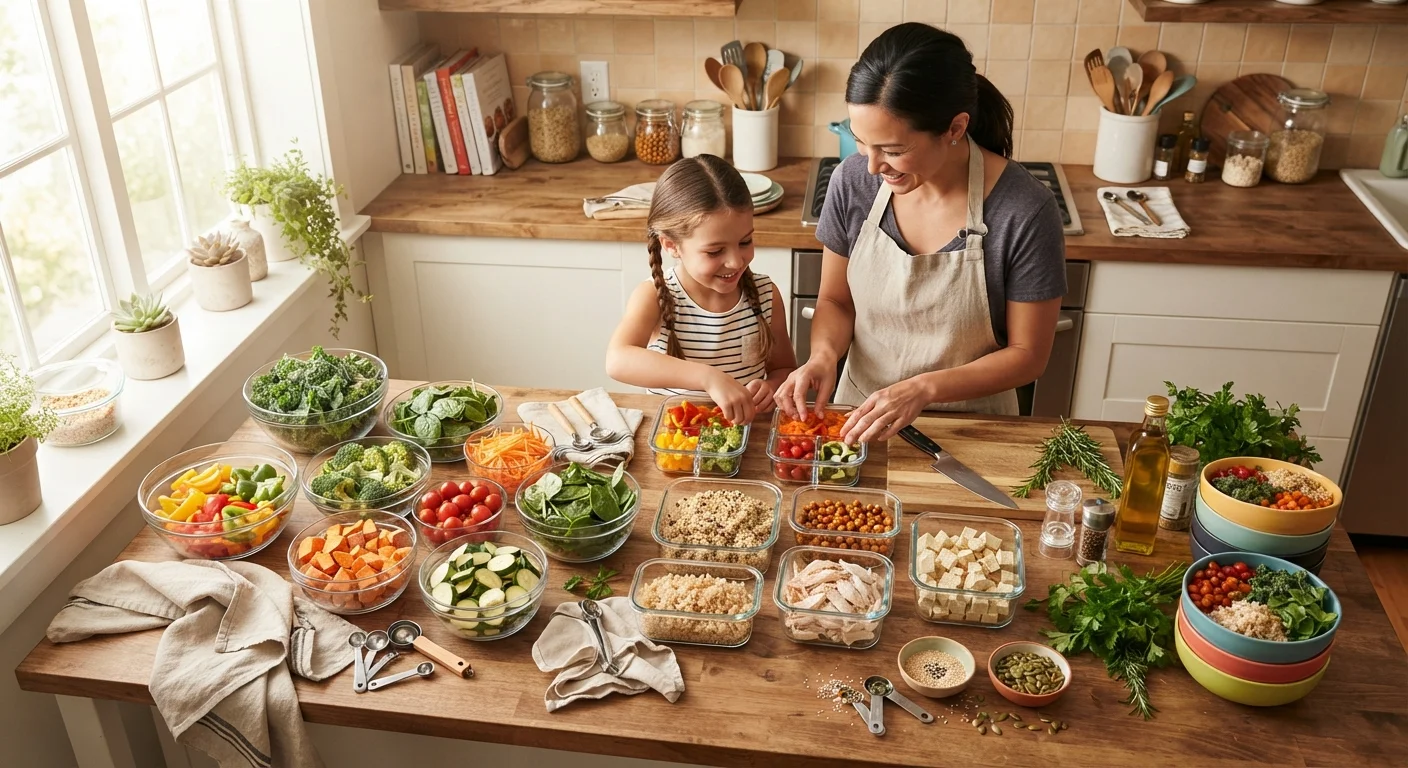
Assign age-appropriate tasks to children - rinsing vegetables, measuring grains, or sorting ingredients. Hands-on involvement has been linked in child nutrition research to greater willingness to eat varied foods. It also cuts your solo prep time and builds kitchen confidence in kids.
Step-by-Step: Your Sunday Prep Session
Don't Skip the Planning Step
Prepping without a clear weekly meal plan often leads to wasted food and duplicated effort. Before you cook, map out which meals will use which prepped components. Our family meal planning framework walks you through this step in detail.
Review your weekly meal plan and gather ingredients
Before touching a single knife, spend 10 minutes reviewing your plan for the week. Identify which meals share ingredients - for example, roasted chicken used in Tuesday's grain bowl and Thursday's wrap. Group your shopping list by what needs to be prepped and in what order. This reduces redundant cooking and ensures nothing is forgotten.
Start with the longest-cooking items first
Grains like brown rice, farro, or quinoa take 30-45 minutes and require minimal attention once started. Legumes cooked from dry take even longer. Put these on the stove or in a rice cooker first, then move on to other tasks while they cook. A large batch of grains - typically 3 to 4 cups dry - provides the base for multiple weeknight meals.
Roast vegetables in large batches
Preheat your oven to 400°F (205°C). Use two or three sheet pans to roast different vegetables simultaneously - for instance, broccoli on one pan, sweet potatoes on another, and bell peppers on a third. Toss with a small amount of oil and seasonings, then roast until tender and slightly caramelized. Roasted vegetables hold well in the refrigerator for three to four days and add color, fiber, and micronutrients to nearly any meal.
Cook a primary protein source
While vegetables roast, prepare a large batch of protein. Baked chicken thighs, hard-boiled eggs, cooked ground turkey, or a pot of beans are versatile, family-friendly options that span multiple meals. Use an instant-read thermometer to confirm safe internal temperatures - 165°F (74°C) for poultry, 160°F (71°C) for ground meats. For plant-based households, a double batch of lentils or chickpeas works well across a variety of dishes.
For more on plant-based protein strategies, see our article on plant-based eating for families.
Wash, chop, and portion raw produce
Raw salad greens, sliced cucumbers, shredded carrots, and cut fruit can be washed and stored in containers for quick assembly throughout the week. Pat produce dry before storing to extend freshness. Keep salad dressings separate until serving to prevent wilting. This step takes the friction out of adding a vegetable side to any weeknight plate.
Label everything and organize the refrigerator
Label each container with its contents and the date it was prepared. Organize the refrigerator so prepped components are clearly visible - ideally at eye level - rather than buried behind other items. Arrange by how quickly each will be used: items planned for Monday and Tuesday go in front, Thursday's prep goes behind. A well-organized fridge is the difference between ingredients that get used and ingredients that get forgotten.
Consistent meal prep can also support your household budget. Our guide on meal planning as a financial tool explains how families use this habit to reduce food waste and grocery spending.
Food Safety Is Non-Negotiable
Cooked proteins and grains should be cooled to room temperature within two hours and refrigerated promptly. The USDA recommends storing cooked foods in the refrigerator for no more than three to four days. When in doubt about whether something is still safe, discard it - foodborne illness poses real risks, especially for young children.
This article is for general informational and educational purposes only and is not a substitute for professional dietary or medical advice. Consult a registered dietitian or your family's healthcare provider for guidance tailored to your household's specific nutritional needs.