

Key Takeaways
What Unit Pricing Actually Means
Unit pricing strips away packaging and marketing to answer one question: what does one standardized unit of this product actually cost? That unit might be an ounce, a fluid ounce, a count (individual item), a square foot, or a load — depending on the product category.
Most US grocery stores are required by state or local law to display unit prices on shelf tags, typically in small print in the lower corner. The format varies: you might see $0.18/oz or $0.04/sheet. These numbers let you compare any two products regardless of how they're packaged or priced — a 12-oz jar versus a 32-oz jar, a 6-pack versus a 24-pack.
The confusion arises because retailers don't always use the same base unit across competing products. Two pasta sauces might show pricing per ounce and per serving respectively, making a direct comparison impossible without doing the math yourself. Being alert to this inconsistency is part of reading labels effectively.
For a broader look at how pricing psychology operates at retail, see our article on anchor pricing and the illusion of a deal.
What you will need
Step-by-Step: How to Compare Unit Prices at the Shelf
The process takes under two minutes once it becomes habit. Follow these steps each time you're deciding between sizes or brands.
Locate the unit price on the shelf tag
Find the small shelf label below the product. Look for a price-per-unit figure, usually displayed in smaller font than the retail price. Common labels read something like $0.22 / oz or $0.06 / count. If multiple competing products use different base units, note this before comparing.
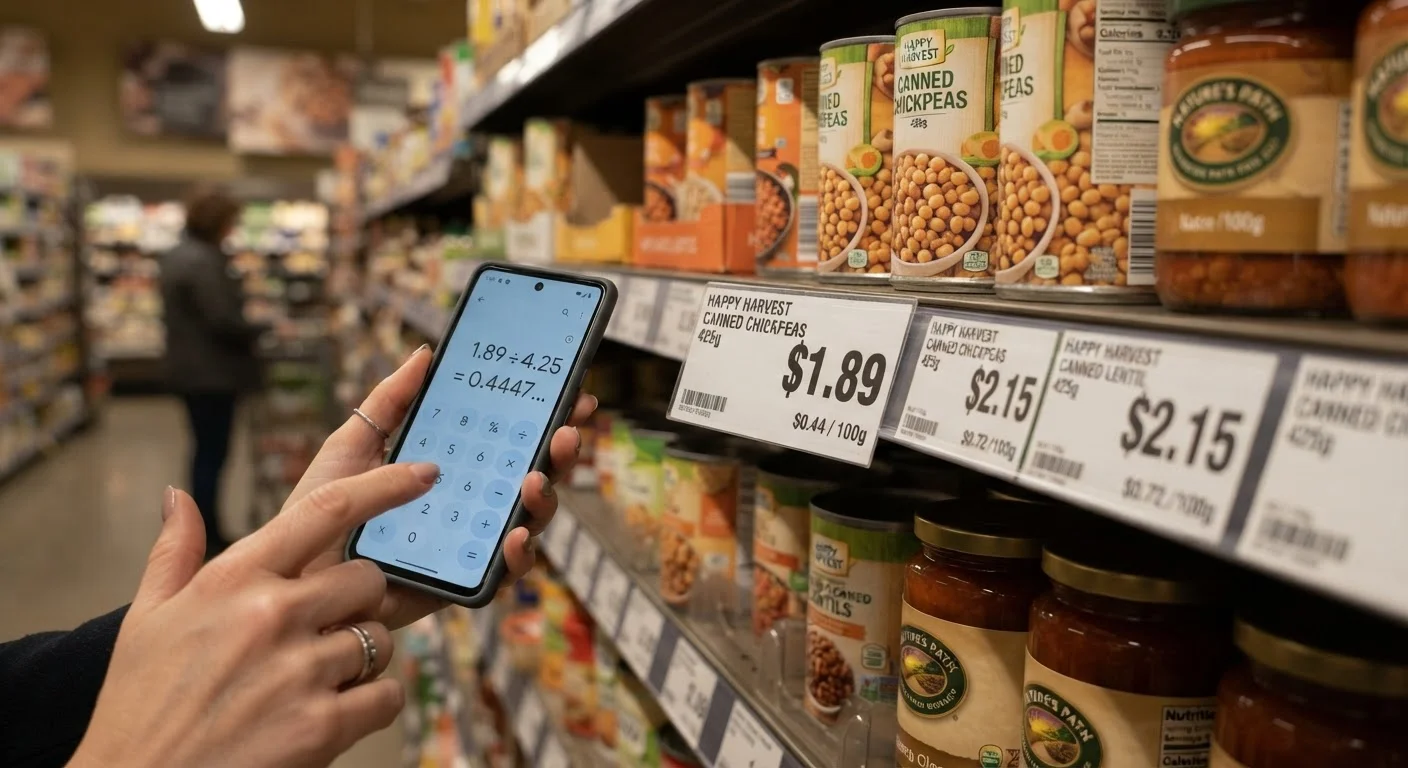
Calculate it yourself when the label is missing or inconsistent
Divide the retail price by the total quantity in the package. For example: a 28-oz jar priced at $3.49 works out to $3.49 ÷ 28 = $0.125 per ounce. Do the same calculation for the competing product and compare the results directly. This takes roughly 20 seconds with a phone calculator.
Check whether the lower unit price requires a size you'll realistically use
Once you've identified the lower unit price option, ask: will this quantity be fully used before it expires, degrades, or goes to waste? If the answer is uncertain, the nominal savings may not materialize. A product with a slightly higher unit price that gets fully used is often the better financial choice.
Compare across brand tiers, not just package sizes
Run the unit price calculation for the store-brand version alongside the name-brand options. In many categories — cooking oils, canned vegetables, cleaning supplies, paper goods — store brands carry a lower unit price with comparable functional performance. Let the numbers guide the comparison rather than brand familiarity.
Record your findings for repeat purchases
For items you buy regularly, note the winning product and its unit price in a simple list — a note on your phone works fine. Over time this eliminates the need to recalculate from scratch every shopping trip and helps you spot when pricing shifts or promotions genuinely improve value.
Loyalty Apps Can Surface Unit Prices Digitally
Many major grocery chains now display unit prices within their mobile apps alongside digital coupons. Browsing before your trip lets you pre-identify the better-value size and factor it into your list before you're standing in the aisle. This is particularly useful for planning larger or bulk purchases.
Unit pricing is one piece of the value picture. For larger purchases, the same logic applies at scale — see our guide on calculating total cost of ownership to apply similar frameworks beyond the grocery aisle.
When Bulk Buying Wins — and When It Doesn't
A lower unit price only translates to real savings if you actually use the product. Three conditions determine whether bulk is genuinely worthwhile:
- Shelf life: Non-perishables (canned goods, paper products, cleaning supplies) are almost always safe bulk candidates. Fresh or refrigerated items require realistic self-assessment of your household's consumption rate.
- Storage capacity: Buying 96 rolls of paper towels saves nothing if half end up damaged in a damp garage. Factor in your actual storage conditions.
- Usage rate: A product you use weekly behaves very differently from one you use monthly. A low unit price on a slow-moving item ties up cash and risks spoilage or expiry.
Specialty or seasonal items often carry inflated unit prices in smaller sizes, making bulk look attractive — but if the product goes stale or unused, the math flips against you. Our related article on when bulk buying actually saves money maps out these conditions in detail.
Store brands deserve attention here too. In many product categories, the store-brand option carries a meaningfully lower unit price than the name-brand equivalent with no practical difference in quality. Running the unit price comparison across brand tiers — not just sizes — often surfaces the clearest savings.
Sale Prices Don't Always Improve Unit Value
A product marked 'on sale' can still carry a higher unit price than a competing item at full price. Promotions are designed to drive volume, not necessarily to deliver the lowest cost per unit. Always run the unit price calculation on sale items the same way you would for any other product before assuming you're getting a better deal.
For more on the spending habits that quietly compound grocery costs, see grocery spending patterns that inflate your bill.