

Key Takeaways
Why Impulse Spending Is a Designed Problem, Not a Willpower Problem
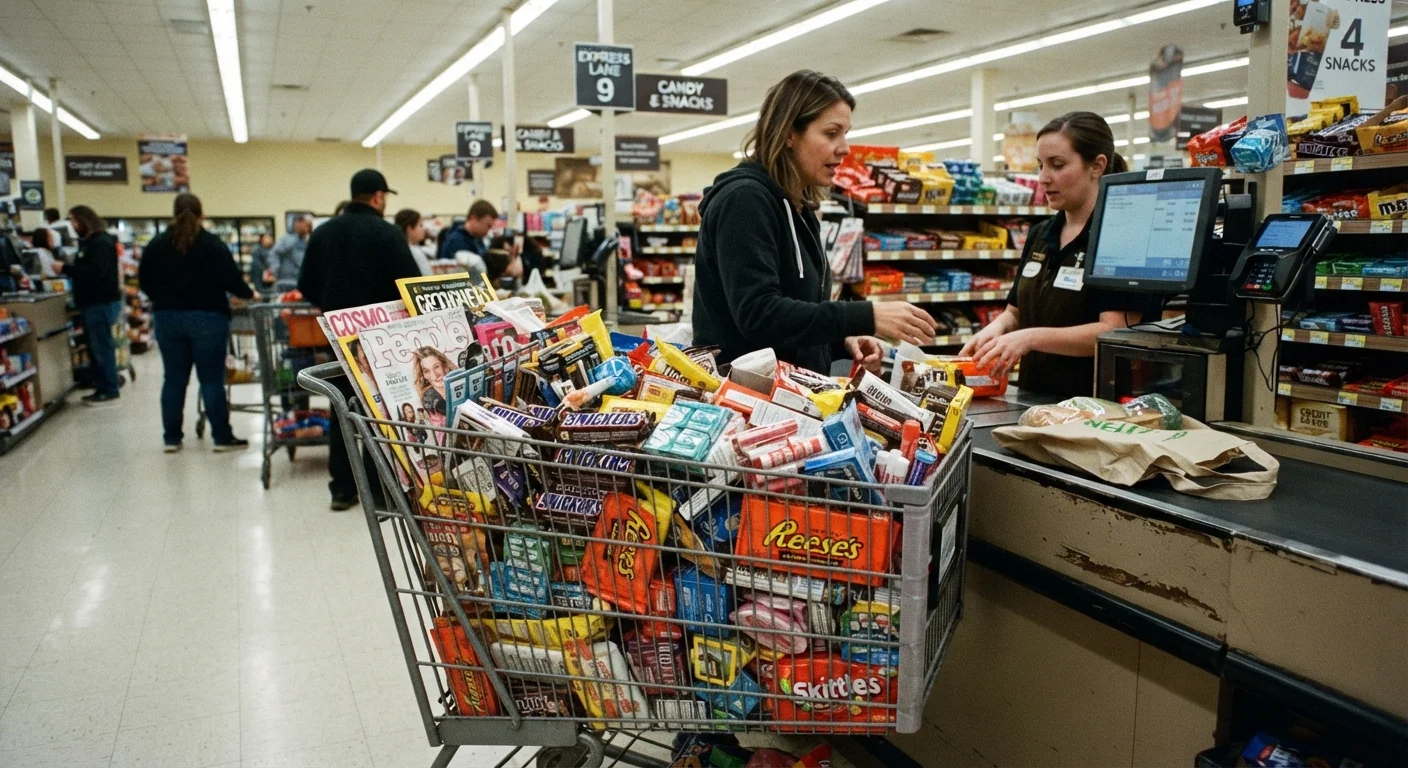
Retailers invest heavily in the science of unplanned spending. Store layouts, lighting, scent, music tempo, and digital checkout flows are all calibrated to shorten the gap between desire and purchase. Blaming yourself for overspending ignores the structural forces at work. Understanding those forces is what actually changes behavior.
Research in consumer psychology consistently shows that emotional state, physical environment, and perceived scarcity are stronger predictors of unplanned purchases than income or financial literacy alone. That matters because it shifts the solution from "try harder" to "change the conditions." For a foundational look at building better spending habits overall, see our complete primer for intentional spending.
~$314
Average monthly U.S. impulse spend per adult
A widely cited Slickdeals consumer survey found US adults reported spending roughly this amount monthly on unplanned purchases, adding up to nearly $3,800 annually per person.
88%
Shoppers who report impulse buying
Multiple consumer behavior studies consistently find the vast majority of shoppers acknowledge making at least occasional unplanned purchases, regardless of income or budgeting habits.
Common Impulse-Buying Mistakes and How to Stop Making Them
The following mistakes show up repeatedly across families at every income level. Each one is predictable — and correctable once you can name it.
Shopping without a list and a defined budget ceiling.
Why it happens: Most people treat shopping as a task to complete rather than a decision environment to navigate. Without constraints written down in advance, every item becomes a live negotiation.
Responding to urgency cues like countdown timers, "only 3 left" alerts, or flash-sale framing.
Why it happens: Scarcity and time pressure are among the most reliably documented triggers of unplanned purchases. Retailers and platforms use them precisely because they work — they short-circuit the evaluation step.
Shopping while emotionally activated — stressed, bored, celebratory, or tired.
Why it happens: Emotional states reduce cognitive load tolerance, meaning we reach for fast, feel-good decisions rather than deliberate ones. Retail environments are designed to sustain that emotional activation.
Anchoring value to the discount rather than the price.
Why it happens: When an item is presented as "40% off," the brain evaluates it against the original price rather than asking whether the purchase makes sense at all. The saving feels concrete; the spending feels abstract.
Treating checkout add-ons and upsells as part of the original decision.
Why it happens: Extended warranties, accessories, and "frequently bought together" suggestions appear at the moment of highest commitment — when you've already decided to buy. The mental accounting gets bundled.
One-Click and Saved-Card Checkout Accelerates the Problem
Digital retail environments are specifically engineered to remove the friction that naturally slows impulse decisions. Saved payment details, one-tap checkout, and auto-filled forms all reduce the psychological cost of spending. If you notice unplanned online purchases are a recurring pattern, removing stored payment methods from retail accounts adds back a deliberation step that can meaningfully change behavior over time.
Building Systems That Work Harder Than Willpower
Individual moments of restraint are fragile. Systems and pre-commitments are durable. A few structural habits provide far more protection than hoping you'll feel disciplined in the moment.
- The written list rule: Only items on a pre-written list are eligible for purchase in that shopping trip. Anything else gets added to a wish list for future consideration.
- The 48-hour wait: Any unplanned purchase above a household-defined threshold (many families use $25–$50) waits 48 hours before being bought. Most impulses evaporate.
- Friction by design: Remove saved payment methods from retail apps. Add one deliberate step — logging out, deleting autofill — between desire and checkout.
- Envelope or category budgets: Pre-allocating a modest "spontaneous spending" budget monthly lets you satisfy occasional impulses without derailing larger goals.
Online environments layer additional manipulation on top of these in-store tactics. Impulse buying in one-click checkout environments examines exactly how digital friction removal works against you. And if you shop for groceries regularly, grocery spending patterns that quietly inflate your bill shows where layout psychology costs families the most without their realizing it.
This article is for general informational purposes only and is not personalized financial advice. Consult a qualified financial professional for guidance specific to your circumstances.