

Key Takeaways
Why Retail Deceptions Still Work on Smart Shoppers
Retail deceptions don't target careless shoppers — they're specifically engineered to fool people who believe they're paying attention. These tactics exploit cognitive shortcuts that every human brain relies on: the assumption that a crossed-out price was real, or that a ticking countdown reflects genuine scarcity. Understanding how these mechanisms work is more useful than simply trying to shop more carefully.
The list below covers the most common deceptions families encounter in physical stores and online. Each one comes with a practical counter-strategy so you can identify the trick before money leaves your wallet. For a broader look at how misleading beliefs compound these risks, see our guide to shopping myths that cost American families real money.
Bait-and-Switch Advertising
A retailer advertises a product at a compelling price, then claims it's out of stock once you arrive — conveniently steering you toward a pricier alternative. While this practice is illegal under Federal Trade Commission guidelines, enforcement is inconsistent, and variations of it appear regularly both in stores and online.
Counter-strategy: Call ahead or check live inventory online before making a trip specifically for an advertised item. If a store tells you an advertised item is unavailable, ask for a rain check in writing — legitimate retailers are generally required to provide one or honor the advertised price on a comparable item.
Always verify stock before traveling for an advertised deal — substitutes benefit the store, not you.
Artificial Reference Prices
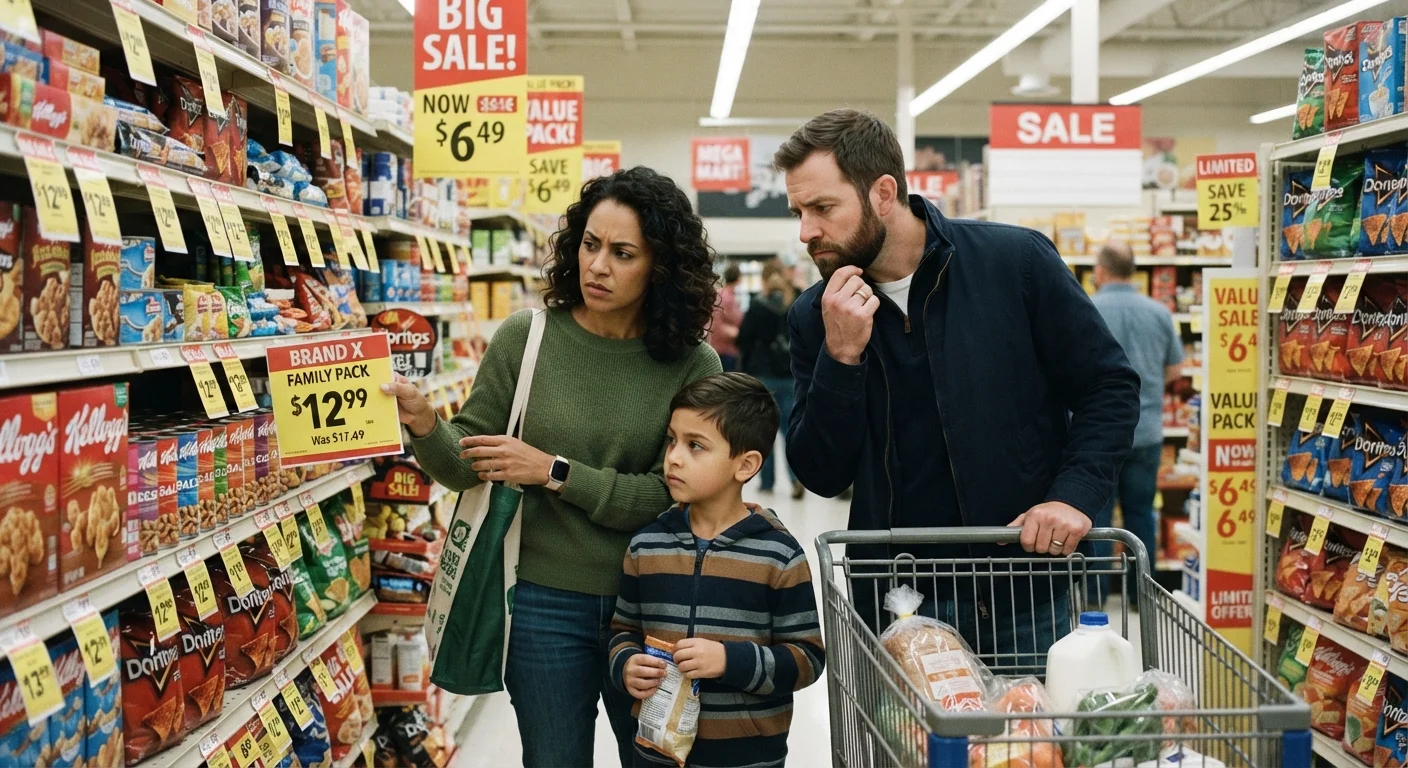
"Was $120, now $60" feels like a significant win. But the original price may have been set artificially high, or held briefly at that level, purely to make the discount appear dramatic. Consumer protection agencies in multiple states have pursued retailers for this practice, though it remains widespread.
Counter-strategy: Research the item's actual price history using independent tools before accepting a reference price at face value. Ask yourself: would you consider this item a fair value at the "sale" price if you'd never seen the original number? If the answer is no, the discount isn't doing real work for you.
A crossed-out price is only meaningful if that price was real and sustained.
Misleading Bundle Deals
Bundles present a group of products at a combined price that appears lower than buying each separately — but only if you actually need every item included. When a bundle contains products you wouldn't purchase individually, you're not saving money; you're spending money you otherwise wouldn't have spent at all.
Counter-strategy: Calculate the price of only the items you genuinely need within any bundle. If those items alone don't justify the bundle price, the remaining products don't represent savings — they represent extra cost dressed up as value. Our article on smart spending myths examines this pattern in more detail.
A bundle only saves money if you'd have bought every included item anyway.
Hidden Subscription Enrollment
At checkout — especially online — a pre-checked box or small-print disclosure quietly enrolls you in a recurring subscription, loyalty program, or auto-replenishment service. The initial purchase price may be reduced as an incentive, obscuring the ongoing charge buried in the terms.
Counter-strategy: Before finalizing any online purchase, scroll through the entire checkout page and read every pre-selected option. Review your bank and credit card statements monthly for unfamiliar recurring charges, and cancel subscriptions through official channels — not just by ignoring them.
Pre-checked subscription boxes at checkout are opt-outs disguised as features.
Manufactured Urgency and Scarcity
Countdown timers, "only 3 left!" notifications, and "offer expires tonight" banners create pressure to decide before you're ready to. In many cases these signals are not based on real inventory or time constraints — they're design elements calibrated to short-circuit deliberate decision-making.
Counter-strategy: Treat urgency language as a prompt to pause, not to act. Reload the page an hour later to see if the timer resets. Check whether the "limited" item is available at other retailers. Genuine scarcity rarely requires a retailer to tell you about it — real shortages speak for themselves.
Urgency that appears on demand is almost always manufactured, not real.
Unit Price Confusion
A large package priced at $14.99 feels economical compared to a smaller one at $6.99 — but unit price math frequently inverts that assumption. Retailers occasionally price larger sizes at a higher cost-per-unit, relying on the assumption that shoppers equate size with value.
Counter-strategy: Most US grocery and big-box retailers are required to display unit prices on shelf tags. Compare these directly — price per ounce, per count, per square foot — rather than total package price. When unit prices aren't displayed, use a phone calculator before placing items in your cart.
Bigger packaging does not always mean better value — unit price is the only honest comparison.
How to Build a Stronger Shopping Filter
No single habit eliminates all retail manipulation, but a few consistent practices make a significant difference. Before any non-routine purchase, write down exactly what you need and a realistic price expectation based on independent research — not the store's own reference price. That anchor number is yours, not theirs.
Make Your Price Anchor Before You Shop
Before entering a store or opening a product page, write down your own estimate of what the item should reasonably cost based on prior research. This number becomes your anchor — and it's far more reliable than whatever reference price the retailer displays. Shoppers who set their own price expectations are measurably less influenced by artificial markdowns.
Online shoppers face an additional layer of design-level manipulation. Dark patterns — interface tricks that push unintended purchases — operate alongside the pricing deceptions listed above. Being aware of both categories together gives families a much stronger defense. And if you use coupons or savings apps, our breakdown of how those tools actually work will help you use them without being nudged into overspending.