

Key Takeaways
Why Pet Dental Myths Are So Costly
Dental disease is one of the most commonly diagnosed health problems in companion animals. According to the American Veterinary Medical Association, most dogs and cats show signs of periodontal disease by the time they are three years old. Despite this, many owners remain unaware of the problem — in part because widely repeated myths make it easy to assume a pet's mouth is fine when it isn't.
These misconceptions have real consequences. Untreated dental disease can progress from inflamed gums to tooth loss, chronic pain, and — in serious cases — bacterial spread that affects the heart, kidneys, and liver. The good news is that most dental problems are preventable. Correcting the myths is the first step. For a broader look at pet wellness decisions, the Pet Health & Vet hub is a useful starting point.
Myth
Dry kibble cleans my pet's teeth just by being crunchy.
Fact
Kibble provides minimal mechanical cleaning and does not prevent tartar buildup without additional dental care.
The idea that crunchy food scrubs teeth clean is one of the most enduring pet dental myths. In reality, most dogs and cats bite through kibble so quickly that very little contact occurs between the food and the tooth surface — particularly the critical area near the gumline where periodontal disease starts. Veterinary dental organizations consistently note that diet alone is not a substitute for active dental hygiene. Some specially formulated dental diets exist with larger kibble shapes and specific fiber matrices that create more friction, but standard kibble provides negligible benefit.
Myth
Bad breath is just a normal part of having a pet.
Fact
Persistent bad breath (halitosis) is a clinical sign of bacterial accumulation, gum disease, or other underlying conditions.
A mild, transient odor after a meal is common, but chronic or strong-smelling breath is not something to normalize. In most cases, halitosis signals the presence of plaque and tartar-harboring bacteria below the gumline — the hallmark of periodontal disease. In some cases it can indicate other health issues, including kidney disease or gastrointestinal problems. If your pet's breath is consistently unpleasant, that's a clear cue to schedule a veterinary dental examination rather than reach for a flavored treat or breath spray.
Myth
Cats don't need dental care the way dogs do.
Fact
Cats are just as susceptible to periodontal disease and tooth resorption, yet dental care is often overlooked in feline households.
Because cats tend to hide discomfort and their mouths are harder to examine casually, dental disease in cats frequently goes undetected for longer than in dogs. Tooth resorption — a painful condition in which the tooth structure breaks down from the inside — is particularly common in domestic cats. Veterinary dentistry experts estimate it affects a significant proportion of adult cats. Home brushing is equally recommended for cats, using a small, soft-bristled brush and veterinary-approved toothpaste. Starting young makes acceptance far easier, though older cats can be trained with patience.
Myth
If my pet is eating normally, its teeth must be fine.
Fact
Animals instinctively continue eating even when experiencing significant oral pain, masking dental disease for months or years.
Survival instincts drive dogs and cats to eat regardless of discomfort. Many animals with severe periodontal disease, fractured teeth, or oral lesions will eat enthusiastically right up until the problem becomes extreme. Waiting for a change in appetite as a signal that dental care is needed means disease has likely been progressing silently for some time. This is why routine veterinary dental examinations — not just observation at home — are the standard of care for detecting problems early.
Myth
Professional dental cleanings require anesthesia only because vets want to charge more.
Fact
General anesthesia is medically necessary for safe, thorough dental cleanings in animals and cannot be meaningfully replaced by anesthesia-free procedures.
Anesthesia-free dental scaling has grown in popularity at some grooming facilities, but veterinary dental associations are clear that it provides only cosmetic surface cleaning. The subgingival (below-the-gumline) spaces where disease actually develops cannot be safely or effectively cleaned in a conscious, moving animal. Anesthesia also allows for full-mouth X-rays, which are essential for detecting bone loss and root problems invisible to the naked eye. The anesthetic risks are real but are managed with pre-anesthetic screening — a conversation worth having with your veterinarian.
Building a Realistic Dental Care Routine
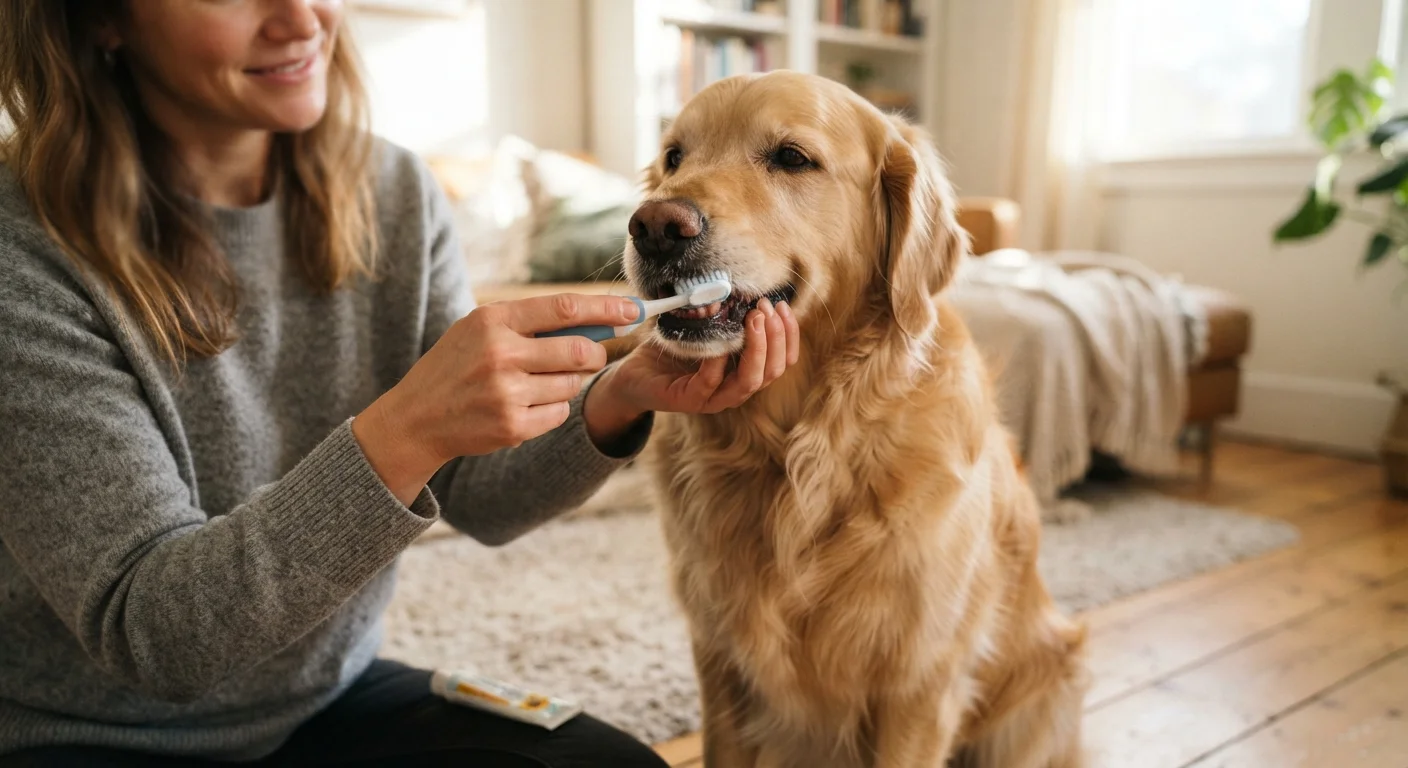
Once myths are set aside, the path forward is straightforward. Veterinarians generally recommend a layered approach: daily tooth brushing using a toothpaste formulated for pets (human toothpaste contains ingredients that are harmful to animals), combined with annual or biannual professional cleanings under anesthesia. Dental chews and water additives can serve as supplementary tools but should not replace brushing.
Never Use Human Toothpaste on Pets
Many human toothpastes contain xylitol, fluoride, or detergents that are toxic or harmful to dogs and cats if swallowed. Always use a toothpaste specifically formulated and labeled as safe for pets. These come in flavors like poultry or malt that also improve acceptance during brushing sessions.
Introducing brushing gradually — starting with letting a pet sniff and lick the toothpaste, then progressing to brief brushing sessions — improves acceptance, especially in cats. Consistency matters far more than duration; even 30 seconds of effective brushing daily makes a measurable difference over time.
If your pet shows signs of dental pain — pawing at the mouth, dropping food, reluctance to chew, or bleeding gums — contact your veterinarian promptly. These are not signs of aging or personality quirks; they signal a condition that deserves professional attention. Understanding how diet factors into oral health is also worth exploring: see our guide on decoding pet nutrition labels for more context.
80%
Adult dogs with periodontal disease by age 3
The American Veterinary Medical Association estimates that by age three, most dogs show some evidence of periodontal disease.
70%
Adult cats affected by dental disease
Veterinary dental specialists estimate a majority of adult cats have some form of dental disease, much of it undetected by owners.
This article is for general educational purposes only and does not constitute veterinary advice. Always consult a licensed veterinarian regarding your individual pet's health needs.