

Key Takeaways
Lawn Brown Patches
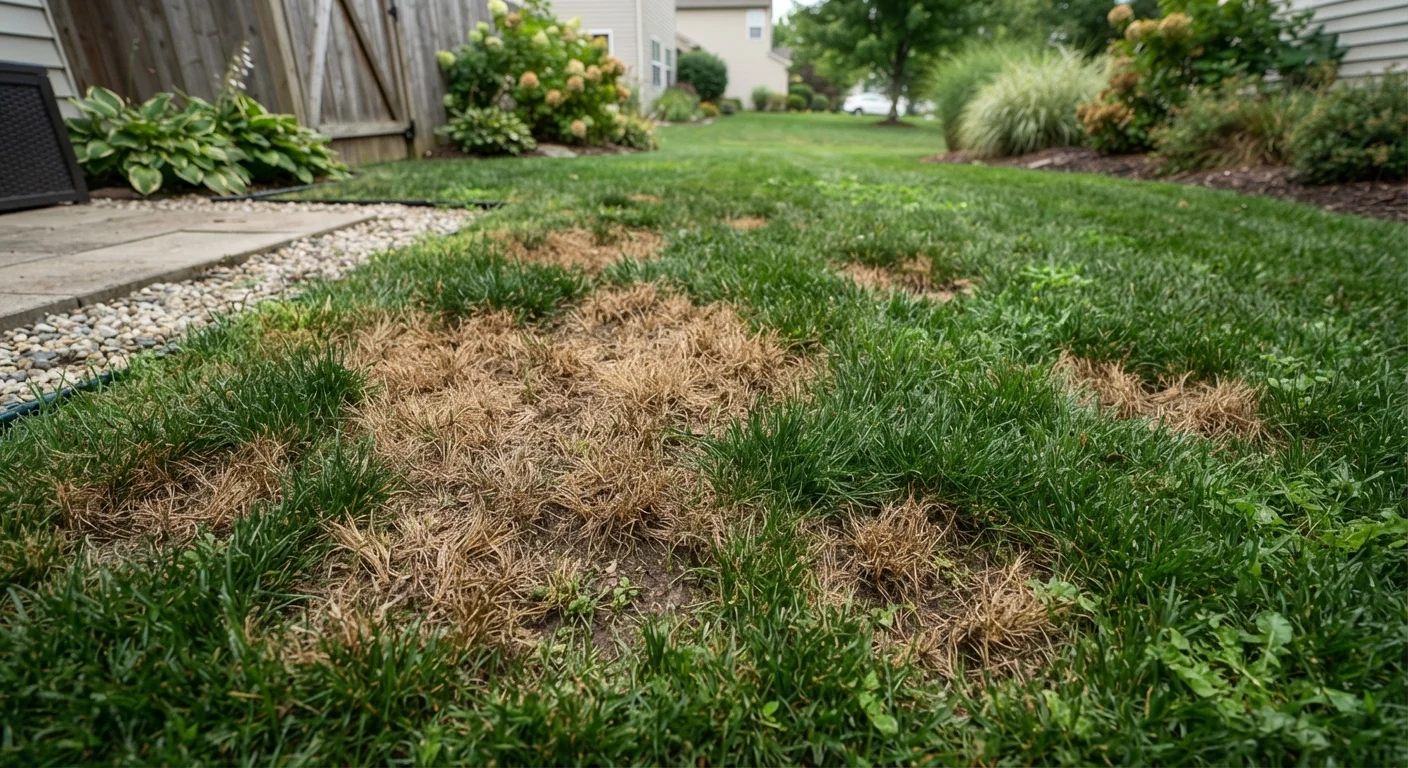
Brown patches in a lawn are areas where grass has died, gone dormant, or become stressed — turning tan, yellow-brown, or straw-colored rather than green. They aren't all caused by the same problem. The shape, size, location, and distribution of those patches are diagnostic clues that point toward specific causes like disease, pests, watering problems, or soil issues.
Turfgrass pathologists and extension specialists often use patch pattern and timing as the first step in diagnosing lawn health issues before recommending any treatment.
Why Pattern Recognition Matters Before You Act
When brown patches appear, the instinct is to water more, apply fertilizer, or reach for a lawn treatment. But acting before you understand the cause can waste money and make the problem worse. A patch caused by a fungal disease won't respond to irrigation — in fact, more moisture may accelerate the damage. A patch from drought stress won't disappear with a fungicide application.
The geometry of the damage — its shape, edges, size, and where it sits on the lawn — is your first and most useful diagnostic tool. Think of it the way a doctor reads an X-ray: the pattern carries information before you run a single test.
For a broader look at how lawn health fits into your overall yard plan, see our complete backyard landscaping guide.
80%+
Of lawn problems misdiagnosed at first
Turfgrass specialists note that the majority of homeowner-reported lawn issues are initially attributed to the wrong cause, leading to ineffective or counterproductive treatments.
3–5 ft
Typical diameter of brown patch disease circles
Brown patch disease circles can begin small but expand rapidly — sometimes reaching 3 to 5 feet or more during periods of sustained heat and humidity.
1–2 weeks
Recovery time for drought-stressed grass
Lawns experiencing drought-induced browning can often show visible recovery within one to two weeks when consistent, appropriate irrigation is restored.
Circle and Ring Patterns: Fungal Disease Signals
Roughly circular patches — especially those with a darker green or brown ring around the perimeter — are strongly associated with fungal diseases. Brown patch disease (caused by Rhizoctonia solani) creates circular areas that can expand to several feet wide during warm, humid weather. The outer edge may appear water-soaked or darker than the interior.
Fairy ring produces arcs or full circles where grass at the ring line dies while the interior may look unaffected or even darker green. This pattern is driven by fungal activity decomposing buried organic matter underground — old tree roots, stumps, or heavy thatch.
Dollar spot creates smaller, roughly circular patches about the size of a silver dollar that may merge into irregular shapes as the disease spreads. It's most common in lawns with low nitrogen levels during cool, moist mornings.
Check Edges Before Watering More
Look closely at the boundary between brown and green grass. A sharp, defined edge suggests disease or chemical burn. A gradual fade into surrounding grass is more typical of drought or heat stress. This simple observation can save you from applying the wrong remedy.
Understanding your grass type matters here — cool-season grasses like tall fescue and Kentucky bluegrass tend to be more susceptible to brown patch during hot, humid summers than warm-season grasses. See our guide to cool-season vs. warm-season grasses for more context.
Irregular Patches: Watering, Compaction, and Drainage
Patches with no consistent shape — jagged, sprawling, or following the contour of a slope — point toward physical or moisture-related causes.
- Drought stress typically starts in areas farthest from sprinkler heads, on slopes where water runs off quickly, or in spots exposed to more sun and wind. The browning is widespread rather than sharply defined.
- Overwatering or poor drainage creates soggy, yellowed grass that turns brown, often in low-lying areas or near downspouts. Waterlogged soil starves roots of oxygen.
- Soil compaction shows up as thinning, struggling grass in high-traffic zones — play areas, pathways, or anywhere people walk regularly. The grass doesn't die all at once but steadily weakens. Aeration and overseeding are typically the right response here.
Adjusting your irrigation approach to match season and soil conditions is often the most impactful fix for moisture-related browning. Our lawn watering schedules guide walks through how to calibrate watering by season.
Scattered Small Patches: Pest and Chemical Damage
Random small patches scattered across the lawn — without any organized shape or pattern — often indicate insect activity or localized chemical exposure.
Grub damage from beetle larvae feeding on grass roots creates irregular brown areas that feel spongy underfoot and can be peeled back like loose carpet. If you lift the turf at the brown edge and find C-shaped white grubs, that confirms the cause.
Pet urine leaves a distinct round, dark brown center with a ring of dark green grass around it (the nitrogen-rich fringe). These spots are typically small, 4–8 inches wide, and concentrated where a pet frequents.
Fertilizer burn from misapplication creates streaks or patches that follow the application pattern — often parallel lines or irregular areas where granules clumped. See common fertilization mistakes to avoid this entirely.
When Grass Type Affects Diagnosis
The same pathogen or pest can produce different visual symptoms depending on whether you have a cool-season or warm-season lawn. Warm-season grasses like Bermuda and Zoysia may go naturally dormant and brown in winter, which is normal — not damage. Context and timing matter as much as pattern.