

Key Takeaways
Why KonMari Gets Misread So Often
Since Marie Kondo's organizing philosophy became widely known through her books and television appearances, it has also become widely misquoted. Soundbites spread faster than full explanations, and a rich, nuanced method gets flattened into a handful of rules that can frustrate more than they help. The result: many families try KonMari, struggle to fit their lives into the simplified version, and assume the method doesn't work for them — when really, they were working from an incomplete picture.
Understanding what KonMari actually says — versus what gets repeated about it — can make the difference between a one-time purge and a genuinely sustainable home system. If you've ever felt that the approach was too extreme, too precious, or just impractical for a busy household, the myths below may change your perspective. For related misconceptions about how decluttering decisions can go wrong, see our guide on decluttering without regret.
Myth
KonMari means keeping only items that make you feel a burst of happiness.
Fact
'Sparks joy' is a translation that encompasses usefulness, meaning, and gratitude — not just emotional excitement.
The phrase tokimeku in Japanese is closer to "makes your heart flutter" and has always been intended as a broad measure of whether something adds value to your life. A functional tool, a child's art project, or a practical raincoat can all meet that standard. Marie Kondo has clarified in interviews that gratitude for an object's function counts — you don't need to feel delight every time you look at a spatula.
Myth
You have to get rid of most of what you own to do KonMari correctly.
Fact
The method sets no target number of possessions; it asks only that everything you keep be chosen intentionally.
KonMari is not a minimalism prescription. Some people go through the process and keep the vast majority of their belongings — they simply become more conscious about what stays and why. The goal is a home where everything present has been actively chosen, not a home that reaches some external benchmark of sparseness.
Myth
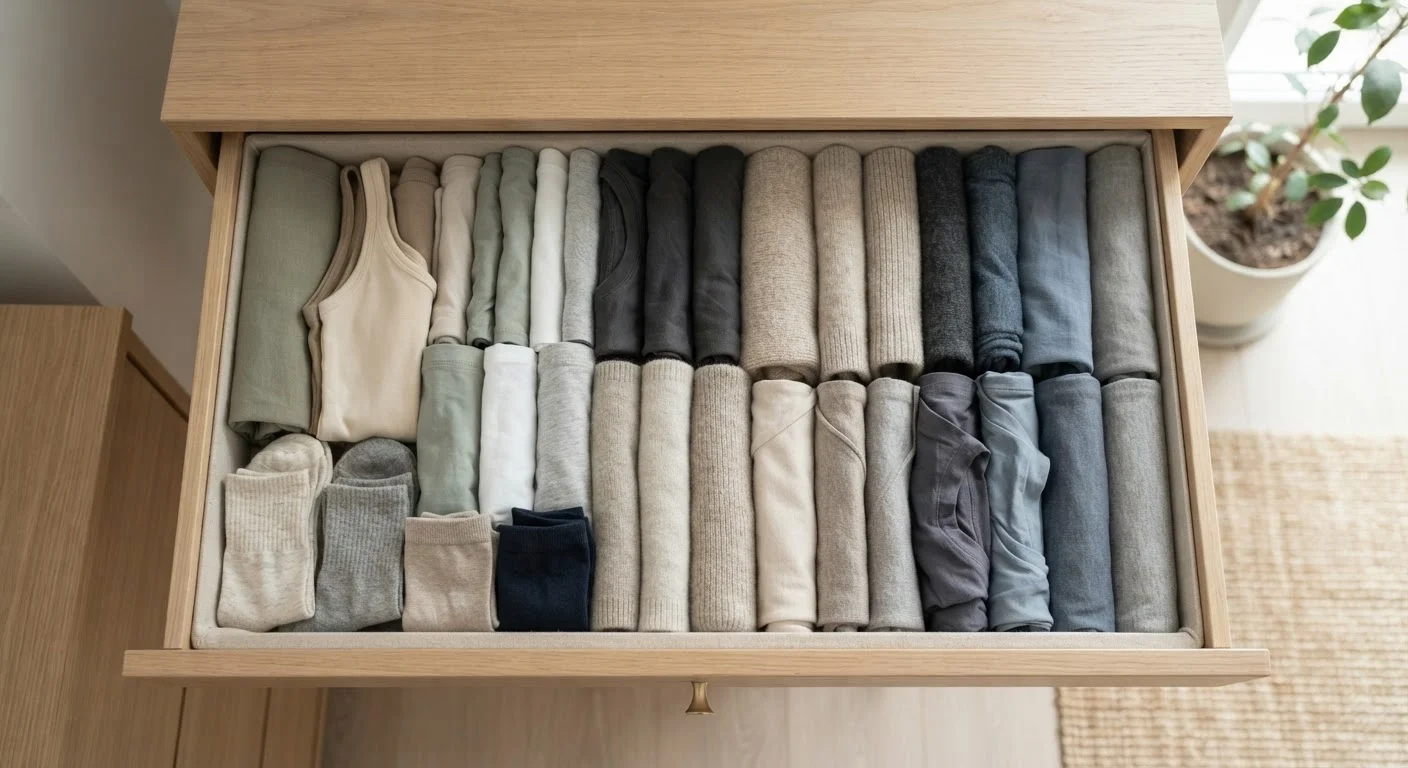
Everything must be folded vertically and stored upright.
Fact
Vertical folding is a recommended technique for certain clothing categories, not a universal rule for every item in the home.
The vertical folding method is genuinely useful for items like T-shirts, sweaters, and pants stored in drawers, because it makes contents visible at a glance and prevents re-shuffling. However, KonMari doesn't insist on this approach for hanging garments, linen closets, or items where another storage method works better. Adapting the technique to your specific storage setup is entirely consistent with the method.
Myth
You should tidy your entire home in a single weekend.
Fact
KonMari recommends a single dedicated tidying 'event' spread over as long as it takes — often several weeks or months for a full household.
The idea of a tidying "festival" doesn't mean a 48-hour sprint. For a family home with multiple rooms, accumulated possessions across generations, and the logistics of daily life continuing, the process routinely takes weeks. The point is to approach it as a distinct project with a clear beginning and end, rather than an ongoing, perpetually incomplete chore. Giving yourself that runway is practical, not a failure of commitment.
Myth
KonMari requires you to touch every single item you own simultaneously.
Fact
Handling each item is meant to help you make a conscious keep-or-go decision — the act itself matters, not completing every category in one sitting.
Physically holding an object before deciding its fate is meant to counter the habit of keeping things out of inertia rather than intention. That principle can be applied even if you work through categories across multiple sessions. The tactile element is a tool for mindful decision-making, not a rigid procedural requirement that invalidates the method if not followed to the letter.
Applying KonMari Realistically in a Family Home
Even with the myths cleared up, families face a real challenge: KonMari was largely written with individuals in mind. When multiple people share a home — with different tolerances for clutter, different attachments to objects, and different schedules — the method needs thoughtful adaptation rather than wholesale imposition.
Don't Impose the Process on Other Family Members
Applying KonMari to shared possessions without buy-in from the people who own or use them commonly causes conflict and resentment. Going through a partner's or child's belongings on their behalf — even with good intentions — undermines trust and rarely produces lasting results. Start with your own spaces and invite others to participate rather than requiring it.
The most effective approach for families is often to apply KonMari principles to your own belongings first, and to shared spaces collaboratively, without dictating outcomes for others. Marie Kondo herself has acknowledged that tidying one person's possessions without their consent is counterproductive. If household disagreements about organization are a recurring issue, our article on organizing a home when family members disagree offers practical frameworks for finding common ground.
KonMari is also sometimes conflated with minimalism, but they aren't the same philosophy. Minimalism typically sets an aspirational ceiling on possessions; KonMari sets no numerical limits at all. For a candid look at what full minimalism actually involves, see the trade-offs of going fully minimalist.
54%
Americans who say clutter causes stress
A survey by the American Psychological Association found a majority of U.S. adults report that household disorganization contributes to feelings of stress and anxiety.
6 categories
KonMari organizing sequence
The method organizes belongings into six categories — clothing, books, papers, komono (miscellaneous), and sentimental items — tackled in that specific order to build decision-making confidence.
What the method does ask is that you make deliberate choices — and then maintain them. That ongoing intentionality, far more than any particular folding technique, is what the KonMari approach is truly about.