

Key Takeaways
Why Decluttering Regret Is So Common
Decluttering advice often emphasizes ruthlessness — if in doubt, throw it out. But that framing doesn't account for the real and surprisingly common experience of regretting items you let go. Research into household decision-making consistently shows that choices made quickly, under pressure, or in high-energy emotional states tend to prioritize the immediate goal of clearing space over longer-term preferences.
The result: functional items repurchased at full price, sentimental objects irreplaceably lost, and a nagging sense that the process didn't quite work. Going fully minimalist can feel appealing in the abstract, but active families often discover real costs when they apply maximum-reduction logic to a household that genuinely needs variety and flexibility.
The goal of smarter decluttering isn't to keep more — it's to make decisions you'll still agree with months later. That requires a process built around deliberate pacing rather than momentum.
Don't Discard Before You're Ready
Donating or disposing of items is usually irreversible. Once something leaves your home, recovering it is rarely possible and often costly. Before any item goes out the door permanently, make sure every household member with a stake in it has had a chance to weigh in. Hasty decisions made during high-energy decluttering sessions are the most common source of lasting regret.
What You'll Need Before You Start
Good outcomes depend on preparation as much as execution. Gathering the right materials and setting realistic parameters before you begin prevents the common trap of stopping partway through a session and leaving a room in worse shape than you found it.
What you will need
Labeled Storage Boxes or Bags
Physical sorting containers that enforce clear category decisions as you work through each space.
Smartphone Camera or Scanner App
Photograph or digitize sentimental papers, children's artwork, or documents before discarding originals.
Sticky Notes and Marker
Tag ambiguous items with a review date so decisions aren't made under pressure in the moment.
Inventory Notebook or Notes App
Track items placed in Maybe boxes so you can quickly recall what's stored there during the review period.
If your household includes a partner or older children, loop them in before the session rather than after. Organizing a home when family members disagree is its own challenge, but at minimum, shared spaces should be sorted with shared input.
How to Work Through Each Space
Follow the steps below in sequence. Skipping steps — particularly the cooling-off period and the family-flagging check — is where most decluttering regret originates. The process is designed to be gradual and revisable, not final on the first pass.
Set a Clear Scope Before You Start
Choose one room, zone, or category — not the entire house — as your starting point. Tackling too much at once accelerates decision fatigue, which is when poor, regret-prone choices happen. A single closet or one category like outerwear is a realistic, manageable scope for a first session.
Sort Into Four Clear Categories
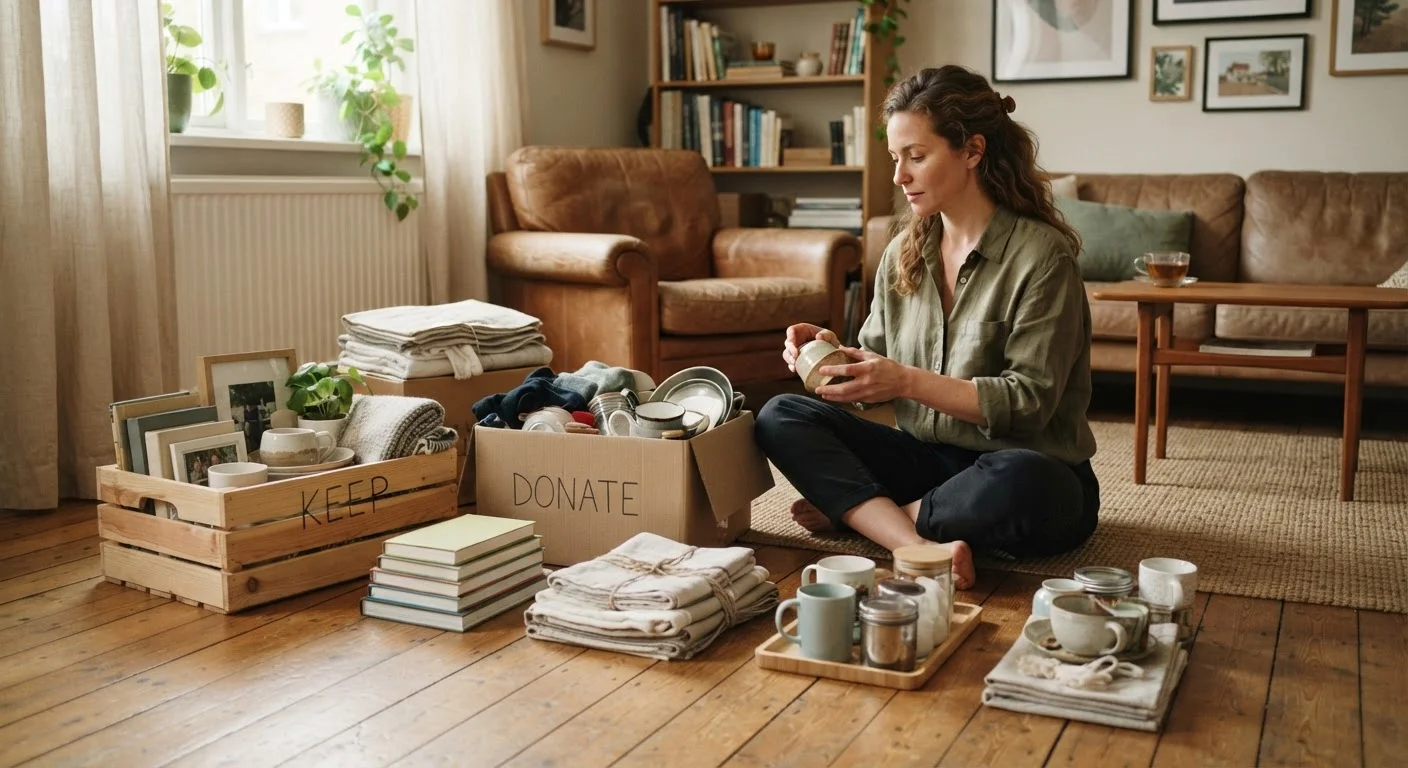
As you handle each item, place it immediately into one of four labeled containers: Keep, Donate, Discard, or Maybe. Avoid creating sub-piles or setting items aside to decide later — that recreates the clutter you're trying to resolve. The Maybe category exists precisely for genuine uncertainty, so use it without guilt.
Flag Items That Belong to Other Household Members
Before anything moves to Donate or Discard, check whether the item belongs to or is regularly used by another person in the household. This is especially relevant for shared spaces like garages, storage rooms, or family living areas. Place flagged items in a visible neutral spot and notify the relevant person before taking action.
Apply a Cooling-Off Period to Maybe Items
Seal your Maybe box, write today's date on it, and log its contents briefly in a notebook or notes app. Set a calendar reminder for 60–90 days out. If during that window you find yourself needing or thinking about something in the box, retrieve it — that's your answer. If the reminder arrives and you haven't touched it, the contents are strong candidates for donation.
Digitize Before You Discard Sentimental Items
For papers, children's drawings, printed photos, or handwritten notes you're considering letting go of, photograph or scan them first. Free scanner apps can produce high-resolution images suitable for printing if you change your mind. Store digital copies in a named folder organized by year or person, and back them up automatically using a cloud service.
Remove Donate and Discard Items Promptly
Once you've made your decisions, get Donate bags out of the house within 24–48 hours. Items that linger in bags by the door are frequently raided and recirculated, undoing the work of the session. Schedule a donation drop-off as part of the same day or the next, rather than treating it as a future task.
Use the Maybe Box Method
For items you're unsure about, place them in a sealed box with a date written on the outside. If you haven't opened the box to retrieve anything within 60–90 days, that's reliable evidence the contents aren't part of your active life. At that point, you can donate or discard with much greater confidence and far less second-guessing.
One category that benefits from its own dedicated approach is paper. Mail, school documents, receipts, and instruction manuals accumulate at a rate most sorting sessions don't address. See our guide to tackling paper clutter for a system designed specifically for that challenge.
Avoiding Common Pitfalls After the Session
The work doesn't fully end when the boxes leave. Two patterns frequently undo well-executed decluttering sessions: refilling cleared spaces quickly, and failing to address the systems that created the clutter in the first place.
Sentimental Items Deserve Separate Treatment
Sorting sentimental objects alongside everyday clutter leads to poor decisions. Emotional fatigue from handling practical items — old appliances, duplicate kitchen tools — dulls your judgment by the time you reach things that actually matter. Reserve a separate session, ideally on a different day, specifically for sentimental categories like childhood keepsakes, photographs, and inherited belongings.
For cleared surfaces and shelves, apply a brief pause before adding new items — ask whether what you're about to place there genuinely belongs there or is simply filling available space. The hidden costs of disorganization are real and measurable, from duplicate purchases to wasted time, and maintaining the gains from decluttering is what converts a one-time effort into lasting household function.
If you notice patterns — for example, that items pile up in a particular zone, or that certain categories are always hard to decide about — that's signal worth acting on. Adjusting storage, habits, or household expectations proactively prevents the same work from repeating every few months.