

Key Takeaways
Hidden Costs of Disorganization
The hidden costs of disorganization are the real financial losses that accumulate when a household lacks consistent systems for managing belongings, food, time, and paperwork. These are expenses most families don't consciously track — duplicate purchases, wasted groceries, late fees — but they add up steadily. Unlike a single bad purchase, disorganization costs are diffuse and easy to overlook until you add them up.
Behavioral economists sometimes refer to these as 'friction costs' — inefficiencies embedded in daily routines that impose measurable financial penalties without a single obvious decision point.
Why Clutter Costs More Than You Think
Most families focus on the big-ticket items when reviewing a household budget — mortgage payments, utility bills, insurance premiums. What rarely gets scrutinized is the slow financial bleed caused by a disorganized home. It doesn't show up as a single line item. Instead, it hides inside grocery receipts, credit card statements, and late-penalty notices.
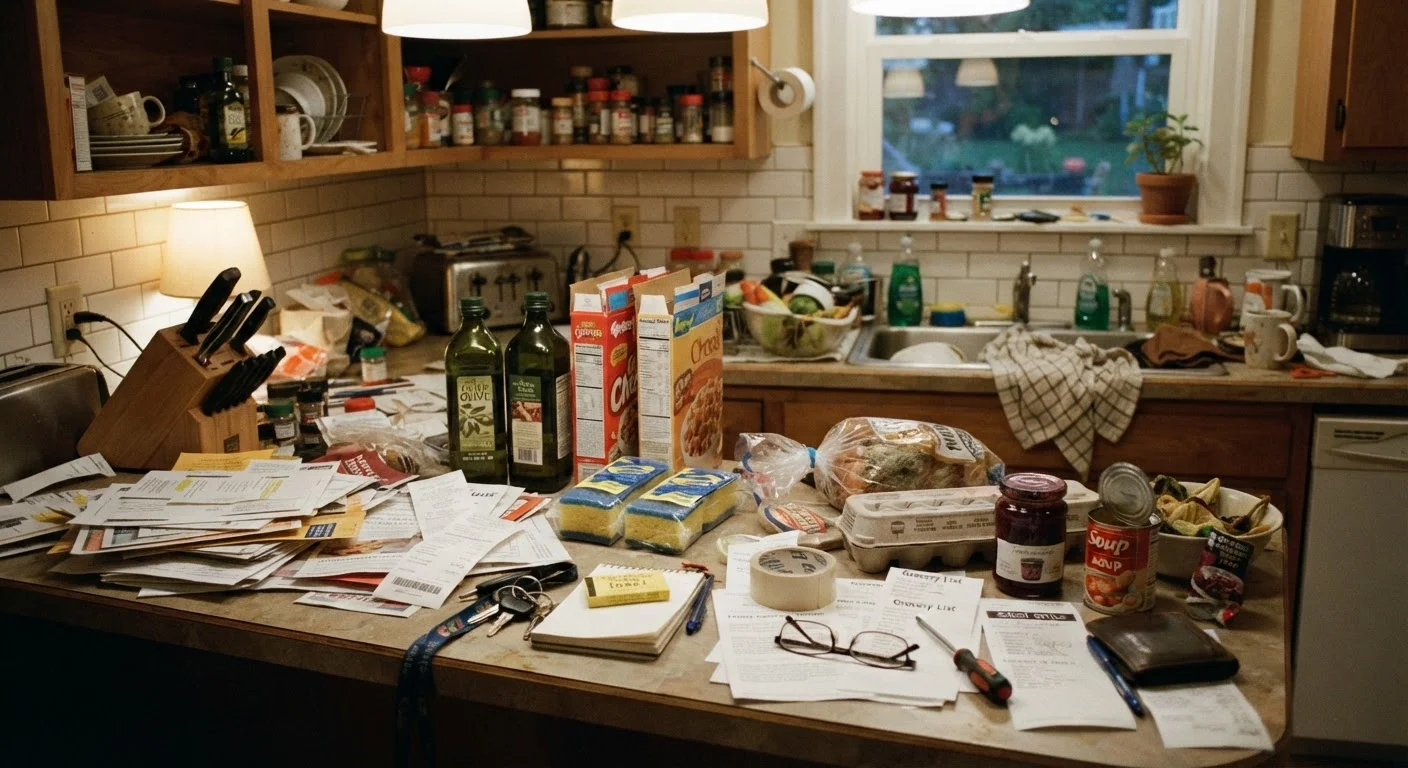
Disorganization costs are especially easy to miss because they're spread across dozens of small decisions made under pressure: buying another set of batteries because no one can find the ones purchased last month, or ordering takeout because the pantry looks bare when it's actually full of usable ingredients buried behind expired cans. These aren't budgeting failures in the traditional sense — they're system failures that carry a real price tag.
Understanding where those costs come from is the first step toward reducing them. For a broader look at how everyday assumptions quietly undermine household finances, see spending myths that cost families money.
~$1,500
Estimated annual food waste per U.S. household
The USDA estimates that American households waste roughly 30–40% of the food supply, with household-level waste often linked to poor visibility and storage habits.
23 min
Average time spent daily searching for misplaced items
Organizational research has suggested the average person spends around 23 minutes per day searching for lost items, time that compounds into meaningful lost productivity and frustration.
~25%
Households that routinely buy duplicates of owned items
Surveys by professional organizing associations have found that a significant share of households regularly purchase items they already own but cannot locate.
The Main Ways Disorganization Drains Household Budgets
Food Waste
Perishable groceries that get pushed to the back of the fridge or lost behind clutter in the pantry represent one of the most direct financial losses in a disorganized home. When families can't easily see what they have, they over-purchase — then discard. A consistent meal planning routine and a weekly pantry audit can reduce this significantly without requiring any special products.
Duplicate Purchases
Can't find the tape, the scissors, or the spare phone charger? Most people buy another one. These small purchases feel trivial individually, but households that lack organized storage routinely own multiples of the same item while simultaneously being unable to locate any of them. A simple, designated home for common household tools eliminates most of this waste.
Late Fees and Missed Deadlines
Paperwork buried under clutter means bills go unpaid, warranty registration windows close, and rebate deadlines pass unnoticed. A single missed credit card payment can trigger a fee, and repeated late utility payments can affect your account standing. Setting up a dedicated bill station — even just a wall pocket or a folder — is a low-effort intervention with measurable returns.
Emergency Replacements
When essential items are stored carelessly, they break, get lost, or reach the end of their life before anyone notices they need replacement. That forces last-minute purchases at less favorable prices rather than planned replacements. This dynamic is closely related to hidden costs families overlook in major purchases, where lack of planning consistently inflates the final price paid.
Try a One-Month Disorganization Audit
For 30 days, jot down every purchase that was made because you couldn't find something you already owned, every food item discarded unused, and every fee paid due to a missed deadline. Most families find this simple tracking exercise revealing — and motivating. Seeing the total in one place makes the case for change far more clearly than any general advice.
Building Simple Systems That Prevent Costly Chaos
The solution to disorganization doesn't require an expensive overhaul or a minimalist lifestyle. In fact, going too far in the opposite direction carries its own trade-offs — as explored in the trade-offs of full minimalism for active families. The goal is friction-free organization: systems simple enough that every household member actually uses them.
Start with a household inventory habit
Before each major grocery shop, do a 60-second scan of pantry staples and fridge contents. This single habit prevents the majority of duplicate food purchases. Extend the same logic to household supplies — a quick check before a hardware store run eliminates redundant buys.
Designate one home for high-loss items
Batteries, scissors, tape, chargers, and remote controls account for a disproportionate share of duplicate purchases. Assign each a permanent, visible location and return it there after every use. The location matters less than the consistency.
Create a bill-and-deadline command center
Whether physical or digital, having a single place where incoming mail, upcoming deadlines, and financial documents live prevents the late fees that quietly inflate household expenses. Even a simple folder system or a phone calendar with bill due dates can eliminate this cost entirely.
For structured guidance on managing your household's overall financial picture, the family budgeting hub offers practical frameworks that work alongside better home organization. And for sharper everyday purchasing decisions, smart spending strategies can help families make the most of every dollar.