

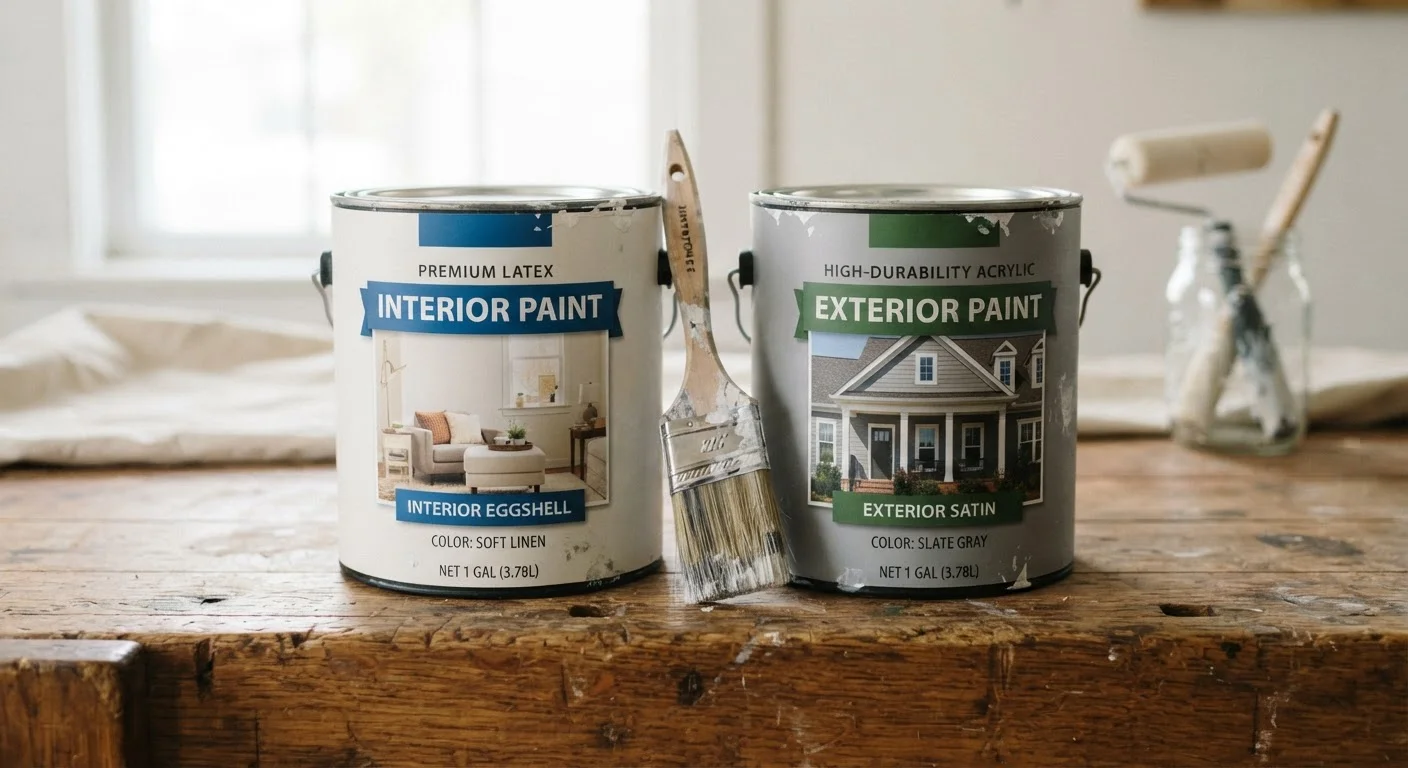
Key Takeaways
Option A
Interior Paint
The low-emission formula built for indoor living.
Best for: Walls, ceilings, and trim inside your home where washability and air quality matter most.
Option B
Exterior Paint
The weather-hardened formula built to withstand the elements.
Best for: Siding, trim, decks, and any surface exposed to sun, rain, temperature swings, or humidity.
If you are painting any wall, ceiling, or interior trim
Interior Paint
Interior formulas are designed for low VOC emissions, easy cleanup, and surfaces that get wiped down frequently — not for weather resistance.
If you are painting siding, exterior doors, fences, or decks
Exterior Paint
Exterior paint's flexible resin and protective additives are what allow it to expand and contract with temperature changes without cracking.
If you have leftover exterior paint and are tempted to use it indoors
Interior Paint
Exterior paint off-gasses mildewcides and fungicides that can linger indoors and degrade air quality — it is not a safe substitute.
If you are painting a surface that bridges indoors and outdoors, like a sunroom or covered porch
Exterior Paint
Even partially exposed surfaces face humidity and UV exposure that interior formulas cannot reliably withstand over time.
What Actually Differs Between the Two Formulas
At a glance, interior and exterior paints may look identical — same sheen levels, similar color options, comparable price points. But their chemistry is fundamentally different, and those differences exist for good reason.
Every paint formula consists of four core components: pigment (color), binder (resin), solvent (liquid carrier), and additives. The binder and additives are where interior and exterior paints diverge most significantly.
Interior Paint: Designed for Safety and Washability
Interior paints use rigid resins — typically acrylic or vinyl-acrylic — that dry to a hard, scrubbable finish. They are engineered to release as few volatile organic compounds (VOCs) as possible, since you and your family breathe that air long after the paint dries. Additives focus on things like stain resistance, mold inhibition at low concentrations, and pigment stability under artificial lighting.
Exterior Paint: Designed for Durability Under Stress
Exterior paints use softer, more flexible resins that can expand and contract as temperatures shift between seasons — and even between morning and afternoon. They also contain higher concentrations of mildewcides, fungicides, and UV stabilizers to resist biological growth and sun-driven color fade. These additives are effective outdoors where ventilation is unlimited, but they are not appropriate for enclosed living spaces.
| Criterion | Interior Paint | Exterior Paint |
|---|---|---|
| Resin type | Rigid acrylic or vinyl-acrylic | Flexible acrylic resin |
| VOC levels | Low to very low | Moderate to higher |
| UV resistance | Minimal | High — includes UV stabilizers |
| Mildewcide content | Low concentration | High concentration |
| Temperature flexibility | Not designed for thermal cycling | Expands and contracts with surface |
| Washability | Excellent — hard, scrubbable finish | Less critical for outdoor use |
| Safe for enclosed spaces | Yes | Not recommended |
| Fade resistance | Suitable for indoor light levels | Formulated to resist direct sun |
What Happens When You Use the Wrong Paint
Substituting one paint type for the other is not simply a matter of preference — it creates predictable, sometimes costly, failures.
Exterior Paint Used Indoors
The mildewcides and fungicides in exterior paint are designed to off-gas outdoors where airflow is constant. Used indoors, these compounds can linger in poorly ventilated spaces for weeks or months. Beyond air quality concerns, the softer resin in exterior paint stays tacky longer and does not develop the hard, washable surface that interior spaces require. Walls can feel slightly sticky, attract dust, and be harder to clean.
Interior Paint Used Outdoors
Interior paint's rigid resin simply cannot flex with the thermal expansion and contraction that outdoor surfaces experience. Within one or two seasons, you will typically see cracking, peeling, or bubbling — especially on wood surfaces. Interior paints also lack UV stabilizers, so colors fade quickly under direct sun. Mold and mildew can take hold rapidly without the protective additives that exterior formulas include.
If you want to understand how to read paint labels and spec sheets to confirm which formula you are actually buying, the guide to reading product specifications is a practical starting point.
A Note on "Interior/Exterior" Labels
Some paints are sold with an "interior/exterior" designation, suggesting they work in both environments. While these do exist as a product category, they typically represent a compromise between the two formulas rather than a full replacement for either. If you are painting a high-traffic indoor wall or a surface with significant weather exposure, a purpose-built formula will generally outperform a dual-use option. Always read the product's specific performance claims on the label before using it in a demanding application.
Choosing the Right Paint for Your Project
The decision between interior and exterior paint should be straightforward once you know where the surface lives. Here are a few practical considerations to keep in mind before you open a can:
- Location is the first question. If the surface is exposed to weather, humidity, or direct sun — even intermittently — use exterior paint.
- Check for specialty formulas. Some paints are marketed as suitable for both indoor and outdoor use. These do exist, but always verify the label rather than assuming. They tend to be a compromise and may not perform as well as purpose-built formulas in demanding conditions.
- Think about the substrate. Wood, masonry, and metal each respond differently to paint chemistry. Confirm that the paint you choose is compatible with your specific surface material, not just with the indoor or outdoor environment.
- Ventilation matters during application. Even low-VOC interior paints need airflow while drying. Open windows and use fans regardless of which formula you are applying.
For a deeper look at prep work, primer selection, and technique — the steps that determine whether any paint job lasts — the guide to painting a room covers what most weekend tutorials skip over.
2–3 years
Typical lifespan of interior paint used outdoors
Paint industry guidance generally suggests interior formulas degrade within a few seasons when exposed to weather, versus 10+ years for quality exterior paints.
50+ VOCs
Compounds found in some exterior paint formulas
The EPA notes that exterior paints can contain numerous volatile organic compounds designed to off-gas in open-air conditions, making indoor use a ventilation concern.