

Key Takeaways
Motion Sickness (Children)
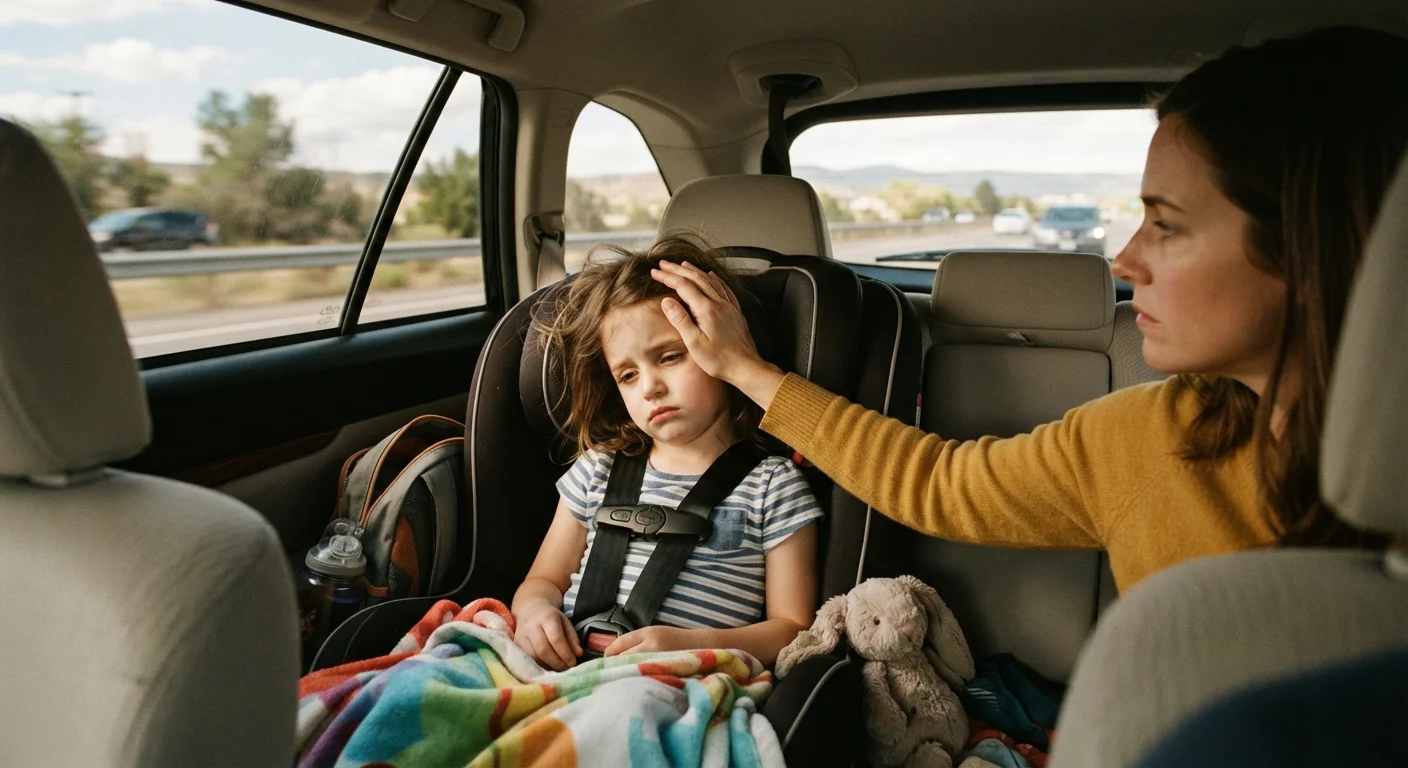
Motion sickness is a common physical response that happens when the brain receives conflicting signals from the eyes, inner ears, and body about movement. In a moving car, a child's eyes may be focused on a book or screen inside the vehicle while their inner ear senses the motion outside — that mismatch triggers nausea, dizziness, or vomiting. It is not a sign of illness or weakness, and many children outgrow it as their sensory systems mature.
The vestibular system — the balance structures of the inner ear — is particularly central to motion sickness. Children's vestibular processing is still developing, which partly explains why younger kids are more susceptible than adolescents and adults.
Why the Car Makes Kids Feel Sick
If your child has ever gone green-faced ten minutes into a road trip, you're far from alone. Motion sickness is one of the most common travel complaints in childhood — and it stems from a straightforward but frustrating biological glitch.
The brain continuously receives information from three sources: the eyes (what you see), the vestibular system in the inner ear (balance and movement), and proprioceptors in the muscles and joints (body position). During a car ride, these signals can tell contradictory stories. A child reading in the back seat has eyes reporting stillness while the inner ear detects every curve and acceleration. The brain, uncertain how to reconcile the conflict, responds with nausea — essentially a protective alarm that something is off.
Children's vestibular systems are still maturing, which makes them particularly vulnerable to this mismatch. Most kids aged 2–12 are in the highest-risk window, though toddlers under two rarely seem affected — possibly because they aren't yet processing visual space the same way older children do.
Motion Sickness vs. Other Causes of Nausea
Not every stomachache in the car is motion sickness. Anxiety, hunger, illness, and even carbon monoxide exposure (from a faulty exhaust system) can all produce similar symptoms. If nausea seems to occur only in the car but resolves immediately upon stopping, motion sickness is a likely cause. If symptoms persist after exiting the vehicle or feel unusually severe, consult a healthcare provider promptly.
See our guide to stomach pain in children if your child experiences abdominal discomfort that isn't clearly tied to travel — other causes are worth ruling out.
Signs to Watch For — and When to Talk to a Doctor
Carsickness doesn't always announce itself with vomiting. Early warning signs include pallor, unusual quietness, yawning, excessive salivation, and complaints of a stomachache or headache. Kids who are too young to articulate nausea may simply become cranky or clingy shortly after the car starts moving.
For most families, occasional motion sickness is a manageable inconvenience. However, you should loop in your child's pediatrician if:
- Symptoms are severe or happen on nearly every car ride
- Vomiting leads to signs of dehydration
- Your child develops significant anxiety or fear around travel
- Symptoms occur when the child is not moving at all
Persistent dizziness or nausea outside of vehicle travel can occasionally signal other conditions unrelated to motion, so a professional evaluation is worthwhile in those cases.
Have a 'sick kit' within reach
Pack a small bag in the back seat with a change of clothes, a few zip-close bags, unscented wipes, and a water bottle. Having it easily accessible (not buried in the trunk) means you can respond quickly without adding stress to an already uncomfortable moment. Getting ahead of the practicalities lets you focus on comforting your child rather than scrambling.
Practical Comfort Measures for the Car
While there's no guaranteed fix, several evidence-informed strategies can meaningfully reduce how often and how severely kids experience carsickness.
Optimize Seating and Sightlines
A forward-facing seat with a clear view out the front windshield gives the brain better visual confirmation of movement. Young children must always remain in age- and weight-appropriate car seats — but among rear seats, positioning an older child in the center with a forward view tends to help. For more on in-car positioning and safety, see our complete guide to driving safely with young children.
Fresh Air and Temperature
Stuffy, warm air noticeably worsens nausea for many kids. Cracking a window slightly or adjusting the climate control toward cooler, circulating air can help. Avoid strong food smells or air fresheners inside the vehicle.
Swap Screens for Audio
Books, tablets, and handheld games are common culprits. Switching to audiobooks, podcasts, or music removes the visual-vestibular conflict entirely. Our strategies for keeping kids engaged on long travel days include plenty of screen-free ideas that hold kids' attention for hours.
Time Meals Thoughtfully
A light, bland snack about an hour before departure is generally better than traveling on a full or completely empty stomach. Avoid greasy, heavy, or strongly flavored foods close to departure. Keep a water bottle handy — small sips can ease queasiness.
Plan Strategic Stops
Short breaks where kids can get out, walk around, and let their senses reset make a real difference on longer drives. Even five minutes of standing on solid ground can interrupt the cycle of nausea building.
~1 in 3
Children affected by motion sickness
Estimates from pediatric and travel medicine literature suggest roughly one-third of children experience motion sickness at some point during childhood.
Ages 2–12
Peak age window for susceptibility
Pediatric research consistently identifies this age range as the period of highest vulnerability, with symptoms often improving in adolescence.
~50%
Reduction in symptoms with forward view
Studies on motion sickness interventions suggest that improving visual-vestibular alignment — such as viewing the direction of travel — can substantially reduce symptom severity.
A Note on Medications and Supplements
Some families find that certain over-the-counter antihistamines or acupressure wristbands help reduce symptoms. The evidence varies in quality for different approaches, and what works for one child may not work for another.
Do not give any medication — including over-the-counter products — without speaking to your child's pediatrician first. Dosing for children differs significantly from adult dosing, and some products are not appropriate for young ages or specific health situations. Your pediatrician can weigh your child's age, weight, health history, and the nature of their symptoms before making a recommendation.
This article is general educational information and is not a substitute for professional medical advice. If motion sickness is significantly affecting your family's ability to travel, a conversation with your child's doctor is the best next step.
This article is for informational purposes only and does not constitute medical advice. Always consult a qualified healthcare provider regarding your child's health and before starting any treatment or medication.