

Key Takeaways
Start here
Why the First Family Trip Feels So Daunting
Next
Choosing the Right Destination for Your Family's Age and Stage
Then
What to Pack (and What to Leave Behind)
Almost ready
Keeping Kids Comfortable on Travel Days
Final step
Managing Expectations — Yours and Theirs
Why the First Family Trip Feels So Daunting
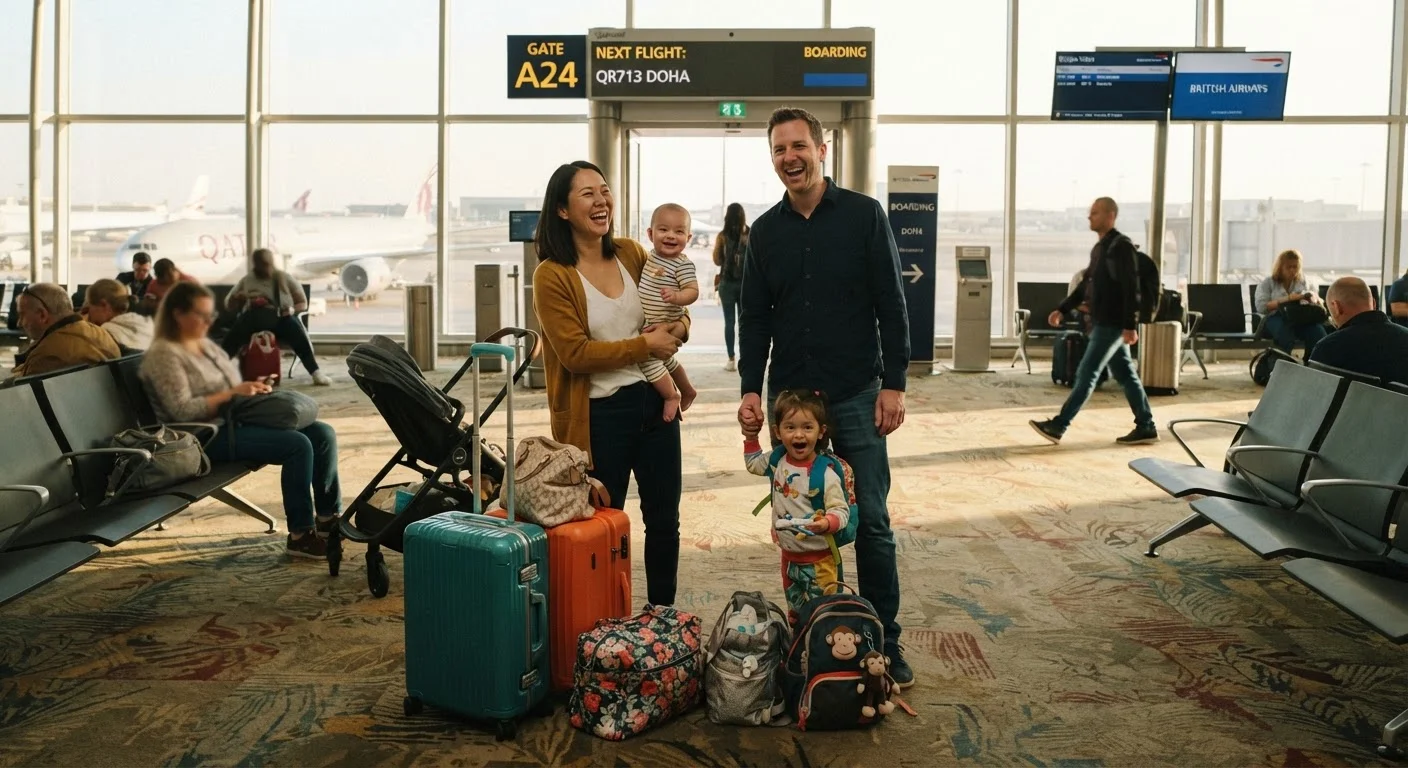
Let's be honest: the mental image of traveling with a baby or toddler can feel like a logistics nightmare. You're managing nap schedules, diaper bags, car seats, and a tiny person who has zero interest in your carefully crafted itinerary. It's a lot. And yet, millions of families pull it off every year — and many come back saying it was easier than they feared.
The anxiety is real, but most of it comes from uncertainty rather than actual impossibility. The families who struggle most on first trips tend to do so because of avoidable planning gaps — over-ambitious schedules, destinations that don't suit young kids, or luggage that would sink a cruise ship. Our guide to first-timer mistakes digs into the most common missteps and how to sidestep them.
The key reframe: your first family vacation doesn't need to be a grand adventure. It needs to be a manageable one that leaves everyone — including the adults — wanting to do it again.
Lap infant
A child under 2 years old who travels on a parent's lap during a flight without occupying a separate paid seat. Airlines have specific rules and documentation requirements for lap infants.
Travel routine
A simplified version of a child's daily schedule — especially naps and meals — adapted for the travel environment to maintain predictability and reduce meltdowns.
Pack-n-play
A portable, foldable play yard that doubles as a safe sleep space for infants and toddlers — commonly used when traveling and staying in accommodations without a crib.
Buffer time
Extra time deliberately added to a schedule — before flights, between activities, or during drives — to absorb the inevitable delays that come with traveling with young children.
Sleep cues
Objects, sounds, or routines a child associates with falling asleep — such as a white noise machine, a specific stuffed animal, or a particular song — that help them settle in unfamiliar environments.
Choosing the Right Destination for Your Family's Age and Stage
Destination is the single biggest lever you can pull. A 10-hour drive to a remote cabin with a 9-month-old is a very different animal than a 3-hour drive to a beach town with a generous rental house. For first trips especially, proximity and flexibility win over novelty.
Think about your child's age. Infants are mostly portable — their world is you, their routine, and their gear. The destination almost doesn't matter, but ease of access to a pharmacy, laundry, and a clean quiet space for sleep matters enormously. Toddlers need space to move and ideally outdoor room to roam. School-age kids can handle more structure and are genuinely excited by new experiences.
For US families, destinations with low-friction logistics — a short drive or direct flight, established family amenities, and predictable weather — are the low-risk starting point. If the outdoors appeals, our article on national parks suited to young kids helps you match the park to your family's actual energy level and age range.
Use our practical starting point for planning to work through destination selection, booking order, and realistic expectations before you commit to anything.
Consider a 'trial run' before your big trip
If your child has never slept away from home, a one-night stay at a nearby hotel or relative's house is a low-stakes way to spot what you've forgotten and how your child handles a new sleep environment. It's far better to discover you need a blackout curtain workaround 20 minutes from home than in a hotel across the country.
What to Pack (and What to Leave Behind)
Overpacking is almost universal among first-time family travelers, and it costs you in ways that aren't obvious until you're hauling three bags through a parking garage with a screaming toddler. The goal is a focused, tested kit — not everything that might possibly be useful.
Essentials by category:
- Feeding: Formula, snacks, familiar foods, portable utensils, bibs — enough for travel days plus one extra day.
- Sleep: Portable sleep surface if your accommodation doesn't provide one, plus baby's usual sleep cues (sound machine, lovey, swaddle if still relevant).
- Health: Infant acetaminophen/ibuprofen (age-appropriate), thermometer, bandages, any prescription medication, and your pediatrician's contact number.
- Gear: Stroller or carrier appropriate to your destination's terrain, car seat (required by law for road trips), and a lightweight carrier as backup.
- Entertainment: A few familiar toys and a tablet for older kids — novelty wears off fast; familiar is better on hard days.
For a detailed, practical framework on what to bring and how to pack it efficiently, see our family packing guide. And before you zip up that last bag, run through the pre-departure checklist so nothing critical gets left behind.
Keeping Kids Comfortable on Travel Days
Travel days — whether a long drive or a flight — are the part most parents dread. The good news: with a little intentional planning, they're survivable and sometimes even fun.
Never leave children unattended in parked vehicles
Even during short highway rest stops, children must never be left alone in a car — temperatures inside a parked vehicle can rise dangerously fast, and safety risks compound quickly. Always take children with you, even for a brief stop.
On road trips, build in stops every 90 minutes to 2 hours regardless of whether you think you need them. Kids need to move, and a 10-minute break at a rest stop is far cheaper in time than a meltdown that stops everything for 45 minutes. Bring a dedicated travel snack bag that only comes out in the car — the novelty helps.
For flights, arrive at the airport with genuine buffer time — not just TSA's recommended minimum, but an extra 30–45 minutes for the reality of traveling with a stroller, car seat, and a child who wants to investigate every moving walkway. Use boarding time wisely: board early if the airline offers family boarding, and have the entertainment and snacks immediately accessible, not buried in an overhead bin.
Feeding and sleep cues are your most powerful tools on travel days. A full, drowsy baby on a plane is a gift. Time feeds and nap-inducing activities (car ride, rocking, white noise) to align with departure when possible.
Managing Expectations — Yours and Theirs
The biggest mindset shift for first-time family travelers: you are not on vacation from parenting. You are parenting in a new place. The sooner you fully accept that, the more genuinely enjoyable the trip becomes.
Some practical expectation resets:
- You will not see everything. Pick two or three meaningful experiences and treat anything else as a bonus.
- Kids will have hard moments. A tantrum at a scenic overlook doesn't ruin the trip — it's just Tuesday, in a prettier location.
- Routines matter more than activities. A baby who naps on schedule in an unfamiliar pack-n-play is having a better trip than one who skips naps to see more sights.
- Your enjoyment counts too. Build in at least one thing each adult genuinely wants to do.
The families who look back on first trips warmly are almost always the ones who kept the agenda light and leaned into flexibility. For a deeper dive into the full planning process — from budgeting to booking sequencing — the complete family vacation planning guide covers every phase in one place. And the family vacation booking timeline helps you figure out when to lock in each piece without unnecessary last-minute stress.
You've got this. The first trip is the hardest — and it still tends to be worth it.
Every family's 'easy' looks different
What works smoothly for one family may be genuinely hard for another, depending on your child's temperament, health needs, and your own comfort with uncertainty. This guide offers general principles — trust your knowledge of your own child and adjust accordingly. When in doubt about any health-related travel concern, check with your pediatrician before you go.